Volkswagen ID.4: Specifications, Range and Charging in Ukraine
Updated September 4, 2026.
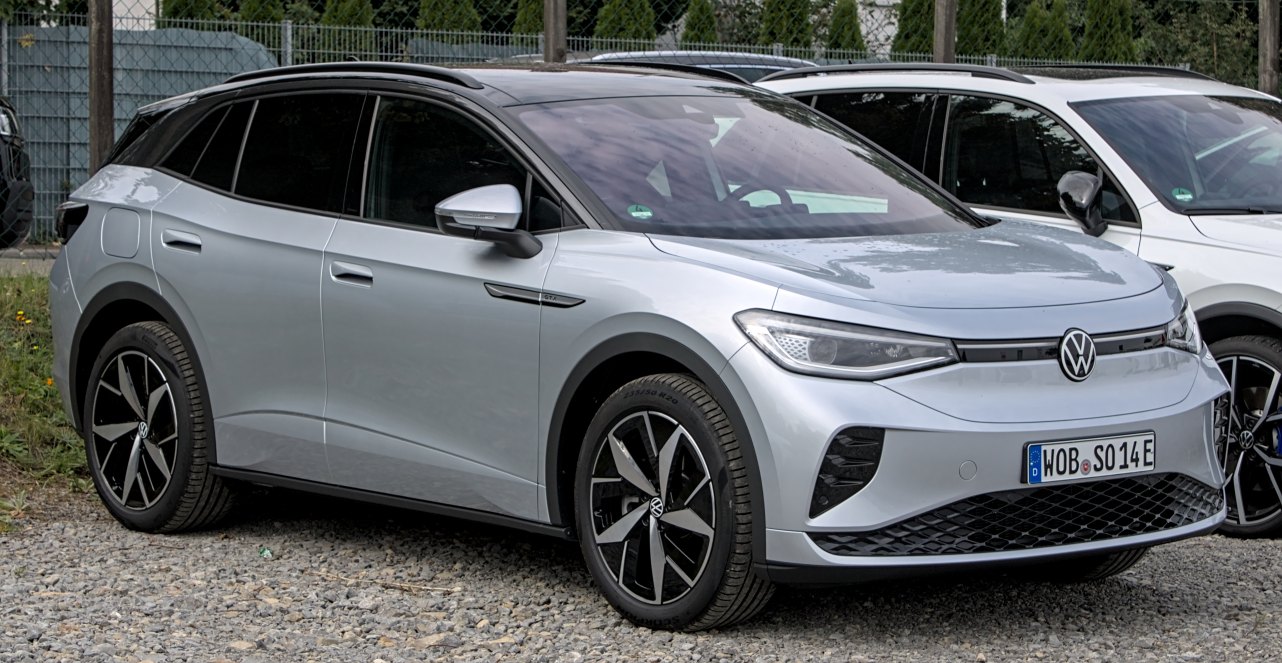
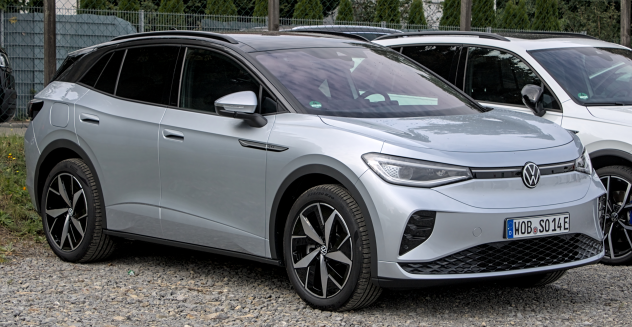
Volkswagen ID.4 is a family electric crossover built on the MEB platform. The current European range includes Pure, Pro, Pro 4MOTION and GTX versions, with an official range of up to 564 km WLTP and 10–80% DC charging in approximately 25 to 29 minutes, depending on the version and conditions.
If you are choosing a Volkswagen ID.4 in Ukraine, first check its market of origin and VIN. European, North American and Chinese ID.4 Crozz vehicles can differ in battery capacity, charging connector, software and equipment.
Volkswagen ID.4 specifications: Pure, Pro, 4MOTION and GTX
The table below uses Volkswagen’s official European specifications current as of June 2026. Earlier cars and vehicles imported from other markets may have different figures.
| Version | Usable battery | Drive | Power | WLTP range | AC / DC | DC 10–80% |
|---|---|---|---|---|---|---|
| ID.4 Pure | 52 kWh | rear-wheel drive | 140 kW / 190 PS | up to 433 km | 11 / 105 kW | about 25 min* |
| ID.4 Pro | 77 kWh | rear-wheel drive | 210 kW / 286 PS | up to 564 km | 11 / 165 kW | about 29 min |
| ID.4 Pro 4MOTION | 77 kWh | all-wheel drive | 220 kW / 299 PS | up to 554 km | 11 / 165 kW | about 29 min |
| ID.4 GTX 4MOTION | 77 kWh | all-wheel drive | 250 kW / 340 PS | up to 529 km | 11 / 185 kW | about 27 min |
*The 25-minute figure for Pure applies with the optional 145 kW peak charging capability; the standard maximum is 105 kW. Sources: Volkswagen battery, range and charging data and current Volkswagen UK technical data.
The differences are not limited to acceleration. Rear-wheel-drive Pro usually offers the best balance of range and battery capacity, 4MOTION adds traction on slippery roads, and GTX focuses on performance. Trim names and equipment vary by market, so confirm the option list from the VIN rather than relying only on the advert.
Volkswagen ID.4 dimensions and ground clearance
According to the current UK specification, the standard ID.4 is 4,584 mm long, 1,852 mm wide without mirrors and 1,634 mm high, with a 2,771 mm wheelbase. Boot capacity is 543 litres. GTX differs slightly at 4,582 mm long, 1,619 mm high and a 2,773 mm wheelbase.
| Measurement | ID.4 | ID.4 GTX |
|---|---|---|
| Length | 4,584 mm | 4,582 mm |
| Width without mirrors | 1,852 mm | 1,852 mm |
| Height | 1,634 mm | 1,619 mm |
| Wheelbase | 2,771 mm | 2,773 mm |
| Boot capacity | 543 litres | 543 litres |
Source: official Volkswagen ID.4 dimensions.
What is the ground clearance of the ID.4?
Volkswagen ID.4 ground clearance depends on the version, market and measurement method. Official Volkswagen documents contain figures of 160, 170 and 210 mm. The range “160–210 mm” does not mean that one car has adjustable ground clearance. For a particular ID.4, check its VIN specification, wheel size and the actual lowest point under the vehicle.
Real-world Volkswagen ID.4 range
The maximum 564 km figure is a WLTP laboratory result for the current ID.4 Pro, not a guaranteed distance for every journey. Actual range depends on battery and ambient temperature, speed, terrain, wind, tyres, load, heating and air conditioning. Volkswagen also notes that real-world results can differ from WLTP.
For a rough estimate, use this formula: usable battery capacity ÷ average consumption × 100. With a 77 kWh battery, the calculated range is approximately 428 km at 18 kWh/100 km, 385 km at 20 kWh/100 km and 350 km at 22 kWh/100 km. This is an estimate and does not account for the battery’s protective reserve or route conditions.
What happens to range in winter?
In winter, energy is used to heat the cabin and condition the battery, while cold or wet roads increase rolling resistance. Instead of relying on a universal “20–30% loss” claim, use the consumption shown by your own vehicle and keep an extra reserve before the next charging stop. Preheating the cabin while the car is plugged in can help before a long journey.
Charging the Volkswagen ID.4: connectors, power and time
European versions use Type 2 for AC charging and CCS2 for rapid DC charging. The onboard charger in current European versions accepts up to 11 kW AC. Volkswagen quotes approximately 5 hours 30 minutes for a 0–100% charge in Pure and about 8 hours for versions with the 77 kWh battery.
Maximum DC power depends on the version: up to 105 kW for the standard Pure, 165 kW for Pro and Pro 4MOTION, and 185 kW for GTX. Peak power is not maintained throughout a charging session. Charging speed also depends on battery temperature and state of charge, preconditioning, station output and power sharing between connectors.
How long does the ID.4 take to charge at home?
With an 11 kW wallbox, a current ID.4 can be recharged overnight. Charging takes longer if the property or a single-phase station is limited to a lower output. Before installation, check the available electrical capacity, cable, earthing and protective devices. Suitable options are available in TOKA’s range of home charging stations.
For an explanation of household sockets, wallboxes, AC and DC stations, see how to charge an electric car. Check the current public charging price in the app or on the TOKA tariffs page rather than relying on an undated price in an article.
European, US and Chinese ID.4: key differences
| Market of origin | What to check before buying |
|---|---|
| Europe | Type 2/CCS2, usable battery capacity, heat pump, equipment and service history. |
| US and Canada | AC/DC connector, adapter compatibility, accident history, completed service campaigns and software updates. |
| China, ID.4 Crozz or ID.4 X | GB/T connector, adapter type, infotainment localisation, update availability and exact battery specification. |
ID.4 Crozz should not be judged by the specifications of a European Pro. Chinese versions have their own trim structure and range measurement standard. CLTC or NEDC figures cannot be compared directly with WLTP. Before buying, request the factory specification by VIN and test charging on compatible equipment.
Volkswagen ID.4 problems: a pre-purchase checklist
There is no single universal fault list covering every ID.4 model year and market. Use a diagnostic inspection of the specific car instead of relying on unverified owner reports:
- Check the high-voltage battery. Ask for a diagnostic report, BMS fault codes, an inspection of the battery casing from below and both AC and DC charging tests.
- Confirm the software version. Early vehicles received updates for infotainment and several control modules.
- Check campaigns by VIN. Use the official NHTSA VIN lookup for US and Canadian cars; check European and Chinese vehicles through the appropriate market service network.
- Test the charging port. The vehicle should start and stop AC and DC sessions reliably. For an adapter, check permitted current, power and locking method.
- Inspect the repair history. For an imported car, ask for pre-repair photos and check body geometry, the underside, battery cooling system and 12-volt battery.
- Test the climate system. Confirm whether a heat pump is fitted and test heating, air conditioning and battery preconditioning.
North American 2021–2023 ID.4 vehicles are covered by software campaign 919A, among other actions. This does not mean every vehicle has the issue, but it shows why a VIN check is more useful than a generic list of “common problems”. Official tool: NHTSA Recall Lookup.
Battery warranty and safety
Volkswagen states that the high-voltage battery is covered for up to eight years or 160,000 km, whichever comes first, with at least 70% of its original usable capacity under the relevant market terms. For an imported vehicle, confirm separately whether the warranty is valid in Ukraine and which documents are required.
Source: Volkswagen Newsroom: ID.4 battery and charging options.
Euro NCAP reassessed the Volkswagen ID.4 in 2025 after manufacturer improvements and awarded it five stars. The rating applies to the versions and safety equipment listed in the protocol, so verify the driver-assistance systems fitted to a particular imported vehicle by VIN.
Source: Euro NCAP: Volkswagen ID.4.
Volkswagen ID.4 advantages and disadvantages
| Advantages | Points to consider |
|---|---|
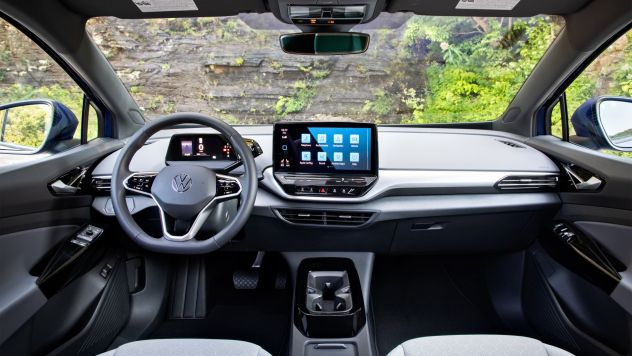
| Spacious cabin and 543-litre boot | There is no front luggage compartment. |
| Choice of rear- or all-wheel drive | All-wheel drive usually consumes more energy. |
| Up to 564 km WLTP in the current Pro | Real range depends on weather and speed. |
| Type 2/CCS2 on European vehicles | US and Chinese versions need a separate connector check. |
| Five-star Euro NCAP rating in the 2025 assessment | Driver-assistance equipment varies by version and market. |
Which Volkswagen ID.4 should you choose?
- For city driving and regular home charging: Pure, if its real-world range covers your usual routes.
- For longer journeys: Pro with the larger battery and rear-wheel drive, the longest-range version in the current European line-up.
- For winter roads and traction: Pro 4MOTION, if all-wheel drive matters more than maximum range.
- For performance: GTX, if you accept potentially higher energy use and purchase cost.
- On a limited budget: an ID.4 Crozz or a US import may look cheaper, but calculate adaptation, repair and charging-solution costs before buying.
The best ID.4 is not necessarily the car with the largest number in the advert. Choose a specific vehicle only after checking its VIN, battery, connector and your charging options at home and on longer journeys.
Frequently asked questions
What is the range of a Volkswagen ID.4?
In the current European line-up, the official WLTP range is up to 433 km for Pure, 564 km for Pro, 554 km for Pro 4MOTION and 529 km for GTX. Actual range depends on conditions.
How long does a Volkswagen ID.4 take to charge?
Official rapid-charging time from 10 to 80% is approximately 25–29 minutes, depending on the version. A full charge from an 11 kW AC wallbox takes about 5.5 hours for Pure and approximately 8 hours for versions with the 77 kWh battery.
What is the ground clearance of a Volkswagen ID.4?
Official documents for different versions and markets quote 160–210 mm. Check the VIN and actual equipment for the specific vehicle.
Which charging connector does the Volkswagen ID.4 use?
A European ID.4 normally uses Type 2 for AC and CCS2 for DC. US and Chinese vehicles use different connectors, so check compatibility before buying.
How is the ID.4 Crozz different from a European ID.4?
ID.4 Crozz is produced for the Chinese market and may differ in battery, equipment, software, range measurement cycle and GB/T charging connector. Compare vehicles by VIN and factory specification.
What problems can occur with the Volkswagen ID.4?
Risks depend on model year and market. Before buying, check the battery, software version, VIN-specific service campaigns, AC/DC charging, climate system and repair history.
Is the Volkswagen ID.4 suitable for Ukraine?
Yes, particularly a European version with Type 2/CCS2 and access to home charging. For a US or Chinese vehicle, select a safe compatible solution in advance and test public charging.
Conclusion
Volkswagen ID.4 suits drivers who need a spacious electric crossover with a clear choice of drivetrains and enough range for city use and longer trips. The current ID.4 Pro offers up to 564 km WLTP, but when buying in Ukraine it is more important to verify the market of origin, battery, connector and history of the specific vehicle.
Once you have chosen an ID.4, the next practical step is to determine the available electrical capacity at home and select a suitable charging station. For questions about installation and compatibility, see the TOKA FAQ.
This article is based on official Volkswagen technical data, Euro NCAP results and TOKA information about charging infrastructure. Always verify imported-vehicle specifications by VIN because market, model year and equipment can change the figures.