How to Charge an Electric Car: Every Method, Cost and Practical Tips
Updated September 15, 2026.
To charge an electric car, you need a compatible connector, working charging equipment and an available power supply. At home, use an appropriate portable EVSE or a fixed AC wallbox; at public locations, choose AC or DC fast charging. Charging time depends on the energy you need and the car’s capabilities. Cost depends on the billed kilowatt-hours and the applicable tariff.
This guide is for new EV owners driving in Ukraine. It explains how to charge an electric vehicle at home, at an apartment-building car park and at a public station. You will also find a TOKA session checklist, worked time and cost examples, connector guidance and practical considerations during power outages.
- For a long parking stop: a checked home connection or a public AC charger.
- For a short stop: a compatible DC charger, allowing for the vehicle’s limits.
- Before your first session: check the connector, available power, start procedure and full session price.
How to Charge an Electric Car from a Home Socket
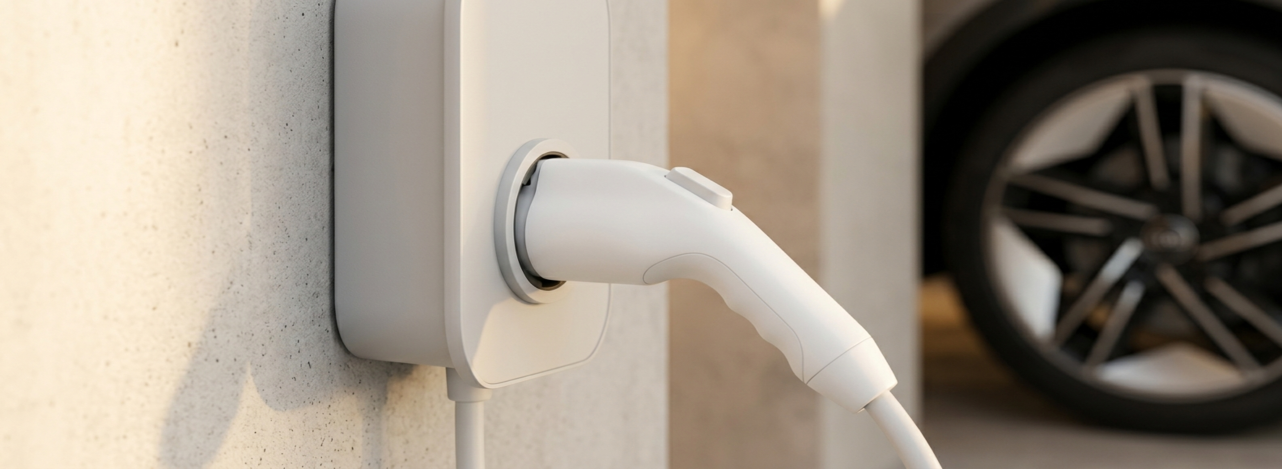
A household socket, often described locally as “220 V”, requires a compatible portable EVSE with the necessary control and protection. This is not an ordinary adapter cable. An EVSE may come with the vehicle, but check its presence and suitability separately when buying a used or imported car.
Single-phase power is approximately voltage multiplied by current. At 230 V and 10 A, that is 2.3 kW; at 16 A, about 3.7 kW. However, a “16 A” marking on a socket is not automatic approval for hours of EV charging at that current. The permitted setting depends on the circuit, contacts, protective devices and EVSE instructions.
Have an electrician check the wiring, protective earth conductor and circuit protection before use. Do not connect through a household extension lead, power strip or damaged socket. For example, the Tesla Mobile Connector manual prohibits improperly grounded outlets and extension cords. Other charging equipment must also be used according to its own instructions.
If a circuit breaker or RCD trips, or you notice damage or a burning smell, stop using the equipment and arrange an inspection. Turning down the current does not repair a fault. Our separate guide explains why EVSE protection does not replace protective earthing.
There is no universal “5 kW apartment limit”. As an illustration, a 5 kW supply with a 2.3 kW charging load leaves around 2.7 kW for other appliances. This is a load-budget example, not an assessment of your electrical installation. The actual supply capacity and acceptable simultaneous loads need to be checked on site.
Home Charging Stations: When a Wallbox Makes Sense
A wallbox is a fixed charging point for a garage or parking space. In an AC system, the station manages the alternating-current supply, while the vehicle’s onboard charger converts it into direct current for the battery. Consequently, a 22 kW station cannot deliver 22 kW AC to a car whose onboard charging limit is 7.4 or 11 kW.
- Around 7.4 kW: a possible single-phase setting when the supply, station and vehicle support it.
- 11 or 22 kW: typically a three-phase connection; confirm the car’s supported power in its documentation.
- Control features: RFID, an app, scheduling and load balancing depend on the equipment configuration.
Compare charging equipment in the 7–22 kW range by connector, phases and functions. Budget for the unit, cable route, protection, installation and testing. Use the current product listing for equipment prices and a site-specific quote for installation, rather than an old starting price.
A wallbox can make regular charging more convenient, but it does not inherently cause less battery wear than a properly functioning portable EVSE. The benefits come from the installation and features you actually need. The Schneider Electric installation guide explains the principles of checking supply capacity and coordinating protection.
Charging an Electric Car When You Live in an Apartment
The important question is whether you have a safe connection at the parking space, not whether there is a socket inside the apartment. A cable hanging from a window or crossing a shared walkway can be damaged and obstruct other people. Do not treat this as a permanent charging arrangement.
For a dedicated parking-space charger, discuss the work with the property owner or building manager first. The assessment should cover available power, the cable route, protection, electricity metering and user access. Required approvals depend on the property; there is no single procedure that fits every building. Explore charging arrangements for residential car parks.
If installation is not possible yet, look for public charging near home, work or places you already visit. Compare the energy tariff, parking charges, overnight access, session time and possible idle fees. A public AC charger is not necessarily priced like household electricity, even when you use it overnight.
Public AC Charging: Connector, Cable and Available Power
AC charging suits a stop lasting several hours, such as at an office, hotel or shopping centre. Type 2 is common in Europe, but the individual car and charging port still need to match. A socket-only station without an attached cable requires you to bring a compatible charging cable.
A car with a Type 2 inlet can use a Type 2-to-Type 2 cable at a compatible AC socket. A car with a Type 1 inlet needs the appropriate vehicle-side connector instead. When comparing cables for connecting to public AC chargers, check both ends, current rating, phases and length rather than appearance alone.
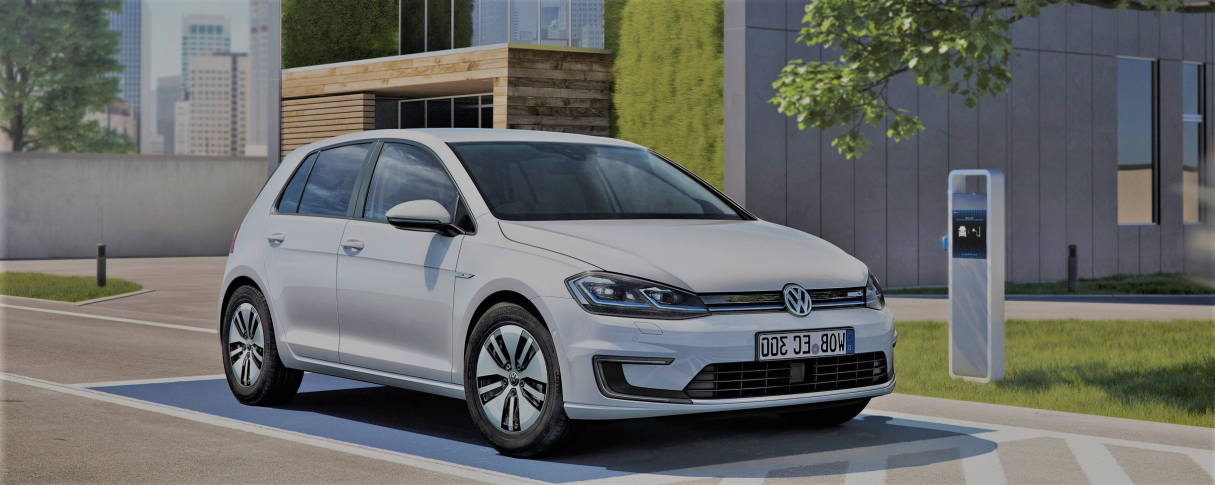
Actual charging speed is constrained by the lowest relevant limit in the station, cable and vehicle chain. Shared power between ports can also affect the session. A “22 kW” label therefore does not promise the same charging time for different Nissan Leaf, Renault Zoe or Volkswagen e-Golf versions.
How to Charge an Electric Car at a TOKA Charging Station
At a public charging station, the driver usually selects the port and authorises the session. The precise sequence can vary by equipment, but these checks provide a practical starting point:
- Choose a location. Use the TOKA map of charging ports along your route to check the address, connector and availability. Identify a backup stop.
- Prepare your account. Install the TOKA app for starting and managing a charging session, register and check your balance and available payment method.
- Match the station and port. On arrival, compare the equipment number with your selection. Check the tariff, idle-fee conditions and parking rules.
- Inspect the equipment. Do not use a damaged connector. Position the cable so it cannot obstruct a walkway or be driven over.
- Connect and start. Follow the station and app instructions. Confirm that the vehicle is actually charging, rather than merely connected.
- Finish correctly. Stop the session using the supported procedure, wait for unlocking, remove the connector without force and free the space.
Plugging in does not always start a session automatically. RFID and Plug & Charge depend on support and setup for the relevant authorisation method. If charging will not start, check the selected port, account balance, vehicle timer and charge limit. Contact support for equipment faults rather than bypassing a safety lockout.
DC Fast Charging: When It Saves Time
A DC station supplies direct current to the traction battery, bypassing the onboard AC converter. This is useful during a journey or when parking time is short. However, the station’s maximum rating is an upper capability, not a promised charging speed for every electric car.
The result depends on the vehicle’s supported power, temperature, current state of charge or SOC, and charging curve. The battery generally accepts energy more slowly near its upper charge limit. If the vehicle offers battery preparation for fast charging, use it according to the manufacturer’s instructions.
It is inaccurate to label every DC session harmful or assume that different models share the same battery-cooling system. Choose your regular charging routine using guidance for the particular vehicle. Daily charge-limit recommendations are discussed below.
Connector Types: What to Check Before Travelling
- Type 1 / J1772: an AC connector found on vehicles made for the North American and Japanese markets.
- Type 2 / Mennekes: a common European AC connection; single-phase or three-phase capability depends on the vehicle.
- CCS1 and CCS2: different DC connection variants that should not be treated as interchangeable.
- CHAdeMO: a DC connector familiar from many Nissan Leaf versions; check the market and generation.
- GB/T AC and GB/T DC: separate connectors used on Chinese domestic-market vehicles. A brand’s country of origin does not, by itself, identify the charging port.
Check the exact vehicle specification and the charging-port listing. An adapter cannot add DC charging capability that the car lacks, and physical fit does not guarantee protocol compatibility. Use only a solution whose compatibility and permitted use have been confirmed for the vehicle and charging equipment.
How Long Does EV Charging Take? A Worked Example
Energy needed = usable battery capacity × change in state of charge. For a 60 kWh battery, charging from 20% to 80% means 60 × 0.60 = 36 kWh added to the battery. Approximate time is that energy divided by the average power actually reaching the battery.
- At an average 2.3 kW: 36 ÷ 2.3 ≈ 15.7 hours.
- At 3.7 kW: about 9.7 hours; at 7.4 kW: 4.9 hours.
- At 11 kW: about 3.3 hours; at 22 kW: 1.6 hours, provided the vehicle supports that mode.
- At an average 50 kW DC: about 43 minutes; at 100 kW: about 22 minutes.
These are arithmetic examples, not vehicle test results. If you use power measured at the socket, allow for losses and auxiliary consumption. If you substitute peak DC power for the session average, the prediction will be too optimistic.
A full 40 kWh charge at 7.4 kW theoretically takes 5.4 hours, while 75 kWh takes 10.1 hours, excluding losses. For everyday planning, calculate the energy needed after your own driving rather than automatically assuming a 0–100% session. For example, 50 km at 18 kWh/100 km uses 9 kWh from the battery.
How Much Does Charging Cost, and Where Are TOKA Tariffs Shown?
Session cost = billed kWh × tariff + any applicable additional charges. TOKA pricing depends on the location and charging type. Check the current price for the specific station in the app. Depending on the location’s conditions, idle fees can apply after the session ends. See the TOKA explanation of charging payments and idle fees.
Do not confuse battery capacity with metered energy. Adding 36 kWh to the battery at an assumed 90% efficiency requires 40 kWh at the input. Here, 90% is an illustrative assumption, not a measured efficiency figure for every electric car.
- At a hypothetical UAH 5/kWh, those 40 kWh cost UAH 200.
- At a hypothetical UAH 15/kWh, they cost UAH 600.
- At a hypothetical UAH 20/kWh, they cost UAH 800.
These are comparison scenarios, not current TOKA or household electricity tariffs. Replace them with the price on your electricity bill or in the charging app. If a station already displays the billed session energy, do not add a second allowance for hypothetical losses to that figure.
With consumption of 18 kWh/100 km and the same assumed 90% efficiency, you would pay for 20 kWh per 100 km: UAH 100, 300 or 400 in the three scenarios. For a petrol comparison, use your actual litres per 100 km multiplied by the current price per litre. There is no universal “six times cheaper” result across all tariffs and vehicles.
Overnight charging costs less only if you have an applicable time-of-use tariff and the required metering. If comparing total ownership costs rather than one charging session, include home equipment and installation as well. Public parking and idle charges can also change which option is cheapest for a particular stop.
Charging During Power Outages
Plan around the current outage schedule from your local electricity network operator, rather than assuming power will always be available overnight. Keep enough charge for essential journeys. Check a public station’s status before leaving: a map marker does not guarantee backup power or an unoccupied connector when you arrive.
Home energy storage can form part of a backup-power design, but it needs sufficient usable capacity, inverter output and compatible protection. For example, a 5 kWh reserve cannot add 36 kWh to an EV battery. Explore energy storage options for a backup-power system; priorities between the home and car should be established during system design.
Do not connect an EVSE to an arbitrary generator or inverter without checking the manufacturer’s requirements and obtaining an electrician’s assessment. After grid power returns, confirm that charging has resumed. Automatic restart depends on the equipment and its settings.
How to Charge an Electric Vehicle in Everyday Use
Take the daily SOC limit from the vehicle’s manual and charging menu. Do not apply “20–80%” mechanically to every battery. For example, Tesla’s battery-health recommendations associate an 80% daily limit with vehicles for which it is recommended and advise against prolonged storage near the extremes of charge.
- Do not wait for a complete discharge before charging again; plan your reserve around the journey.
- Before a long drive, set the required charge limit using the vehicle manufacturer’s guidance.
- Follow the equipment’s permitted weather conditions. There is no universal IP67 requirement for all EV charging equipment.
- Do not use damaged, flooded or malfunctioning equipment, and never disable protective functions.
A practical choice starts with daily energy demand, parking time and a compatible connection. Then compare the complete session cost and ease of access. This makes charging electric cars a predictable part of the day, rather than a search for the largest power figure on a station.
Frequently Asked Questions
Can I charge an electric car at home without special equipment?
Without a wallbox, sometimes: use a suitable portable EVSE and a checked circuit. Without equipment providing the necessary control and protection, no. An ordinary cable is not a substitute for EVSE.
Why does my car charge slowly at a high-powered station?
Possible reasons include the onboard AC limit, cable rating, battery temperature, high SOC, power sharing between ports or a fault. Check the actual charging mode and vehicle messages. The station’s rating is not a guarantee for every session.
Can I charge an electric car in the rain?
Use equipment designed by its manufacturer for the relevant outdoor conditions. Damage, flooding, contaminated contacts or fault messages are reasons not to start, or to stop charging and contact support.
Will an adapter let me charge any electric car?
No. Connectors, protocols, electrical ratings and permitted use must be compatible. An adapter cannot turn a vehicle without DC charging capability into a fast-charging vehicle.
How do I check the actual cost of a charging session?
After charging, compare the billed kWh, tariff and additional charges in the session history. At home, use appropriate consumption metering. The increase in battery percentage alone does not show the total electricity used.
You may also like...
-
Innovations in charging technologies Powering your home from an electric vehicle: V2H, V2G and V2L - how does it work?


-
Innovations in charging technologies Do electric vehicles need oil and other maintenance issues?
-
Innovations in charging technologies Volkswagen e-Golf Charging: Connectors, Time and Range