Renault Zoe Electric Vehicle Charger
Updated September 17, 2026.
The right Renault Zoe charger depends on the car’s version, your available electrical supply and where you intend to charge. AC charging uses a compatible Type 2 connection; DC charging through CCS must be checked separately. This guide helps Zoe owners choose a home charger, cable and charging stops without confusing a connector’s appearance with the charging speed it can deliver. Shop links refer to equipment offered by TOKA in Ukraine.
- At home: check the number of phases, available capacity and required electrical protection.
- At a public AC point: consider both the onboard charger and the cable’s rating.
- For rapid DC charging: confirm that the individual car has CCS rather than relying on its registration year.
Renault Zoe batteries: identify the version first
The Zoe’s popularity should not be read as evidence that every version is the same. Renault described it as Europe’s best-selling electric car for 2020, a historical result rather than a current ranking. Updates changed the battery, motor, interior, electronics and charging capabilities. The historical sales statement appears in Renault’s Zoe E-Tech announcement.
In particular, the 41 kWh Z.E. 40 battery was followed by the 52 kWh Z.E. 50. Renault’s article dated 17 December 2020 quoted up to 395 km WLTP for the Z.E. 50. That is a specification for the relevant version, not a guaranteed motorway or winter range for a used car. Its battery development explanation also helps distinguish battery capacity in kWh from charging power in kW.
Check warranty coverage against the sales market, first registration and vehicle documents. For example, UK terms for specified Zoe i vehicles provided eight years or 100,000 miles, with separate retained-capacity thresholds. Those terms are not a universal warranty for every imported Zoe; leased batteries have a separate agreement.
Renault Zoe charger types: Type 2, 22 kW, 43 kW and CCS
Type 2, also called Mennekes, is used for AC charging. The Zoe’s onboard Caméléon Charger converts AC for the battery; a wallbox or portable charging unit does not replace that component. Renault specified up to 43 kW AC for the Q210, compared with up to 22 kW AC for the R240. Its official Q210 and R240 comparison documents this distinction. Do not apply the 43 kW limit to every generation.
For later Zoe versions, Renault describes AC charging up to 22 kW and optional CCS for DC. CCS adds two large power contacts below the Type 2 section. A Type 2 inlet alone does not establish DC capability, and an ordinary adapter cannot add missing charging electronics. Check the VIN specification alongside Renault’s explanation of Zoe charging equipment.
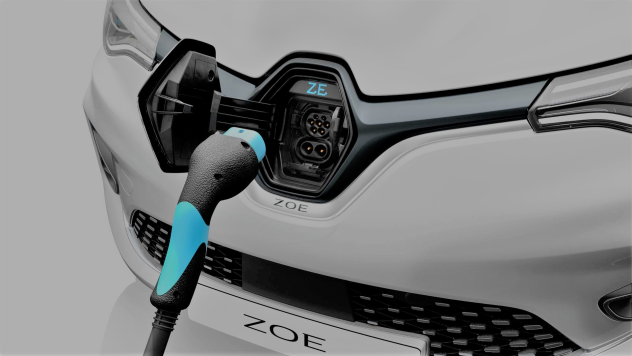
A model name alone is also insufficient when comparing Zoe connectors with those on a Kia Soul EV, Hyundai Ioniq or Tesla: generation and original sales market matter. Select a cable against your actual inlet and vehicle documentation, not a generic list of compatible brands.
Charging a Renault Zoe from a domestic socket or home charger
A plug fitting a socket does not establish that the installation is suitable for sustained EV charging. Use a compatible portable unit and an electrician-checked circuit. Renault requires professional socket checks and prohibits extension leads and multiway sockets; see the charging section in the Zoe owner’s manual. Do not bypass protective-earth monitoring to make a session start.
For regular charging, compare wall-mounted chargers for a home parking space. Single-phase charging and three-phase 11–22 kW charging require different supply capabilities. A 22 kW label on a wallbox cannot increase the capacity of your incoming supply. Have the circuit, protective devices and simultaneous household demand assessed together.
Before ordering, review the preparation stages for installing a charging point. If the lead will not reach, reconsider the mounting location or obtain a manufacturer-approved cable of suitable length. Do not extend it with a household extension lead or attempt a DIY repair of the vehicle’s high-voltage onboard charger.
How long does it take to charge a Renault Zoe?
Compare like-for-like charge intervals: a 20–80% figure is not a 0–100% charging time. For an illustrative healthy battery with 52 kWh available, a rise from 20% to 80% requires 31.2 kWh. A simplified calculation divides the energy to be added by the average power actually reaching the battery.
- At a constant 7.4 kW: 31.2 ÷ 7.4 ≈ 4.2 hours.
- At 11 kW: approximately 2.8 hours.
- At 22 kW: approximately 1.4 hours.
These are idealised comparisons, not measured charging times or promises for a particular station. Conversion losses, temperature, power reduction and the vehicle’s other electrical loads increase the duration. When planning a journey, use the car’s prediction and allow a margin rather than simply dividing capacity by an advertised peak rate.
Rapid charging on a journey and wireless charging claims
In its 2019 material, Renault quoted DC charging up to 50 kW and up to 150 km of recovered WLTP range in 30 minutes for an appropriately equipped New Zoe. It also identified temperature, battery condition, charge level and station output as variables. This conditional Renault figure is not a guarantee for every Zoe or subsequent journey.
For a car without CCS, look for a compatible AC point rather than the highest-powered charger in the area. Use the charging map to plan a Zoe journey in Ukraine to check connector type, access, current status and price. Identify a backup stop: a point shown as available is not guaranteed to remain free until you arrive.
Wireless charging transfers energy inductively, but it should not be described as a standard charging method for a production Zoe. The Renault material checked for this guide describes wired connections. Do not buy inductive equipment without documented compatibility between the specific system and your vehicle.
Choosing a Renault Zoe charging cable and equipment budget
Start with equipment filtered for the Renault Zoe, then check each product specification. Manufacturing country alone does not establish quality. Compare documentation, protective features, service support, warranty, cable length, current adjustment and any required scheduling function. Similar-looking units may have different equipment packages.
Compare the individual ratings of charging cables in the TOKA catalogue. For example, the checked Type 2–Type 2 listing specifies a 5 m lead, 32 A single-phase operation and 7 kW. Do not select that cable expecting three-phase 22 kW charging. That use requires separately confirmed ratings for the cable, charge point and car; matching connector shapes do not make all cables electrically equivalent.
Check the current price for the chosen equipment configuration when ordering. Compare it with installation, protection and any necessary supply work. Prepare the Zoe’s year and version, an inlet photograph, phase availability, supply capacity and distance to the parking position. This makes equipment selection specific to your installation rather than an abstract search for the fastest charger.
Frequently Asked Questions
Can I charge a Renault Zoe from a normal socket?
That depends on a compatible portable charging unit and a professionally checked socket and circuit. Do not use an extension lead or disable safety checks.
Does every Renault Zoe support DC rapid charging?
No. Type 2 is used for AC, while CCS must be confirmed from the inlet and vehicle specification. Registration year or battery size alone is not a substitute for checking.
Why does my Zoe charge below 22 kW at a 22 kW station?
Check current limits, phase availability, cable ratings, station settings and vehicle conditions. Distinguish a normal limitation from a fault before replacing equipment; recurring errors require diagnosis.
Is the Caméléon Charger the same as a home wallbox?
No. Caméléon is the vehicle’s onboard AC-charging component. A home wallbox provides a controlled mains connection; replacing the wallbox does not replace or upgrade that onboard component.
You may also like...
-
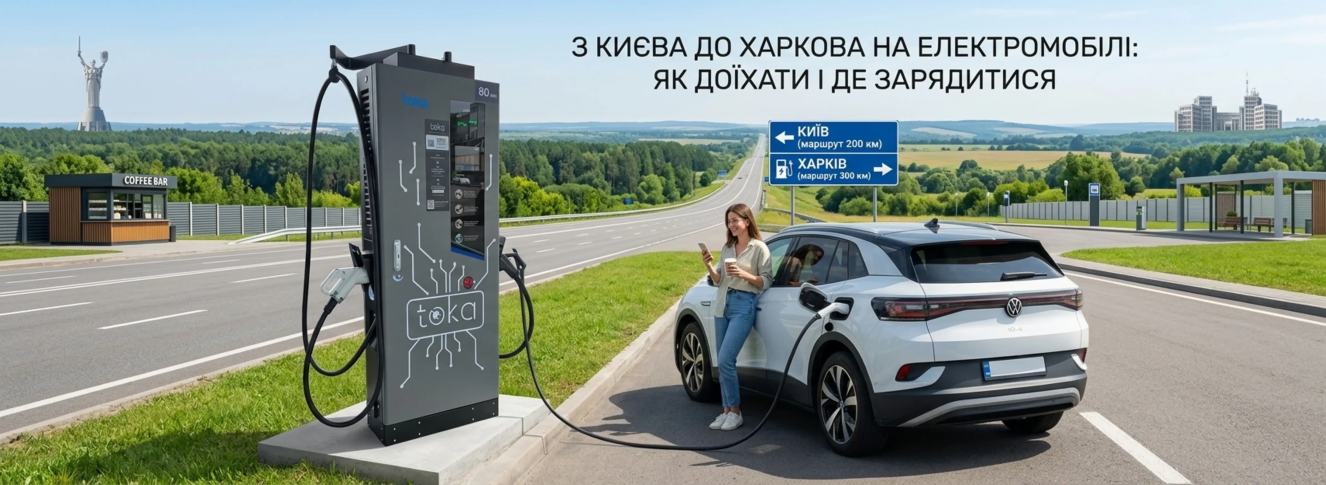
Innovations in charging technologies From Kyiv to Kharkiv on an electric car: how to get there and where to charge

-
Innovations in charging technologies Electric car or gas car (LPG). What is more profitable?
-
Innovations in charging technologies Do electric vehicles need oil and other maintenance issues?