Ford Focus Electric: a complete overview of characteristics, advantages and disadvantages for the Ukrainian market
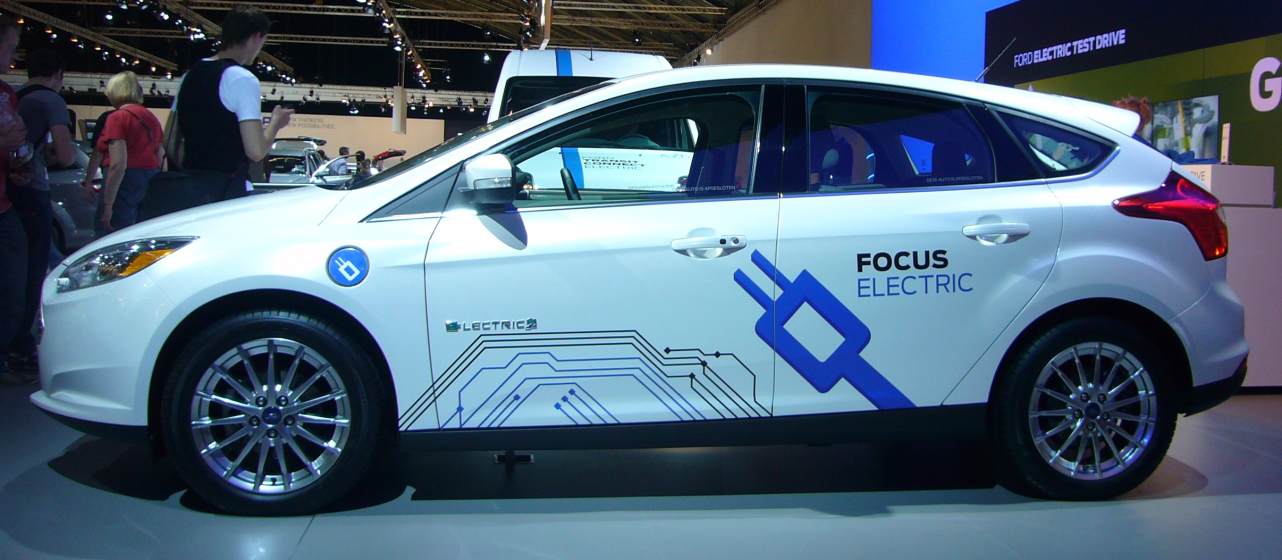
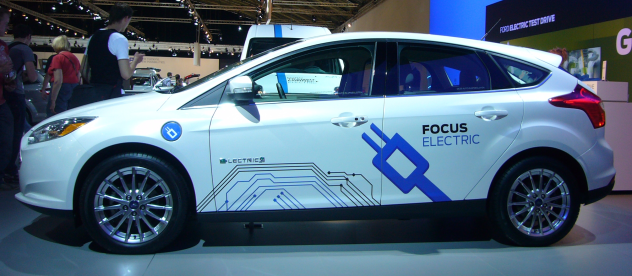
Ford Focus Electric became one of the first mass-produced electric vehicles introduced to the public by the American automotive giant. Manufactured from 2011 to 2018 mainly for the North American market, this Ford Focus Electric is now making its way to Ukraine via the secondary market, attracting buyers with its relatively affordable price and familiar design.
Basing it on the popular third-generation Focus platform, the Ford Focus Electric promised to combine Ford’s renowned quality with the benefits of electric propulsion. However, almost seven years after production ended, this model has both strong points and specific issues that should be noted before purchase.
In 2025, Ford Focus Electric is of particular interest to Ukrainian buyers looking for an affordable electric car for city commutes. However, it is important to understand all the operational aspects of this vehicle in the Ukrainian context, especially considering the development of charging infrastructure throughout the country.
Technical Specifications of Ford Focus Electric
Powertrain and Performance
The Ford Focus Electric’s powertrain specifications are based on a synchronous electric motor with an output of 107 kW, equivalent to 143 horsepower. While this may seem modest by today’s standards, for a compact EV in production from 2011 to 2018, it was quite competitive.
The electric motor produces 245 Nm of torque, which is available almost instantly when the accelerator is pressed. This feature of electric motors gives the Ford Focus Electric excellent throttle response and enjoyable dynamics in urban settings.
Acceleration from 0 to 100 km/h takes 9 seconds, which is a decent result for a family car. The top speed is electronically limited to 135 km/h, sufficient for everyday use and consistent with most speed limits on Ukrainian roads.
The transmission is a single-speed reducer delivering power to the front wheels. The absence of a traditional gearbox ensures extremely smooth and quiet operation, especially noticeable compared to internal combustion engine vehicles.
Battery and Driving Range
The most critical aspect of any electric vehicle is the battery and range. The Ford Focus Electric underwent significant battery system evolution throughout its production cycle.
Early generation (2011–2016): The first-generation Ford Focus Electric was equipped with a 23 kWh lithium-ion battery manufactured by LG Chem. This battery provided an EPA-cycle range of about 120 km, which was considered quite modest even at the time.
In real-world use, especially in the Ukrainian climate with cold winters, the Ford Focus Electric’s range for early models was 80–100 km during warm weather and could drop to 60–70 km in winter with active heating use.
Later generation (2017–2018): In 2017, Ford significantly upgraded the battery system, increasing its capacity to 33.5 kWh. This upgrade extended the official EPA range to 185 km, making the car much more practical for daily use.
The real-world Ford Focus Electric range of late models in favorable conditions can reach 140–160 km, making it comfortable to travel within large cities and their suburbs.
Battery system features: Both generations of the Ford Focus Electric have a progressive, for its time, thermal management system with liquid cooling and heating. This maintains optimal battery temperature across a wide range of outdoor conditions, especially important for Ukraine’s significant seasonal variations.
The battery is located under the car floor, partially beneath the rear seats and in the trunk area. This placement lowers the car’s center of gravity, improving handling, but simultaneously reduces the usable trunk space.
Charging System and Compatibility
The Ford Focus Electric is equipped with a 6.6 kW AC onboard charger. This charger uses the North American standard J1772 plug, requiring a compatible adapter to charge at European stations using Type 2 connectors.
The full charge time depends on battery capacity and charger power:
- From a 120V home socket: 20–30 hours (too slow for practical use)
- From a 240V home charging station: 3.5–5.5 hours depending on battery capacity
- From public charging stations 7–11 kW: 3–5 hours
Fast charging: Early Ford Focus Electric models did not have DC fast charging capability, significantly limiting their practicality for long trips. Only from 2017 did Ford offer an optional CCS Combo 1 (American spec) fast charging port at up to 50 kW.
For the Ukrainian market, this means late-model owners can use certain fast charging stations if they have an appropriate CCS1-to-CCS2 adapter.
Interior and Comfort Level
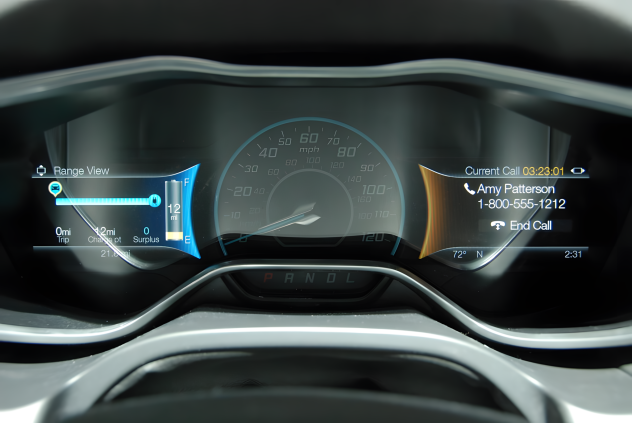
The cabin of the Ford Focus Electric is virtually identical to that of the standard third-generation Focus, with minor electric-specific modifications. The car seats five passengers and offers a typical level of space for the compact class.
Front Seats and Controls
The Ford Focus Electric’s front seats provide good support and comfort, even on long drives. Standard equipment includes heated front seats, which is particularly relevant for the Ukrainian climate and helps reduce battery load in winter.
The steering wheel has a traditional design with integrated controls for the audio system and cruise control. The instrument panel is modified to display EV-specific information: battery charge level, current energy consumption, regenerative braking efficiency, and estimated range.
Multimedia System and Technologies
The Ford Focus Electric features the MyFord Touch infotainment system with an 8-inch color touchscreen. The system includes:
- Satellite navigation with search for the nearest charging stations
- Sony audio system with HD Radio and 10 speakers
- Bluetooth for mobile device connectivity
- SYNC voice control system
- USB ports for device charging
- Remote control via Ford Mobile app
A particularly useful feature is the ability to remotely start cabin preconditioning (heating or cooling) while the car is plugged in, saving battery charge.
Rear Seats and Trunk
The rear seat offers acceptable comfort for average-sized passengers, though taller occupants may find the legroom insufficient. Standard equipment includes a central armrest with a compartment for small items.
The main interior drawback is a significantly reduced trunk space. The battery occupies part of the trunk, shrinking its usable volume by 39% compared to the conventional Focus. This is especially noticeable when hauling bulky items or planning long trips.
Advantages of Ford Focus Electric
Reliable and Proven Platform
One of the biggest advantages of the Ford Focus Electric is its use of the proven third-generation Focus platform. This ensures the familiar build quality, reliability of main mechanical components, and predictable road behavior.
The running gear is nearly identical to the regular Focus, meaning that most spare parts are readily available and servicing can be done at regular Ford service centers, a major plus over cutting-edge EV platforms of the time.
Quiet and Comfortable Ride
The electric motor in the Ford Focus Electric delivers exceptionally smooth and silent acceleration. The lack of combustion engine vibrations and intake/exhaust noise creates a peaceful environment in the cabin, especially apparent in stop-and-go city traffic.
Additionally, Ford improved sound insulation in the electric version, further reducing road and wind noise. This makes the Ford Focus Electric one of the quietest cars in its class.
Regenerative Braking System
The Ford Focus Electric is fitted with an efficient regenerative braking system that converts the car’s kinetic energy during deceleration back into electricity to recharge the battery.
The system offers several modes, enabling the driver to tune the level of regeneration according to preferences and driving style. Under optimal conditions, regeneration can increase real-world range by 10–15%.
Low Operating Costs
The electric motor requires minimal maintenance compared to combustion engines. No oil, filters, spark plugs, or other consumables are needed, significantly lowering periodic maintenance expenses.
The “refueling” cost of the Ford Focus Electric from a home charging station is approximately 15–25 UAH per 100 km, which is 3–4 times cheaper than the equivalent gasoline expense.
Eco-Friendliness and Social Responsibility
The Ford Focus Electric produces no emissions during operation, making it ideal for environmentally conscious owners. As environmental movements grow and low-emission zones emerge in major cities, an electric car offers unrestricted mobility.
Disadvantages and Problem Areas
Battery Degradation and Capacity Loss
The most serious issue with any used Ford Focus Electric is the natural degradation of its lithium-ion battery. Vehicles from 2011–2018 are now 7–14 years old, inevitably leading to reduced battery capacity.
Typical degradation is 2–3% per year, meaning a 10-year-old car may have a battery at only 70–80% of its original capacity. This significantly affects the Ford Focus Electric’s range and can make the car impractical for certain uses.
This is especially problematic for early models with a 23 kWh battery, where even minor capacity losses can result in a critically low range.
High Battery Replacement Costs
The cost of a Ford Focus Electric battery replacement often exceeds the car’s market value. The approximate cost of a new battery with labor can be $15,000–25,000 (USD), making replacement economically unfeasible for most owners.
Alternative solutions, such as restoring individual battery modules, are cheaper but require highly qualified specialists and do not always guarantee a long-term result.
Limited Range and “Range Anxiety”
Even in the best condition, the Ford Focus Electric’s range remains limited compared to modern EVs. This is especially problematic in winter, when heating can lower actual range by 30–40%.
This situation leads to “range anxiety” — constant concern about whether there’s enough charge for the planned trip. This can significantly limit spontaneity and flexibility in travel planning.
Charging System Issues
The Ford Focus Electric’s onboard charger has a reputation for being not very reliable. There are known cases of charger failure, which can cost $2,000–5,000 (USD) to replace.
Symptoms of malfunction include:
- Slow charging or complete failure to charge
- Errors on the display when connecting to a charging station
- Charger overheating
- Inability to initiate the charging process
Lack of Fast Charging on Early Models
2011–2016 models do not have DC fast charging capability, making them impractical for long-distance trips. Even with the current network of fast charging stations, early model owners cannot benefit.
Spare Parts and Specialized Service
The limited production run of the Ford Focus Electric creates problems with the availability of specific parts, particularly high-voltage components. Some parts may take months to arrive and are often significantly more expensive than their internal combustion counterparts.
Finding qualified service is also challenging. Not all repair shops are equipped or trained to work with high-voltage EV systems.
Ford Focus Electric vs Nissan Leaf: Detailed Comparison
Comparison of the Ford Focus Electric vs Nissan Leaf is particularly relevant, as these two cars were the main competitors in the affordable EV market.
Design and Practicality
The Ford Focus Electric has the advantage of traditional styling, nearly indistinguishable from a conventional vehicle. This can be important for buyers who do not want to draw extra attention to their EV choice.
The Nissan Leaf, by contrast, sports typical EV design cues with aerodynamic elements and unique proportions. Some buyers like this, others find it too unconventional.
Battery and Driving Range
Late-model Ford Focus Electric (33.5 kWh) has a similar range to the first-gen Nissan Leaf (24 kWh). However, the Ford Focus Electric’s battery has the advantage of liquid cooling, while early Leafs used less efficient air cooling.
This theoretically means the Ford Focus Electric should have lower battery degradation in hot climates, although in practice the difference may be minimal.
Charging and Infrastructure
The Nissan Leaf has a significant advantage in fast charging, as all versions come with a CHAdeMO port, while early Ford Focus Electric models have no fast charging at all.
In Ukraine, this means Leaf owners have more options for fast charging, since CHAdeMO is supported by most fast charging stations.
Service and Spare Parts
The Nissan Leaf has a clear advantage in service and parts availability in Ukraine. More vehicles on the market mean better support from service centers and greater spare parts availability.
Secondary Market Pricing
The Ford Focus Electric is usually a bit cheaper than a comparably aged and conditioned Nissan Leaf, appealing to budget-conscious buyers.
Prices and Situation in the Ukrainian Market
The Ford Focus Electric market in Ukraine consists exclusively of imports from the USA and Canada, typically arriving via European countries or directly from North America.
Price Range
Current prices for the Ford Focus Electric in Ukraine (as of 2025):
2012–2014 models (23 kWh):
- Needs repair: 250,000–300,000 UAH
- Average condition: 300,000–350,000 UAH
- Good condition: 350,000–400,000 UAH
2015–2016 models (23 kWh):
- Average condition: 350,000–420,000 UAH
- Good condition: 420,000–480,000 UAH
2017–2018 models (33.5 kWh):
- Average condition: 450,000–520,000 UAH
- Good condition: 520,000–600,000 UAH
- Excellent condition with fast charging: 600,000–700,000 UAH
Price Influencing Factors
Battery condition is the most critical price factor. A car with a battery that has lost 50% capacity can be 100,000–200,000 UAH cheaper than one with a “healthy” battery.
Fast charging capability — late models with CCS port can fetch 50,000–100,000 UAH more than similar ones lacking fast charging.
Service history — vehicles with documented official dealer servicing are more expensive.
Trim level — fully equipped versions with premium audio and extra features command a higher price.
Popular Years and Trims
The most popular models on the Ukrainian market are 2017–2018 with the 33.5 kWh battery, offering the best balance of price, range, and modern tech.
2013–2014 models remain attractive to budget buyers despite their shorter range.
Operational Peculiarities in Ukraine
Climate Conditions
The Ukrainian climate poses special challenges for the Ford Focus Electric. Cold winters can reduce real-world range by 30–40%, which is particularly critical for early models with smaller batteries.
Summer heat also affects efficiency, as air conditioner use increases energy consumption. However, the liquid battery cooling system helps maintain optimal cell temperature even in hot weather.
Roads and Infrastructure
The Ford Focus Electric has quite low ground clearance, which can be problematic on some Ukrainian roads. However, for urban use, this is not critical.
The development of the TOKA charging network in Ukraine makes EV use increasingly practical, especially in large cities and major transportation routes.
Documentation and Legalization
Most Ukrainian-market Ford Focus Electric vehicles are of American origin and need to go through customs clearance. It’s crucial to verify all paperwork is in order and ensure there are no legal issues with the car.
Charging Ford Focus Electric in Ukraine
Home Charging
For optimal use of the Ford Focus Electric, it is recommended to install a 7–11 kW home charging station, which will fully recharge the battery in 3–5 hours — ideal for overnight charging.
Using a standard household outlet (2.3 kW), a full charge can take 10–15 hours, which is not always practical.
Public Charging Infrastructure
The Ford Focus Electric is compatible with most charging stations in Ukraine via a J1772-to-Type 2 adapter. The TOKA network delivers reliable charging in key locations across the country.
Late models with a CCS1 port support fast charging at some stations with universal cables or suitable adapters.
Charging Costs
Estimated Ford Focus Electric charging costs:
- Home charging: 15–25 UAH per 100 km
- Public stations: 25–40 UAH per 100 km
- Fast charging: 40–60 UAH per 100 km
This is 3–5 times cheaper than equivalent fuel costs.
Buyer Recommendations
Checklist Before Buying
Mandatory battery diagnostics:
- SoH (State of Health) test — battery’s health status
- Test all battery modules for consistency
- Check cooling/heating system
- Review charging history (if available)
Charging system check:
- Verify onboard charger operation
- Test charging from various types of stations
- Check fast charging (for CCS-equipped models)
- Assess charging port condition
Assess real-world range:
- Test drive with fully charged battery
- Check range in different driving modes
- Test regeneration effectiveness
- Estimate the effect of auxiliary systems on range
Technical vehicle condition:
- Full systems diagnostics
- Inspect chassis and brakes
- Assess interior and exterior condition
- Check all electronic systems
Service Look-Up
Before buying a Ford Focus Electric, be sure to find a service center able to work on EVs. Not all shops have the necessary equipment and expertise for high-voltage systems.
It is recommended to arrange diagnosis and repairs in advance and clarify costs for main services.
Total Cost Calculation
When estimating purchase feasibility, consider not only the car’s price but also potential expenses for:
- Installing a home charging station
- Regular servicing of specialty components
- Potential battery repairs or replacement
- Charging adapters
Ford Focus Electric Alternatives
Nissan Leaf
The main competitor, the Nissan Leaf, offers similar specs with better service support and greater parts availability in Ukraine. However, Ford Focus Electric vs Nissan Leaf shows Ford’s advantage in battery cooling and its more traditional design.
BMW i3
The BMW i3 offers a more premium feel and innovative materials, but is significantly more expensive and has an even more distinctive design. The range is similar to the Ford Focus Electric, but service costs are higher.
Volkswagen e-Golf
The Volkswagen e-Golf might be a better alternative due to improved Volkswagen support in Ukraine, but these cars are rare in the used market and cost more.
New Budget EVs
With a budget of 500,000–700,000 UAH, it is also worth considering new Chinese EVs which offer much better specs, warranty, and modern technologies.
Practical Tips for Owners
Maximizing Range
To maximize driving range:
- Use eco-driving mode
- Plan routes considering topography
- Maintain optimal tire pressure
- Minimize climate system use
- Utilize regenerative braking
Battery Care
To preserve battery life:
- Avoid fully discharging the battery
- Don’t leave the car fully charged for prolonged periods
- Use charging timer to finish before trip
- Park in shade during hot weather
- Keep charge between 20–80% for daily use
Winter Operation
For efficient winter operation:
- Preheat cabin while charging
- Use heated seats instead of overall heating
- Plan shorter routes
- Keep the car in a warm garage if possible
- Always have a charge reserve for unexpected delays
Summer Operation
In hot weather:
- Park in the shade when possible
- Use remote AC pre-cooling while charging
- Avoid fast charging during the hottest hours
- Monitor battery temperature via info system
Technical Maintenance
Regular Servicing
The Ford Focus Electric requires less maintenance compared to gasoline vehicles:
Annually:
- Check high-voltage system
- Battery and management system diagnostics
- Brake system inspection
- Tire rotation
Every 2 years:
- Replace battery cooling fluid
- Check charging system
- Update software
Every 3–4 years:
- Replace cabin filter
- Check suspension and steering
- Replace brake fluid
Maintenance Costs
Annual maintenance costs for the Ford Focus Electric are usually 5,000–10,000 UAH, much less than comparable gasoline models. Main costs go toward diagnostics of electronic and running systems.
The Ford Focus Electric remains an attractive offering in Ukraine’s EV market, especially for budget-conscious buyers seeking their first electric vehicle. However, this purchase requires a careful approach and full awareness of all the nuances.