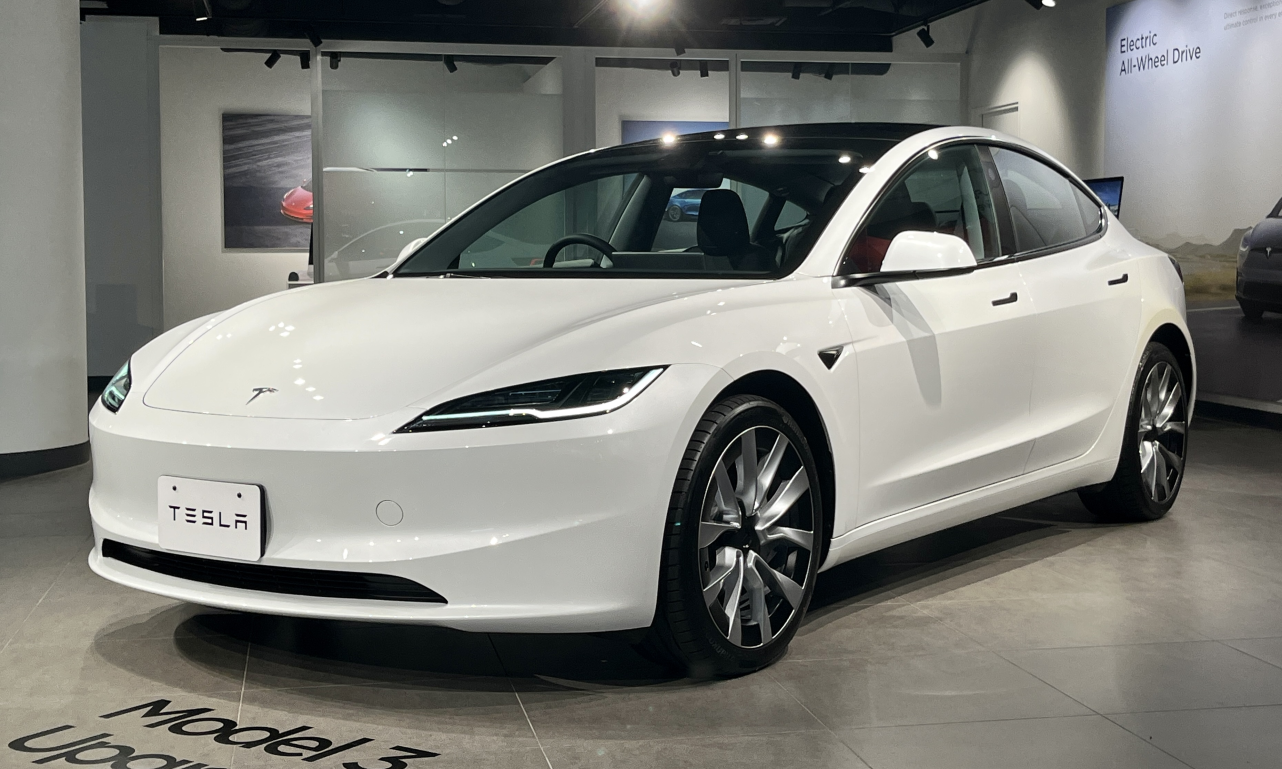
Tesla Model 3 Long Range: Specifications, Range and Versions
Updated September 4, 2026.
Tesla Model 3 Long Range is the long-distance version of Tesla's electric sedan. In the current European range, the rear-wheel-drive Premium Long Range is rated for up to 750 km WLTP, accelerates from 0 to 100 km/h in 5.2 seconds, and supports DC charging at up to 250 kW. Used-car listings also include many 2017–2023 Long Range Dual Motor AWD vehicles whose specifications vary by model year, factory, wheels and software configuration.
Tesla Model 3 Long Range specifications for 2026
Available versions differ by country. These figures come from Tesla's current European comparison pages and should be checked again before ordering.
| Version | Drive | WLTP range | 0–100 km/h | Maximum DC rate | Ground clearance |
|---|---|---|---|---|---|
| Model 3 RWD | rear-wheel drive | up to 534 km | 6.2 sec | 175 kW | 138 mm |
| Premium Long Range RWD | rear-wheel drive | up to 750 km | 5.2 sec | 250 kW | 138 mm |
| Performance AWD | Dual Motor all-wheel drive | up to 571 km | 3.1 sec | up to 250 kW | 128 mm |
Sources: Tesla's current Model 3 comparison, Model 3 specifications and official dimensions. Results vary with wheels and configuration.
How much horsepower does a Model 3 Long Range have?
Tesla does not publish one official combined peak-horsepower figure for every Model 3 Long Range. Numbers in listings are often third-party estimates, while homologation power is not the same as peak output. Compare the drive type, official acceleration time and data for the specific VIN instead of assuming every Long Range has identical power.
Long Range RWD versus Dual Motor AWD
Long Range RWD uses one rear motor. Lower mass and reduced drivetrain losses give it the longest range in the current line-up. Long Range Dual Motor AWD drives both axles, provides better traction on slippery roads and normally accelerates faster, but generally consumes more energy.
| Criterion | Long Range RWD | Long Range AWD |
|---|---|---|
| Drive | one motor, rear axle | two motors, both axles |
| Main advantage | range and efficiency | traction, acceleration and winter confidence |
| Availability | current European version | market-dependent; common as a used import |
| Key checks | tyres, battery and real consumption | the same, plus both drive units |
The Long Range badge does not guarantee the same battery or specification across model years. RWD, AWD, pre-refresh and Highland cars all appear in the used market. Confirm the exact version by VIN and in Controls → Software → Additional Vehicle Information.
Model 3 Highland versus 2017–2023 cars
The Highland refresh arrived in late 2023 for model year 2024 onward. It introduced revised bodywork and lighting, improved aerodynamics and sound insulation, ventilated front seats on Premium versions, a 15.4-inch central touchscreen and an 8-inch rear display. Earlier Model 3 Long Range cars can cost less, but may differ in battery, heat pump, infotainment processor, headlights and fast-charging compatibility.
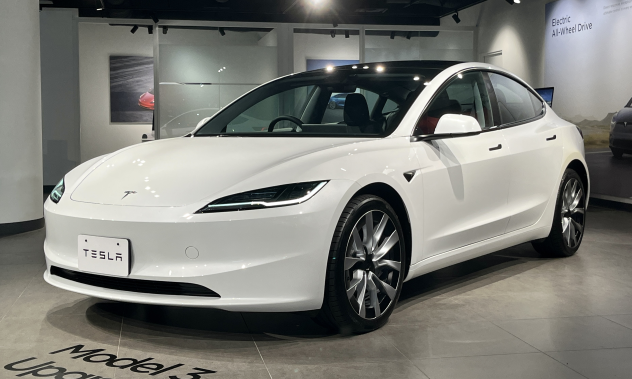
Do not apply the figures from one model year to another. Even cars carrying the same Dual Motor badge may use different battery packs and factory revisions.
Tesla Model 3 Long Range battery and real range
The official 750 km WLTP figure is a laboratory comparison value, not a guaranteed motorway range. Speed, temperature, wind, elevation, wheel size, tyres, load, climate use and battery health all affect the distance available. A car's average consumption on a similar route gives the most useful practical estimate.
Use this calculation: available battery energy ÷ average consumption × 100. Tesla does not publish one universal usable-capacity figure for every Long Range in its configurator, so the common claim that every Model 3 Long Range has a 75 kWh battery is inaccurate. For a used car, identify the pack and usable energy through its VIN, build data and battery diagnostics.
What is the real winter range?
Cold weather increases heating demand and can temporarily limit regenerative braking and charging speed. Tesla recommends preconditioning for about 30–45 minutes before departure, preferably while plugged in. Navigate to a DC charger using the Tesla navigation system so the car can preheat the battery. See Tesla's cold-weather guidance.
Charging a Model 3 Long Range
A European Model 3 uses Type 2 for AC charging and CCS2 for DC charging. The onboard charger accepts up to 11 kW from a 400 V three-phase supply or 7.4 kW from a 230 V single-phase supply. Premium Long Range supports up to 250 kW DC, but peak power requires a suitable battery temperature, a low starting state of charge and a sufficiently powerful station.
Browse charging stations for Tesla filtered for vehicle compatibility. For everyday charging, an 11 kW home charger is practical where the building has enough available power. Check the cable, earthing and protective equipment before installation. See TOKA's guide to charging an electric car and current charging rates.
Sources: Tesla's onboard-charger specifications and Supercharging guidance.
European Model 3 or a US import?
European cars use Type 2 and CCS2. A US-market Model 3 uses NACS and needs a compatible charging solution; the physical connector is only part of the issue because the vehicle must also support the CCS protocol. Check this in Additional Vehicle Information and complete real AC and DC charging sessions before paying for the car.
Dimensions, ground clearance and luggage space
For current Rear-Wheel Drive and Long Range variants, Tesla lists a length of 4,720 mm, width of 1,850 mm without mirrors, height of 1,440 mm, wheelbase of 2,875 mm and ground clearance of 138 mm. Total cargo volume including the front trunk is 682 litres: 594 litres behind the second row and 88 litres in the front compartment.
The 138 mm clearance demands care on rough roads, tall kerbs and packed snow. Tesla lists only 128 mm for Performance. Lift the car only at the manufacturer-approved points to protect the high-voltage battery.
Interior, infotainment and practicality
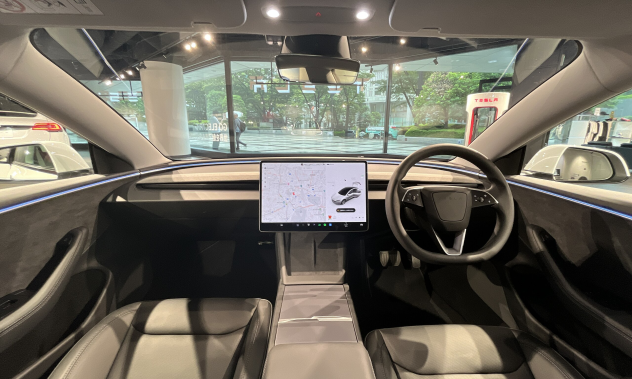
Premium Long Range seats five and has a 15.4-inch central display plus an 8-inch rear screen for selected climate and entertainment controls. Apple CarPlay and Android Auto are not supported as standard. Check Autopilot, Enhanced Autopilot and other paid functions in the specific vehicle's menu: a package name does not make the car autonomous or remove the driver's responsibility.
Used Model 3 inspection checklist
- VIN and market: confirm model year, factory, drivetrain, version and warranty region.
- Damage history: examine auction photos, body geometry, airbags and repairs to aluminium parts.
- Battery underside: look for impacts, deformation, evidence of opening, warnings and cell imbalance.
- Charging: test AC and DC, the connector or adapter, and CCS support.
- Suspension and tyres: listen for noise, check play, uneven wear and wheel alignment.
- Climate system: test air conditioning, heating, heat pump and battery preconditioning.
- Electronics: check displays, cameras, glass, Tesla-account transfer and software updates.
- Recalls: enter the VIN in Tesla VIN Recall Search.
Safety, warranty and maintenance
Model 3 earned five stars from Euro NCAP in 2025 and was named Best in Class for Large Family Cars. Its scores were 90% for adult protection, 93% for child protection, 89% for vulnerable road users and 87% for safety assistance. The rating applies to the listed RWD, Long Range RWD/AWD and Performance variants.
For European Premium Long Range models, Tesla lists an eight-year or 192,000 km battery and drive-unit warranty with at least 70% battery-capacity retention. Coverage for an imported vehicle depends on its original region and delivery date. Sources: Euro NCAP Model 3 2025 and Tesla vehicle warranty.
Tesla recommends checking brake-fluid health every four years, replacing the cabin filter every two years and rotating tyres every 10,000 km, or sooner if tread-depth difference reaches 1.5 mm. On salted roads, clean and lubricate brake calipers every year or 20,000 km. Learn more about electric-car battery life.
Tesla Model 3 Long Range pros and cons
| Advantages | Points to consider |
|---|---|
| up to 750 km WLTP for Long Range RWD | real range depends on conditions |
| DC charging at up to 250 kW | peak power is not sustained for a full session |
| low consumption and quick acceleration | low 138 mm ground clearance |
| spacious cabin and two luggage areas | no native CarPlay or Android Auto |
| strong safety rating | US imports need extra charging checks |
Which Tesla Model 3 should you choose?
- Long Range RWD — for maximum distance, motorway travel and lower consumption.
- Long Range AWD — for all-wheel drive, stronger acceleration and difficult winter conditions where the version is available.
- Model 3 RWD — for city use, home charging and a lower purchase price.
- Performance — for acceleration; allow for lower clearance, larger wheels and more expensive tyres.
- 2017–2023 Model 3 — potentially good value after full battery, body, charging and VIN checks.
If you need a taller body and more cargo space, compare the saloon with the Tesla Model Y.
Frequently asked questions
What is the range of a Tesla Model 3 Long Range?
The current European Premium Long Range RWD is rated for up to 750 km WLTP. Real range depends on speed, temperature, route, wheels, tyres and battery condition.
How fast is Model 3 Long Range from 0 to 100 km/h?
Tesla lists 5.2 seconds for the current Long Range RWD. Earlier Dual Motor AWD cars and versions from other markets differ, so check the model year and VIN.
What battery does Tesla Model 3 Long Range use?
Battery type and usable capacity vary by year, factory and version. Tesla does not publish one universal figure for all Long Range cars; a used vehicle needs VIN-based identification and diagnostics.
What is the difference between Long Range RWD and Dual Motor?
RWD uses one rear motor and prioritises efficiency. Dual Motor uses two motors and all-wheel drive for better traction, but generally consumes more energy.
What is the ground clearance of a Tesla Model 3?
The official clearance for current Rear-Wheel Drive and Long Range versions is about 138 mm. Performance is lower at about 128 mm.
How quickly can Model 3 Long Range charge?
It accepts up to 11 kW AC from a three-phase supply, while Premium Long Range supports up to 250 kW DC. Charging time depends on energy added, temperature, starting charge and station capability.
Can a US Model 3 charge in Europe?
Yes, with a compatible NACS charging solution and CCS protocol support in the specific vehicle. Always test both AC and DC charging before purchase.
Does Model 3 support Apple CarPlay?
No. Apple CarPlay and Android Auto are not supported natively; navigation, media, climate and settings use Tesla's own system.
What should I check on a US-imported Model 3?
Check auction history, body geometry, airbags, the battery casing, charging and CCS support, suspension, climate system, Tesla-account transfer, updates and VIN recalls.
Conclusion
Tesla Model 3 Long Range combines long range, rapid charging and low energy consumption. Long Range RWD is the current choice for maximum distance; with a used car, the decisive factors are VIN, market, battery health, repair history and charging compatibility. After choosing a vehicle, check the power available at home and select a compatible charger; installation answers are available in the TOKA FAQ.
This article uses official Tesla and Euro NCAP information current on the update date. Versions, range, software features and warranty terms vary by market and may change.
You may also like...
-
Innovations in charging technologies Volkswagen ID. UNYX specifications: a complete review of the new electric crossover 2025

-
Innovations in charging technologies Electric vehicle versus plug-in hybrid: choice difficulties
-
Innovations in charging technologies From Kyiv to the city of Dnipro on an electric car: how to get there and where to charge