The first electric car: history, development and modern technology
If you want an eco-friendly alternative to your gasoline-powered car that emits exhaust gases, get behind the wheel of an electric vehicle. The demand for such cars is high and growing due to economic troubles, the rising cost of gasoline and gas, and environmental issues. Many people believe the first electric car was a "child" of Elon Musk, but that's not true. The development of such technologies started long before Tesla's American breakthrough. So, how did it all begin? Let's take a closer look.
The First Prototypes of Electric Vehicles
When the word "electric car" comes to mind, we think of a modern, comfortable vehicle capable of high speeds. But the first car had nothing in common with that. The first model with an electric motor that could move was nothing like today's cars. The prototype resembled more of a skateboard with a motor. The creator of the unit was an inventor from Hungary, Ányos Jedlik. Despite its size and appearance, this invention is considered the prototype of the modern electric vehicle.
So, where did the idea of driving cars with electric motors come from? Our blog about electric motors and how they work will help you learn more about this invention. In the automotive industry at the beginning of the 19th century, there were only two alternatives to electric motors – steam engines and the first internal combustion engines. Both were very large and had minimal efficiency. Therefore, the cars were hard to handle, slow, noisy, and "dirty." Electric motors had none of these drawbacks. Even the prototypes had small weight, operated quietly, but the speed was the same.
The First Electric Car in the World
Let's return to the history of electric vehicles and find out when the first electric car appeared. The first electric carriage in the world—a two-seater car—was built between 1830-1835 (exact dates are unclear) by inventor Robert Anderson from Scotland. The main drawback of this vehicle was the disposable batteries. Because of this, it couldn’t become popular among consumers. After Anderson, several events took place around the world:
- 1853: Dutch inventors Stratyn Groningen and Christopher Becker build their version of an electric car, also a two-seater with disposable power sources.
- 1842: American blacksmith Thomas Davenport builds an electric machine powered by an electromagnetic motor. By the way, Davenport also invented the motor itself. Disposable batteries were used as energy sources.
- 1842: Robert Anderson, now living in the United States, builds another car with an electric motor. This time, he used disposable galvanic cells. With this power source, the car could run longer, but the problem of not being able to recharge the energy source remained.
The history of electric cars in the first half of the 19th century is closely connected with the problem of disposable energy sources. Due to this issue, society long did not accept electric cars as an alternative form of transport. You can learn more about the history of the first electric cars in our blog: Myths about Electric Cars.
The Development of Electric Cars in the Second Half of the 19th Century
Things changed only after nearly 50 years. In 1886, the electric car with a rechargeable battery appeared. The car was called the Flocken Elektrowagen. During this period, there was a significant increase in interest from American inventors. One of them, William Morrison, built a 6-seater electric carriage. This vehicle could travel 23 kilometers and was even presented at the 1893 Chicago exhibition. Two years later, a race was held in the United States, where the electric car won. In 1896, the first car dealer appeared, selling only electric vehicles.
The year 1898 was a turning point in the history of electric vehicles. A car with an alternative motor was able to reach speeds of up to 60 km/h. Its name was the Jeantaud Duc. European inventors also contributed later. For example, the La Jamais Content car was created, whose speedometer needle reached 100 km/h. This was a true breakthrough.
The end of the 19th century can be considered the "golden era" for electric cars. During this time, they were more popular than vehicles with internal combustion engines.
Electric Cars Fade into the Background
By the 1920s, electric cars were on par with gasoline-powered models. Even the famous friends Henry Ford and Thomas Edison planned to release an electric car to the market. However, this did not happen. Electric mobility began to lose popularity due to several factors:
- Rapid development of gasoline engines. They became more powerful, reliable, and cheaper to produce. To compare the differences between electric cars and internal combustion engine (ICE) vehicles, check out our article: Do Electric Cars Need Oil?
- Low speed and range. Electric vehicles of that time could only cover limited distances at limited speeds.
- Lack of infrastructure. At that time, there was no network of charging stations, so traveling long distances was impossible.
- Cost. The production of electric cars required more money, which affected their final price. Meanwhile, the price of gasoline vehicles was more attractive.
- Oil. The discovery of large oil fields led to a drop in gasoline prices. This made gasoline cars even more affordable.
Due to these factors, gasoline cars pushed electric cars off the market for nearly several decades.
How the World Returned to Electric Cars
Let's move to the 1960s-1970s. Oil prices were breaking records, and gasoline was in short supply. This forced people to search for alternatives—electric and hybrid technologies. Car manufacturers returned to the idea of producing vehicles powered by alternative fuels.
For example, General Motors introduced a prototype of a city electric car. American Motor Company developed electric jeeps for delivery. Even NASA worked on increasing the popularity of electric cars. In 1971, NASA's electric piloted lunar rover traveled across the Moon. However, this still didn’t make electric transportation mainstream. True popularity returned to electric vehicles a little later.
Mass Production
The end of the 20th century marked a new surge in the popularity of electric cars. This was due to:
- the global crisis;
- the rising cost of oil;
- the increasing influence of environmentalists.
Leading automotive companies were forced to consider the needs of society—compact, eco-friendly, and urban cars with electric motors. In 1996, General Motors launched the first mass-produced electric car, the EV1. Hollywood celebrities, who were following the trend of environmentalism, appreciated the vehicle and became its main drivers. At that time, it was not possible to buy the car, but it was available for leasing.
The Mitsubishi i-MiEV, also known as the Peugeot iOn or Citroen C-Zero, produced by Mitsubishi Motors, hit the market in 2009. More than 10,000 units rolled off the production line. The i-MiEV is often referred to as the first mass-produced electric model in many sources. The vehicle was adapted for city use—compact, with a small turning radius, and a range of up to 150 km. The i-MiEV also featured:
- a 49 kW (66 horsepower) motor;
- a regenerative braking system to reduce energy consumption;
- basic safety functions and systems such as ABS, stability control, and airbags.
The car was first introduced to the Japanese market and later became available in other regions. For those who want to compare early models with the current development of electric cars in the world, especially in China, we recommend our article about Chinese electric cars in Ukraine.
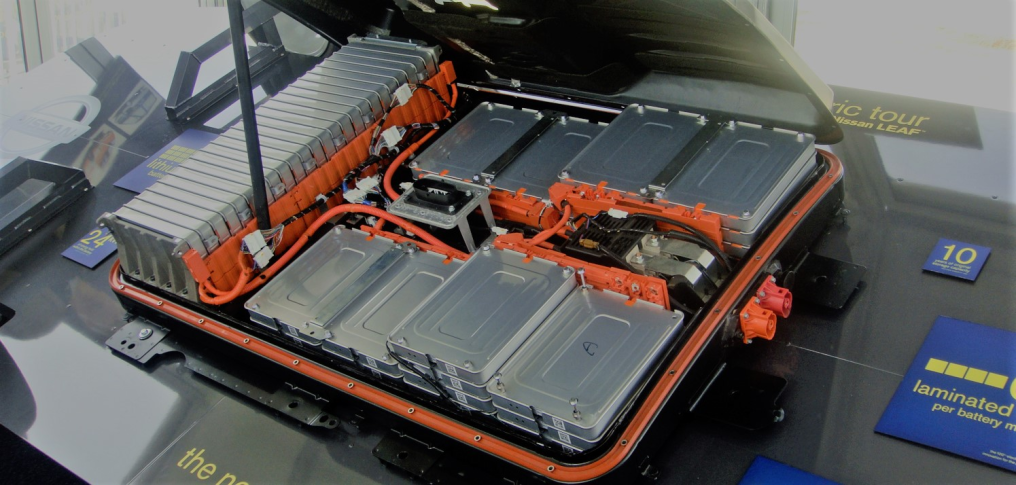
Another example of successful mass production is the 5-door hatchback Nissan Leaf. Many consider this model, released by Nissan in 2010, to be the "pioneer" in mass production and use. Three years later, the Nissan Leaf became the most popular electric car in the world.
The First Electric Car in Ukraine
The first electric vehicle in Ukraine appeared in 1895 in Odessa. This fact is confirmed by a published report in the newspaper Odeski Novyny. In the late 19th century, Odessa resident Ipolit Romanov worked on developing his own electric cars. In 1898, collaborating with the carriage factory Freze, Romanov presented the first models of an electric car and an electric bus. Romanov not only created his own version of the electric motor but also the batteries. Thanks to this, the car could reach speeds of 35-40 km/h and had a range of 60 km.
The first mass production in Ukraine was opened at the Lviv Bus Factory in the early 1950s. These were the NAMi-750 and NAMi-751 vans used for urban transportation.
Modern Mass-Produced Electric Cars
Today, the trend of electric mobility is such that most automakers can offer customers a model with an electric motor. Today, all the conditions are in place for consumers. A wide range of mass-produced vehicles with various capabilities are available:
- Tesla Model S – a powerful car with a range of up to 650 km and acceleration to 100 km/h in less than 2.5 seconds.
- Tesla Model 3 – a more affordable model compared to the S series. It has a slightly smaller range – up to 580 km.
- Nissan Leaf – one of the most popular electric cars in the world. Its main advantages are practicality and affordability.
- Chevrolet Bolt – a compact car with a comfortable interior. It has a range of up to 416 km.
- Hyundai Kona Electric – a modern crossover with a range of up to 484 km.
Range is one of the most important factors when choosing a car. Our blog: Top 7 Electric Cars by Range will help you analyze the best models.
The Future of Electric Mobility
Today, electric cars are not just a fashionable trend. Automakers continue to "invest" money into innovations. This is being done to:
- increase the range;
- improve the efficiency of electric motors;
- integrate autonomous driving.
Innovations have made electric vehicles more versatile and reliable, even in challenging conditions. Our article on using electric cars in winter will provide more details on this.
The widespread adoption of electric vehicles is supported by a developed charging infrastructure. Almost every country is implementing programs to support the construction of charging stations, including here in Ukraine. The map of charging stations in Ukraine is proof of this. This helps the popularity of electric-powered vehicles continue to grow.
A developed charging infrastructure is a critically important factor for the future of electric mobility. It ensures convenience for drivers, helps overcome the "range anxiety," and provides ecological safety. Modern businesses offer effective solutions for the development of charging infrastructure. The charging station store page will help you choose commercial and home units for electric cars.
Considering the interest and demand for electric vehicles, it can be predicted that the future of this industry is very promising. Evidence of this lies in the history of the first electric car in the world and the capabilities of modern ones. The growth of infrastructure, government support, and innovative technologies, such as bidirectional charging (V2G), all contribute to the transition to electric vehicles.