Electric vehicle battery life: lifespan, degradation and SOH
Updated September 10, 2026.
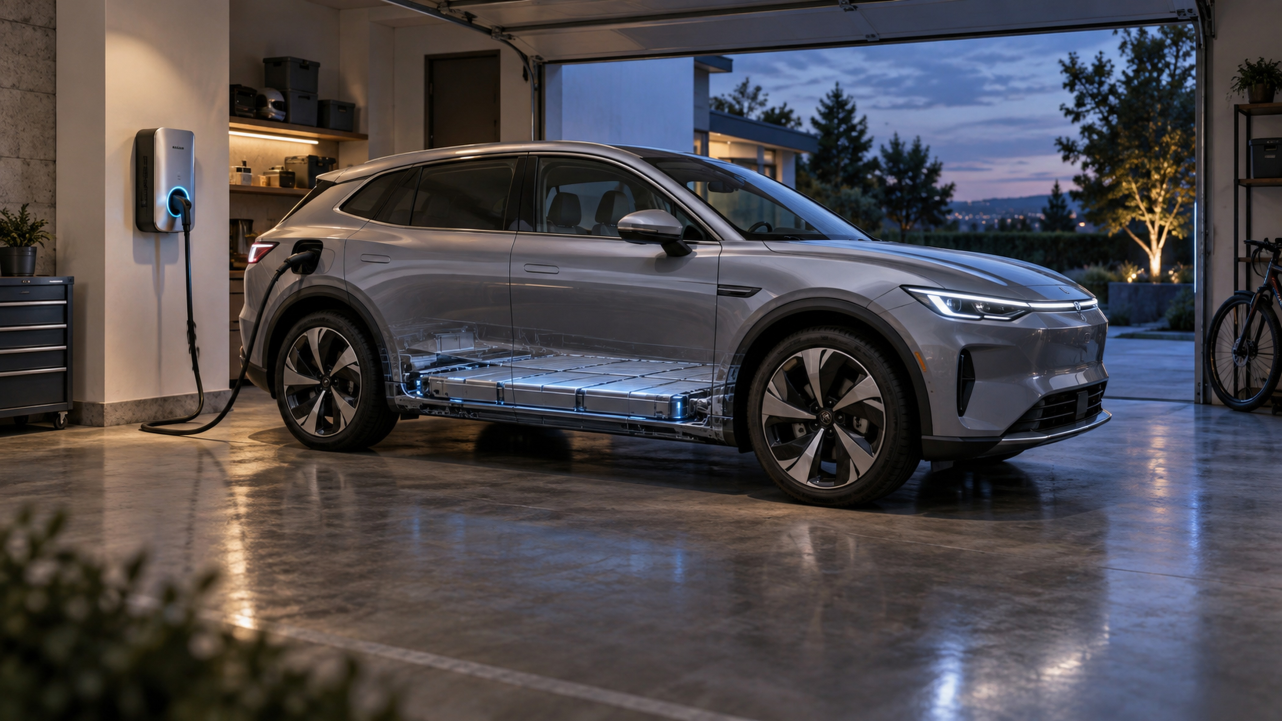
Electric vehicle battery life is usually measured in years, not in the number of plug-ins before a sudden failure. The U.S. Department of Energy’s Alternative Fuels Data Center estimates that today’s traction batteries may last about 12–15 years in moderate climates and 8–12 years in extreme climates. This is a forecast, not a universal guarantee: actual lifespan depends on cell chemistry, temperature, charging patterns, mileage, and the vehicle’s thermal-management system.
An EV battery normally ages gradually. A lower State of Health (SOH) does not automatically make the car unusable; the first practical effect is usually less available driving range. This guide explains how long electric car batteries last, what cycles and SOH mean, how to check a used EV, and how to charge without placing avoidable stress on the cells.
Key takeaways:
- battery warranty and real service life are not the same thing;
- high heat and long storage at extreme states of charge are generally unfavorable;
- a managed AC wallbox is convenient for routine charging, while DC fast charging is valuable on trips;
- when buying a used EV, an SOH report, cell balance, and fault history matter more than mileage alone.
How long does an electric car battery last?
The Alternative Fuels Data Center gives an estimated 12–15 years in moderate climates and 8–12 years in extreme climates. These ranges describe the modeled service life of modern batteries; they do not promise an identical outcome for every vehicle.
Manufacturers publish model- and market-specific warranty terms. For example, European Tesla warranty information lists eight years and either 160,000 or 192,000 km for different Model 3 and Model Y versions, with at least 70% capacity retention. Another brand, market, or model year can have different limits, so the warranty booklet for the exact vehicle is the authoritative source.
A warranty is not the same as expected battery life. The end of warranty coverage does not mean the pack needs replacement. Likewise, 70% SOH is not an automatic failure threshold: the vehicle can remain useful if its remaining range meets the owner’s needs. Replacement becomes relevant when usable range is inadequate, an internal fault is confirmed, module voltage imbalance is unsafe, or a qualified high-voltage technician recommends repair.
Cycle life should not be read as the number of times the cable was connected. One equivalent full cycle accumulates after a total of 100% of capacity has been used; two 50% discharges are roughly one full cycle. Exact cycle durability depends on the cell design, temperature, depth of discharge, and BMS strategy, so one universal number for every LFP, NMC, or NCA pack would be misleading.
Factors Affecting Electric Vehicle Battery Life
The longevity of an electric vehicle battery depends on many factors, from manufacturing technology to operating conditions. Let's look at the main factors affecting battery life.
Battery Chemistry: Li-ion, LFP, NMC, etc.
The chemical composition of the battery is one of the determining factors of its longevity. Various types of lithium-ion batteries are available on the market, each with its advantages and disadvantages:
Lithium Iron Phosphate (LFP, LiFePO4) – characterized by high thermal stability and durability:
- often offer strong cycle durability, but the exact rating comes from the cell and pack manufacturer
- Have lower energy density (less range per unit mass)
- Less susceptible to degradation during full charges to 100%
- More resistant to extreme temperatures
- Used in Tesla Model 3 Standard Range, BYD, and other Chinese electric vehicles
Nickel Manganese Cobalt (NMC) – the most common type of batteries:
- High energy density (greater range)
- cycle durability depends on cell design, temperature, and the usable state-of-charge window
- More sensitive to high temperatures and full charges
- Used in most European and American electric vehicles
Nickel Cobalt Aluminum (NCA) – used in premium Tesla models:
- Very high energy density
- Moderate thermal stability
- actual durability depends on use and the thermal-management system
- Provide maximum range
LFP packs are often selected for thermal stability and potentially strong cycle durability, while NMC and NCA can offer higher energy density. Real degradation depends on pack design and operating conditions, so comparing chemistries with one universal multiplier is misleading.
Number of Charge/Discharge Cycles
Each charge-discharge cycle gradually reduces battery capacity due to microstructural changes in the electrodes and electrolyte:
- A full cycle is considered as discharge from 100% to 0% and back charge to 100%
- Partial cycles (e.g., from 80% to 40% and back) have proportionally less impact on the battery
- When the limit number of cycles is reached, the battery does not fail but continues to operate with reduced capacity
Cycle durability for LFP, NMC, and NCA depends on more than the chemistry label. Cell design, usable operating window, temperature, and BMS strategy all matter. Laboratory cycle figures therefore should not be applied directly to every vehicle; use manufacturer documentation and measured diagnostic data for the specific model.
It's important to note that daily trips usually don't constitute a full cycle. An average daily mileage of 50-60 km typically uses about 20-30% of battery capacity, so it will take significantly more than 1000-3000 days to reach the limit number of cycles.
Temperature Operating Conditions
Temperature regime has a significant impact on the longevity of an electric vehicle battery:
High temperatures (above +30°C):
- Accelerate chemical degradation reactions inside battery elements
- Can cause damage to electrodes and destruction of the electrolyte
- Particularly dangerous in combination with high charge levels (above 80%)
- Electric vehicles with liquid battery cooling (Tesla, Volkswagen ID.4, Ford Mustang Mach-E) are better protected
Low temperatures (below -10°C):
- Increase the internal resistance of the battery, reducing available capacity
- Can lead to the formation of lithium dendrites during charging, leading to irreversible capacity loss
- Require pre-heating of the battery before charging
Optimal temperature for operation and storage of lithium-ion batteries is +15...+25°C. Modern electric vehicles are equipped with battery thermal regulation systems that maintain the optimal temperature regime:
- Liquid cooling (Tesla, Volkswagen ID, Mercedes EQ, Audi e-tron) – the most effective system, providing uniform temperature of all cells
- Air cooling (Nissan Leaf) – less effective, leading to higher battery degradation rates
- Heating systems – protect the battery from extremely low temperatures
Electric vehicles operated in regions with a moderate climate, where the temperature rarely goes beyond 0...+30°C, demonstrate the lowest battery degradation rates.
Frequency of Fast Charging (DC)
DC fast charging is not inherently a prohibited mode. The vehicle and battery-management system limit current according to battery temperature and state of charge. High power in unfavorable conditions can create more heat, while pushing high current into a cold pack can increase unwanted reactions. This is why manufacturers use battery preconditioning and taper charging power as the pack approaches full.
There is no sound universal rule that every EV must fast-charge no more than once or twice per week. A practical approach is to:
- use supported AC charging for regular overnight or workplace sessions, with correctly sized wiring and protection;
- use DC charging on trips or whenever saving time matters;
- navigate to a fast charger through the vehicle’s system in cold weather if doing so starts battery preconditioning;
- avoid leaving the car at 100% for long periods when that is unnecessary, especially in hot conditions;
- follow the exact owner’s manual because guidance for LFP and nickel-based packs can differ.
For routine charging, a managed home EV charging station makes scheduling easier. On the road, use the TOKA charging map to find available locations.
Driving Style and Load
Driving style and load patterns have a substantial impact on the lifespan of an electric vehicle battery:
Aggressive driving:
- Sudden accelerations require peak power from the battery, causing high discharge currents
- High currents lead to increased battery heating
- frequent peak loads increase heat and energy consumption
Speed regime:
- Driving at high speeds (above 110-120 km/h) increases energy consumption
- Increased energy consumption leads to deeper discharge cycles
- Optimal speed in terms of charge conservation and reducing battery load is 70-90 km/h
Frequency and depth of discharge cycles:
- Frequent deep discharges (below 20% charge) accelerate degradation
- Optimal operating mode is maintaining the charge level in the 20-80% range
- Daily short trips with small discharge cycles are least harmful to the battery
Additional battery load:
- Intensive use of the climate control system (especially heating) increases the load
- In cold weather, the range can decrease by 20-40% due to cabin heating
- Electric vehicles with heat pumps (Volkswagen ID.4, Tesla Model Y, Hyundai Ioniq 5) use energy more efficiently for heating
Recommendations for optimal driving style:
- Smooth acceleration and deceleration
- Maximum use of regenerative braking
- Maintaining moderate speeds
- Preferring ECO mode for daily trips
How to Tell When the Battery is Losing Capacity
Battery degradation in an electric vehicle is a natural and inevitable process, but it's important to recognize signs of accelerated capacity loss. Here are the main indicators to pay attention to:
1. Reduced range on a full charge
- If the full-charge range has become noticeably shorter (by 10% or more compared to new condition)
- Example: an electric vehicle that previously showed 300 km on a full charge now shows 270 km or less
2. Changes in discharge rate
- The battery starts to discharge faster, especially in the range from 20% to 0%
- Non-linear display of remaining charge (sharp drops during discharge)
3. Increased charging time
- Full charging takes longer than before
- The battery reaches 80% charge faster but charges to 100% more slowly
4. Reduced efficiency of regenerative braking
- The regeneration system recovers less energy during braking
- Reduced range in urban cycle with frequent stops
5. Diagnostic data Most modern electric vehicles have built-in battery diagnostic systems:
- State of Health (SOH) – a parameter that displays the current battery capacity relative to nominal (in percentage)
- Diagnostic Trouble Codes (DTC) – diagnostic error codes related to the battery management system
Tools for checking battery condition:
- Electric vehicle's onboard computer (in some models)
- Dealer service software
- Special OBD adapters with applications (e.g., Leaf Spy for Nissan Leaf)
Objective assessment of battery condition: The most accurate method for determining battery condition is conducting a Battery Capacity Test (BCT), which includes:
- Fully charging the battery to 100%
- Controlled discharge to a low level (usually 2-5%)
- Measuring the actually used capacity and comparing it with the nominal
It's important to note that some capacity reduction in the first years of operation (up to 10%) is considered normal. Cause for concern arises if the battery loses more than 20-25% capacity in the first 3-4 years with average mileage.
How to check EV battery SOH before buying
SOH estimates the pack’s remaining condition relative to its original characteristics. A single percentage shown by a dashboard or third-party app is not the complete picture: manufacturers calculate SOH differently, and the estimate may change after BMS updates, balancing, or calibration.
Before buying a used electric vehicle:
- request a high-voltage system inspection from a workshop familiar with that make and model;
- check available energy, voltage spread between cells or modules, temperature sensors, and stored fault codes;
- compare displayed range with temperature, driving style, and actual energy consumption rather than only the new-car rating;
- confirm remaining factory warranty and the conditions under which capacity loss qualifies for a claim;
- inspect the underbody and battery enclosure for evidence of collision or impact damage;
- complete a test drive over a known distance and look for unexpected jumps in state of charge.
The strongest assessment combines SOH, measured usable kWh, cell balance, BMS errors, temperature data, and vehicle behavior under load. Only qualified technicians should open or repair a high-voltage battery.
How to Extend Electric Vehicle Battery Life
Proper operating and maintenance practices can significantly extend the lifespan of your electric vehicle's battery. Here are the most effective recommendations:
1. Optimal charge range
- Try to maintain the charge level within 20-80%
- Avoid both full discharge (below 10%) and prolonged storage at 100% charge
- Charge to 100% only before long trips
- For electric vehicles with LFP batteries (some Tesla Model 3, BYD models), periodic full charging is recommended for calibrating the battery management system
2. Optimizing the charging process
- Prefer slow AC charging for everyday use
- Use fast charging (DC) moderately, predominantly during long trips
- allow the vehicle and BMS to manage the power the battery can safely accept
- Plan charging so as not to leave the car for long periods with a fully charged battery
3. Temperature control
- When possible, park the car in the shade or in a garage, especially in hot weather
- Use pre-conditioning of the cabin during charging
- In extremely cold weather, try not to leave the electric vehicle with a low charge level
- For prolonged parking in hot weather, choose battery storage mode (if available)
4. Driving style
- Practice smooth acceleration and deceleration
- Maximize the use of regenerative braking
- Avoid prolonged driving at maximum speeds
- Prefer ECO mode for daily trips
5. Long-term storage
- For long-term storage (more than a month), leave the battery charged at approximately 50-60%
- Periodically check the charge level (approximately once a month)
- If possible, connect the vehicle to the grid to maintain an optimal charge level
- Avoid storage in extreme temperature conditions
6. Regular maintenance
- Follow manufacturer recommendations for maintaining the battery cooling/heating system
- Update the electric vehicle's software – manufacturers often release updates that optimize battery management
- Conduct periodic diagnostics of battery condition
These recommendations are particularly important for electric vehicles with air-cooled batteries (e.g., Nissan Leaf), which are more sensitive to operating conditions.
What to Do If the Battery is Worn Out
If your electric vehicle's battery has significantly degraded (loss of more than 30% of original capacity), you have several options:
1. Continue operation
- If the reduced range is sufficient for your daily trips
- The battery will continue to function, albeit with lower capacity
- Additional advantage: less load on the degraded battery may slow further capacity loss
2. Replace the battery or a module
- Check the warranty, service campaigns, and the possibility of repairing an individual module first.
- Cost depends on the model, capacity, whether the pack is new or refurbished, logistics, BMS programming, and labor; universal price lists become outdated quickly.
- Request a written diagnosis, itemized estimate, proof of battery origin, and a warranty for the work.
- Do not install an incompatible pack: the high-voltage system, cooling, mountings, and software must match the vehicle.
3. Replace individual modules or cells
- In many cases, degradation affects the battery unevenly
- Replacing only problematic modules significantly reduces cost
- Requires a highly qualified specialist with experience working with high-voltage batteries
- Not suitable for all electric vehicle models
4. Install a reconditioned (remanufactured) battery
- cost and remaining life depend on pack origin, diagnostics, and the refurbisher's warranty
- Reconditioned batteries usually have a limited warranty
- It's important to choose proven suppliers with good reputation
5. Battery upgrade
- Upgrade kits with increased capacity are available for some models
- For example, kits up to 40-62 kWh are available for first-generation Nissan Leaf (24 kWh)
- Offers improved characteristics compared to the original battery
- Cost is often comparable to replacing with a similar new battery
6. "Second life" battery use
- Batteries with capacity insufficient for an electric vehicle can be used for stationary energy storage
- Possible to sell the old battery to companies involved in secondary use
- Partial compensation for the cost of a new battery
Important points when replacing a battery:
- Always check if replacement is covered by the manufacturer's warranty
- Consider the residual value of the vehicle – sometimes it's more economically feasible to sell the electric vehicle with the old battery and purchase a new one
- After battery replacement, calibration of the Battery Management System (BMS) may be required
- When installing a non-original battery, ensure it's compatible with your electric vehicle's safety systems
When choosing a solution, it's important to compare the cost of replacing or reconditioning the battery with the expected residual value of the vehicle and the planned period of further operation.
Conclusion
An electric vehicle battery does not normally fail as soon as it reaches a certain age; it gradually loses usable capacity. The 12–15 year estimate for moderate climates is useful for planning, but the condition of a specific car should be judged through SOH, measured usable kWh, cell balance, BMS faults, temperature data, and operating history.
For daily use, avoid unnecessary long storage at extreme states of charge, do not force high-current charging into a cold pack against the vehicle’s guidance, and use AC or DC according to the trip. Before buying a used EV, obtain a qualified battery inspection and verify warranty terms for the VIN, market, and model year.
For predictable daily charging, compare 7–22 kW EV charging stations with the capabilities of the vehicle’s onboard charger.
Frequently Asked Questions
How many years does an EV battery last?
The Alternative Fuels Data Center estimates about 12–15 years in moderate climates and 8–12 years in extreme climates. The condition of an individual pack still depends on model, chemistry, temperature, and use.
What does 70% SOH mean?
It estimates that the battery retains about 70% of its original energy-storage capability according to that BMS methodology. It is not an automatic failure, but range will be lower; repair decisions require diagnosis.
Does DC fast charging damage an EV battery?
DC charging is an intended vehicle function. Additional stress is more likely with high heat, a cold pack, or extended time at a high state of charge. Use preconditioning where available and follow the manufacturer’s instructions.
When should an EV battery be replaced?
Replacement is based on inadequate usable range, a confirmed fault, unsafe module imbalance, or a qualified technician’s recommendation—not age or one SOH reading alone. Check warranty coverage and module-level repair options first.
How do you check a used EV battery?
Review SOH, measured usable energy, cell balance, BMS fault history, enclosure condition, and a controlled test drive. A dashboard range estimate alone is not a battery-health diagnosis.
You may also like...
-
Innovations in charging technologies Using an electric car in winter: Features of operating an electric car in frost


-
Innovations in charging technologies Best Electric Cars 2026: Model Ranking and Buying Guide
-
Innovations in charging technologies Tesla Model X Specifications: Full Review of the Premium Electric Crossover