How to Choose a Compatible Nissan LEAF Charger
Updated September 10, 2026.
Choose a Nissan LEAF charger by the vehicle connector, onboard AC charging capability and electrical supply. Many imported cars need Type 1 / J1772, while European second-generation cars use Type 2. Earlier generations use a separate CHAdeMO port for DC fast charging when fitted. A label saying “for Nissan LEAF” is therefore not enough to establish compatibility.
This guide covers home charging equipment, cables for public stations and common reasons for slow charging. It focuses on used first- and second-generation LEAF models, with the new 2026 generation discussed separately. The charging times below are reference figures, not results of a TOKA vehicle test.
Identify the LEAF generation and charging inlet first
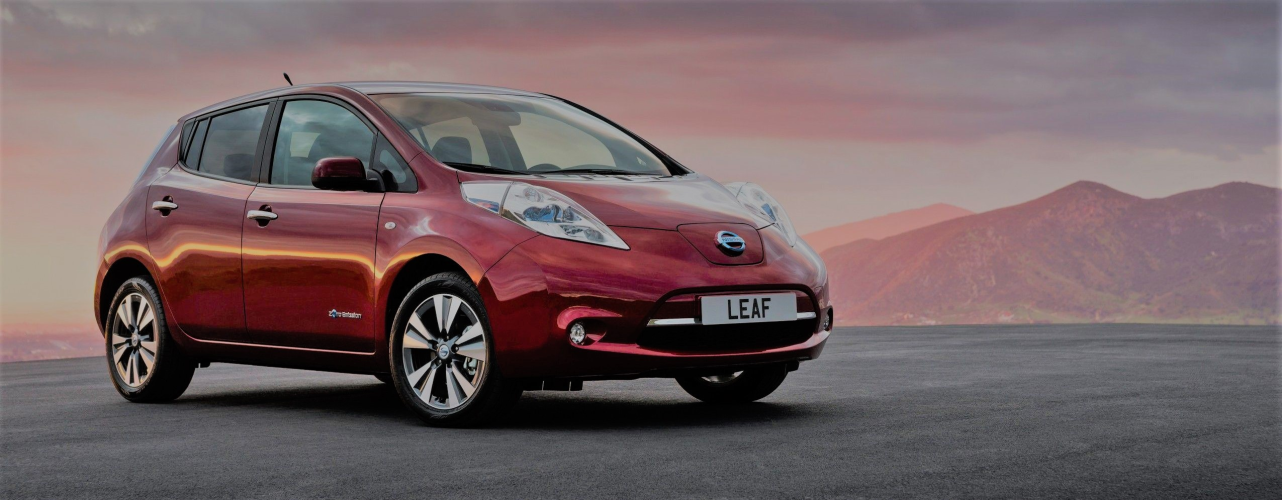
The original LEAF was unveiled in 2009, with production sales starting in 2010. The second generation was introduced in 2017. The familiar five-door hatchback comes in different specifications and with different batteries, so its original market and model year matter more than a similar-looking body. Registration year is not always the same as model year.
| Version | Normal AC charging | DC fast charging |
|---|---|---|
| First generation, including common US and Japanese imports | Type 1 / SAE J1772 | CHAdeMO when equipped |
| Second generation for Europe | Type 2 | CHAdeMO |
| Second generation from the US or Japan | Type 1 / SAE J1772 | CHAdeMO; check specification |
The European Type 2 and CHAdeMO combination is confirmed in Nissan UK's connector compatibility table. Make the final decision using the actual inlet, VIN and owner's manual, especially if the vehicle has been repaired or converted.
What is the difference between Type 1, Type 2 and CHAdeMO?
With AC charging, the station supplies alternating current and the onboard charger converts it into direct current for the battery. CHAdeMO is DC charging: conversion takes place in the fast-charging station. The onboard AC charger's limit is not the limit for CHAdeMO charging power.
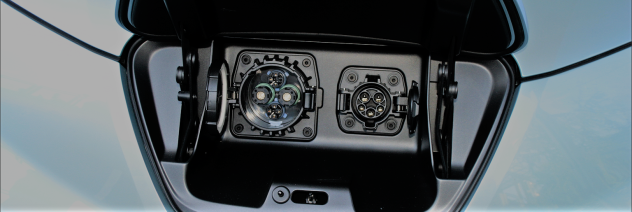
Many LEAF models have both inlets under the front charging flap. Do not rely only on descriptions such as “left” or “right”; look at the shape and markings. An ordinary adapter cannot replace a missing fast-charging inlet and its associated equipment.
An important difference for the 2026 LEAF
Do not apply the older connector arrangement to every new car named LEAF. Nissan lists Type 2 and CCS for the new generation in Europe, while the US-market 2026 LEAF has J1772 for AC and NACS for DC. Check the specific market and model year before ordering equipment for a newly imported vehicle.
Three charging options: outlet, wallbox and fast charger
A portable EVSE is a charging lead with a control and protection unit, intended for an outlet permitted by its manufacturer. It is not an ordinary extension cable. It can suit a modest daily driving requirement when the electrical circuit has been checked and the car can remain parked long enough.
A fixed AC wallbox suits regular charging at home, work or a parking facility. It may have an attached cable or a socket for a separate lead. Choose it for the available electrical capacity and the particular LEAF, not simply for the highest kilowatt rating in a catalogue.
A CHAdeMO station provides faster replenishment and is useful on journeys. Some first-generation cars support it too: the 2013 Nissan LEAF quick-reference guide explicitly describes Quick Charge for equipped vehicles. It is incorrect to say that all first-generation LEAF models lack fast charging.
The name SuperCharge is not a substitute for a connector standard. A LEAF with CHAdeMO cannot automatically use a CCS station or Tesla Supercharger. Verify compatibility with the particular equipment. Complex active adapters should not be treated as equivalent to a simple Type 2-to-Type 1 AC cable.
How much charger power does a Nissan LEAF need?
Earlier LEAF generations have different onboard AC chargers, including units around 3.3 and 6.6 kW. Verify the exact specification of the car. If it accepts only about 3.3 kW, buying a more powerful wallbox alone will not double the charging speed.
For a typical single-phase connection, power is approximately voltage multiplied by current: 230 V × 16 A ≈ 3.7 kW. That describes the supply's capability, not guaranteed power reaching the battery. The actual result is limited by the car, cable, station and installation settings, with some energy lost during conversion.
An 11 kW three-phase station will not necessarily supply a single-phase LEAF with 6.6 kW. In a typical 11 kW configuration, power is shared across three phases at 16 A each. Check the available current per phase instead of only the total station rating. A Type 2 connector does not make the car a three-phase vehicle either.
Start your shortlist with charging equipment matched to Nissan LEAF. For a car with Type 1, one option to assess is the TOKA SW107-C1 station with a J1772 cable. Its product page lists one port and a 7 kW rating. Confirm its suitability for your installation and vehicle before purchasing. A European LEAF with Type 2 requires the appropriate connector version instead.
How long does it take to charge a Nissan LEAF?
There is no universal “eight hours for a full charge” rule. Battery capacity, starting charge level, onboard power and temperature change the duration. The following examples come from the official US-market 2025 LEAF brochure; they are not standard times for every model year.
| US 2025 version | AC 240 V to 100% | DC 50 kW to 80% |
|---|---|---|
| LEAF S, 40 kWh battery | 7 hours 45 minutes | Approximately 40 minutes |
| LEAF SV PLUS, 60 kWh battery | Approximately 11 hours | Approximately 60 minutes |
A full AC charge and a DC session ending at 80% have different finishing points. A household outlet supplying less power will take longer. Do not transfer these figures automatically to early 24 or 30 kWh batteries, or to other specifications and markets.
For daily use, calculate the energy you actually need to replace. For example, a hypothetical 10 kWh at an actual 3.3 kW takes about three hours before losses. If you replace that amount overnight, the highest-power station may not be necessary. Add a time reserve when planning a full charge or a longer journey, rather than treating the arithmetic as a guaranteed completion time.
Can a US LEAF portable charger be connected to 230 V?
Read the Input rating on the EVSE itself first. The car's American connector and the portable charger's permitted input voltage are different issues. Some equipment is rated only for 120 V, while other versions also support 240 V. It is wrong to assume that every American charger is unsuitable, or that every one will work safely in Ukraine.
- If the device is marked only 120 V, do not connect it to a 230 V supply through a plug adapter.
- If a wider range is specified, check frequency, current, connection method and protection requirements against its instructions.
- If the label is unreadable or documentation is missing, do not experiment with the power supply.
- Changing a plug is not a complete conversion: it does not change the electronics' voltage rating or establish that protective functions work correctly.
The safe route is compatible, documented equipment and a circuit checked by an electrician. Do not use improvised extensions, multiway adapters or an earth bypass. Stop charging and seek qualified assistance if the outlet overheats, a burning smell appears or a protection fault is reported. Compare current prices together with warranty, installation and specifications, rather than relying on old prices quoted in articles.
Charging on a journey and troubleshooting a slow session
Before setting off, check connector availability along your LEAF route, access conditions, station status and the tariff. For older generations, look specifically for CHAdeMO if you need fast charging. Plan a backup station: a map marker does not guarantee a free, working connector when you arrive.
During a slow AC session, check the current limit, timer, cable and available station power. During DC charging, consider battery temperature and state of charge. Nissan warns that successive fast charges can take longer when temperature protection is activated. Do not try to bypass these limits.
In winter, heating and temperature affect both energy consumption and session length. A lower range estimate on the dashboard alone does not establish a fault. If the change persists under comparable conditions, consider checking LEAF battery SOH and capacity loss. A charging-speed complaint and battery wear may require different checks rather than the same automatic diagnosis.
Frequently Asked Questions
What charger does a Nissan LEAF need?
For home AC charging, choose equipment with the actual vehicle connector, the correct input voltage and a current suitable for the electrical circuit. Check Type 1 or Type 2, model year and onboard power before ordering.
Can a first-generation LEAF charge through CHAdeMO?
Yes, if the vehicle has the appropriate inlet and equipment. Check the individual car rather than drawing a conclusion solely from its generation.
Will a Type 2-to-Type 1 cable work?
It can connect an AC station with a Type 2 socket to a car with Type 1 when the electrical ratings are suitable. It cannot convert CCS or CHAdeMO into another fast-charging standard.
Why does the LEAF not use the station's full power?
The station rating is only the supply's upper limit. Onboard charging capability, current per phase, cable, settings and battery condition also limit speed. Compare figures for the same charging mode: AC or DC.
You may also like...
-
Innovations in charging technologies Electric vehicle versus plug-in hybrid: choice difficulties

-
Innovations in charging technologies Customs Clearance of Electric Vehicles in Ukraine 2025 – What's Changed?
-
Innovations in charging technologies TOP Chinese electric vehicles in Ukraine