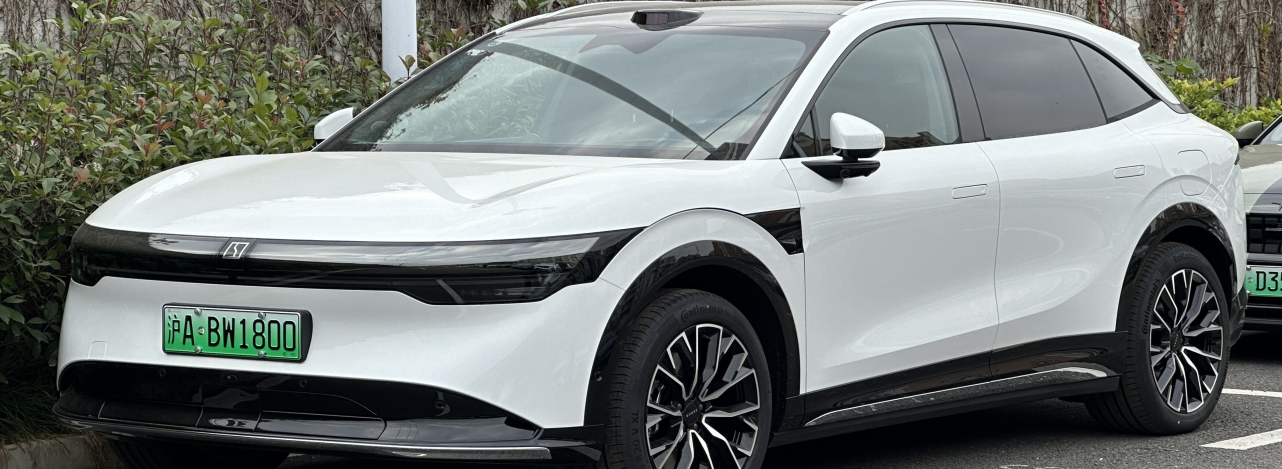
Zeekr 7X Review: Specifications, Real-World Range and Charging
Updated 3 November 2026.
The Zeekr 7X is an electric family SUV whose specifications depend substantially on market, model year and trim. Buyers in Ukraine need to distinguish an early Chinese-market car from a European version and the update presented in autumn 2026. One model name does not guarantee the same battery, charging port, power output or software. This review explains how to compare versions, assess real-world range and plan charging without expecting a record result at every station.
The model’s appeal for travelling combines a spacious cabin with fast DC charging under suitable conditions. However, the route and available equipment determine how useful that combination will be in everyday ownership. Check the actual vehicle before buying rather than choosing a charging station solely around the highest number in an advertisement. This is a specification and ownership guide, not a claim that TOKA has conducted its own road test.
Zeekr 7X positioning and market differences
The 7X occupies the family SUV role in Zeekr’s range. Compared with the compact Zeekr X, it addresses a different use case, placing more emphasis on rear passengers, luggage and longer trips. It can reasonably be compared with a Tesla Model Y and other electric crossovers of similar format. The Zeekr 9X has a hybrid powertrain, so its combined fuel-and-battery range is not directly comparable with the battery-only 7X’s electric range.
An advertisement for a “2026 Zeekr 7X” might refer to the calendar year of production, a Chinese model year or the European update. Request the VIN, build date, trim name and intended-market specification. Record those details in the agreement. Without them, a comparison of 75 versus 100 kWh is incomplete: motors, electronics and feature support may also change alongside the battery.
Zeekr’s European update announcement dated 12 October 2026 describes three variants. First German customer deliveries are planned for the first quarter of 2027. This is a regional manufacturer schedule rather than confirmation that every version is available from a Ukrainian showroom. An imported car already offered locally may belong to a different specification altogether.
Specifications of the updated European 7X
The table concerns the October European announcement specifically. Its WLTP ranges are preliminary, and charging times require suitable conditions. The earlier Chinese 605/780/705 km CLTC figures from the previous article have not been placed in these columns: they concern a different set of versions and a different test procedure.
| Parameter | Core RWD | Long Range RWD | Privilege AWD |
|---|---|---|---|
| Battery | 75 kWh LFP | 100 kWh NMC | 100 kWh NMC |
| Power | 335 kW | 335 kW | 500 kW |
| Preliminary WLTP range, up to | 482 km | 627 km | 545 km |
| Claimed DC 10–80% | 10.5 min | 15 min | 15 min |
These figures do not describe every car called 7X. For a used vehicle or private import, consult its own documentation rather than automatically applying the newest table. Establish whether a battery capacity is nominal or usable before calculating range or charging energy. Confusing those definitions can make an otherwise correct calculation misleading.
Dimensions and everyday practicality
This is an SUV in roughly the 4.8-metre class, but exact measurements should be checked for the relevant body and market. Measure your garage entrance and the space needed to open the doors before purchasing. Width including mirrors matters in a narrow parking bay; height matters in an underground garage. Different bumpers or wheel packages can affect convenience even when catalogue dimensions look similar.
Try the luggage compartment with your own pushchair, suitcases or sports equipment. Litres measured using different methods are not always directly comparable. Check the loading lip, whether the floor is level with the seats folded and whether the charging cable remains accessible when the boot is full. For a family car, these observations can be more useful than a small advantage in advertised luggage volume.
Platform, battery types and performance
What does an 800-volt architecture provide?
A high-voltage system helps transfer high power with the appropriate current and equipment capability. However, an 800-volt description does not mean the battery remains at one constant voltage at every charge level. Nor does it guarantee an absence of heating or wear. The battery-management system monitors conditions and can restrict charging power when necessary.
The vehicle’s maximum charging power and a station’s advertised power are separate limits. Voltage range, cable current and power sharing between connectors also matter. If a station shares its available capacity with another car, the actual rate may change during the session. Look at the parameters of the specific connection rather than assuming a large number on the cabinet will always reach the battery.
LFP and NMC: choosing a battery
In the European announcement above, the smaller battery uses LFP chemistry and the larger packs use NMC. Chemistry affects performance but does not replace evaluating the complete system. A Golden Battery or Qilin label alone cannot establish the remaining life of a particular used car. Usage history, temperature management, module condition and documented warranty terms all matter.
Check the recommended daily charge level and any instructions about periodic full charging in the manual for your version. Do not impose a single 20–80% routine on every battery without exception. Storage, prolonged parking and winter use may have separate recommendations. Software updates can also change the guidance shown by the vehicle, so old forum advice should be checked against current instructions.
Rear-wheel drive versus all-wheel drive
RWD and AWD place different emphasis on consumption, traction, performance and price. All-wheel drive does not automatically shorten braking distances on a slippery road. Appropriate winter tyres remain necessary, and the driver must account for the vehicle’s mass. A 0–100 km/h figure helps compare acceleration; it is not a rating of safety, ride comfort or behaviour on poor surfaces.
Do not apply the earlier 422/646 PS figures and 3.8-second acceleration claim to every 2026 vehicle. The updated European Privilege is advertised at 3.7 seconds, while another car’s documentation may show a different specification. For an ownership decision, establish whether maximum acceleration is important to you or whether range and wheel replacement costs matter more. Compare like-for-like versions rather than selecting the strongest figure from each market.
Zeekr 7X real-world range
CLTC and WLTP cannot be treated as equivalent. A Chinese claim of up to 780 km does not prove a real 600 km in Ukraine, and a European range figure does not guarantee the same result on a winter motorway. There is no single percentage that converts every certified figure into real driving range. Speed, temperature, wind, rain, elevation, tyres and load all influence consumption.
A practical estimate divides usable energy in kWh by consumption in kWh per 100 km and multiplies by 100. An illustrative 70 kWh at 20 kWh/100 km gives 350 km; at 25 kWh/100 km it gives 280 km. These are arithmetic examples, not measurements of a particular 7X. Keep an additional route reserve rather than planning to reach a charger with an empty battery.
During a test drive, reset the trip display and observe consumption over a meaningful distance in your normal driving conditions. A short urban journey with a warm battery does not reproduce winter motorway travel. A used car needs a battery assessment, not just a photograph of predicted kilometres on the dashboard. Available energy and module diagnostics provide different information from the range estimate.
Charging time: peak power versus average power
A claimed 10–80% interval is not a full 0–100% charge. Power normally tapers at higher charge levels, so extending the time linearly to 100% is incorrect. Starting charge, temperature, battery preparation and charger capability affect the result. Before travelling, find out how preparation for rapid charging works in your version and whether route navigation is involved.
Average power can be estimated from energy received and elapsed time. For example, 50 kWh in 20 minutes corresponds to an average of 150 kW. This is neither a 7X test result nor a TOKA tariff; it explains the difference between an instantaneous peak and the overall session. One photograph showing high power does not establish that the complete charge occurred at that rate.
A promise that every version will charge in 15 minutes at any 200–250 kW station ignores required energy and the charging curve. A fast-charging car still operates within the connected equipment’s limits. For a long journey, compare total travel time, detours and waiting rather than the best laboratory record alone. Connecting, authorising and reaching the parking space also take time.
Cabin comfort and infotainment
Assess the 7X from both the driving seat and the second row. Check thigh support, legroom, ventilation, charging sockets and access with a child seat fitted. Seeing a car in a showroom does not replace driving it over an uneven road: wheel size and suspension settings can make a substantial difference. Bring regular passengers if possible rather than relying solely on a sales description.

The second row of the Zeekr 7X. Official Zeekr Europe photograph; upholstery depends on specification.
The centre display, instrument panel and head-up display are different devices. Unverified screen sizes from a Chinese description should not be transferred to a European car. Try changing the temperature, finding a charging point and activating heating without a lengthy menu search. The convenience of those tasks in daily driving matters more than screen size alone.
For an imported vehicle, check language options, mapping, connectivity, the application and transfer of the vehicle account to the new owner. A feature demonstrated using the seller’s connection does not prove it will work with your phone and SIM card. Establish who installs official updates and whether changing region affects important functions. Obtain support terms in writing where possible.
Air suspension and ground clearance
Air suspension depends on version; the manufacturer’s European comparison lists it for the Privilege AWD. Do not assume it is fitted to every 7X. Raising the body may involve speed or mode restrictions, so maximum clearance is not necessarily the height maintained on a motorway. Check the operating instructions for the actual car.
On a used vehicle, inspect compressor operation, whether the car sits level after parking and how it switches between settings. Unusual noises or slow lifting warrant diagnosis. Compare ride comfort at similar speeds and correct tyre pressures. A high seating position and a rough-road setting do not turn a family crossover into an unrestricted off-road vehicle.
Driver assistance and safety
ADAS assists the driver but does not remove responsibility for the road. A list of cameras or a count of functions is not proof of autonomous driving. Check adaptive cruise control, lane support, emergency braking and parking assistance on the specific vehicle. Some functions depend on software, region or a compatible phone. Learn how to disengage assistance safely before relying on it.
The 2025 Euro NCAP assessment of the Zeekr 7X provides a separate safety reference. The tested model and the rating’s applicability do not mean every damaged imported example has equivalent functioning protection systems. Following repairs, airbags, seatbelts, sensors and camera calibration deserve particular attention. A badge or test result cannot replace assessing the condition of the car being purchased.
Charging ports: European specification or Chinese import?
Manufacturing country alone does not determine the charging port; intended market matters. Check a European version for Type 2 AC and CCS2 DC, and a Chinese-market version for GB/T. Inspect the charging flap, read the documentation and establish whether a conversion has been performed. A connector’s physical appearance does not confirm every electrical or software parameter.
A passive adapter cannot translate every DC protocol into another. An active converter requires confirmed compatibility with the specific vehicle, appropriate voltage and current ratings and compliance with the supplier’s operating instructions. Test charging before paying for the car. When choosing your own equipment, explore DC stations filtered for a GB/T port and compare their parameters with the vehicle and installation supply.
Charging a Zeekr 7X with TOKA and at home
Planning rapid charging
Use the map of charging points for your 7X route to check connector type, power, location access and session terms. Not every TOKA point has every connector or the power required for a manufacturer’s record time. Prepare a backup station and enough energy to reach it before a longer journey. Availability can change after the route is planned.
Check the price before starting. An estimate uses billable energy and the tariff, with any other expressly listed charges added where applicable. Do not use the whole battery’s capacity when replenishing only part of it. Differences between the car’s display and the station’s energy reading may reflect system consumption and measurement conditions. Keep the session record if you need to compare costs later.
Home and commercial equipment
At home, available power, phases, protection and the car’s onboard AC charger matter. Selecting equipment for overnight home charging starts with a professional assessment of the electrical installation. Maximum power is not necessary for every owner: reliably replacing daily energy use during parking can be the more relevant objective.
For an office or hotel, compare parking duration, user numbers and load-management capability. Short motorway stops require a different approach from overnight parking. A commercial project also needs assessment of the connection, access, metering and maintenance. Installing a fast charger by itself does not guarantee customer utilisation. Match the equipment to actual parking patterns and available electrical capacity.
What to check before buying a Zeekr 7X
Clarify the warranty process separately: where the car must be taken, who pays for diagnosis and where replacement parts come from. European warranty advertising does not automatically become a service contract for a privately imported Chinese-market vehicle. Check territory, scheduled servicing requirements, exclusions and records of previous work. A nearby workshop does not necessarily have access to every factory procedure.
Build your own weekly scenario: commuting distance, overnight parking, frequency of long trips and time available for charging. If charging at home is unavailable, try several public locations at different times. The benefit of a larger battery depends on that routine; extra capacity does not remove the need for functioning, accessible charging equipment.
Collect the specification, written warranty terms and an ownership budget. Include insurance, tyres, charging equipment, installation and any necessary adaptation alongside the purchase price. For an import, verify documentation and history; for a new order, confirm delivery timing and refund conditions. An oral promise should not be the only evidence supporting a deposit.
During the inspection, test charging, the application, heating, suspension and every supplied key. Arrange independent battery and body checks for a used car. Owner reviews are useful for identifying questions, but someone’s experience with another market version may not apply to your trim. Confirm the equipment list and account-transfer process before collection rather than discovering a missing function afterwards.
Frequently asked questions
How does the 7X differ from the Zeekr X and 9X?
The 7X is a battery-electric family SUV, the X is more compact and the 9X has a hybrid powertrain. Compare space, equipment and propulsion type rather than the largest advertised range number.
Does every 7X charge in ten minutes?
No. A claimed result concerns a particular battery, charge interval and conditions. A different station or a cold battery can produce a longer session.
What is the Zeekr 7X’s real-world range in Ukraine?
There is no single result. Version, usable energy, consumption and driving conditions are needed. A 780 km CLTC claim cannot automatically become a guaranteed real-world 600 km.
Will I need an adapter for CCS2?
That depends on the actual car’s market specification and port. European and Chinese versions should not be assumed identical. For DC charging, check protocol and converter support, not just plug shape.
Can I charge the 7X at home?
Yes, with compatible AC equipment and a suitable electrical installation. Actual power is limited by the car, charging station and available supply.
Do all versions have air suspension and identical ADAS?
No. Equipment depends on trim, market and update. Verify the actual car’s functions; driver assistance does not mean full autonomy.
How does the 7X compare with a Tesla Model Y?
Compare specific versions for space, suspension, consumption, charging routes, service and price. One peak charging figure cannot determine the convenience of the entire vehicle.