Electric Cars with the Highest Range: Models and Practical Comparisons
Updated 3 November 2026.
Electric cars with the highest range need to be compared using the same test procedure and clearly identified specifications. Among the European examples checked for this guide, the Lucid Air Grand Touring offers up to 960 km WLTP, the updated Mercedes-Benz EQS 450+ up to 926 km, and the Audi A6 Sportback e-tron performance up to 756 km. These are manufacturer figures for particular versions, rather than a promise of the same distance on every road in Ukraine.
This guide retains all ten models from the earlier selection: EQS, A6 e-tron, ZEEKR 001, IONIQ 6, Song Plus EV, Q4 e-tron, ID. UNYX, ID.4 CROZZ, Model Y and EV9. Lucid is added as a relevant reference point. This is a practical selection, rather than a complete worldwide ranking. Chinese-market CLTC figures are considered separately, while price, availability and warranty in Ukraine must be checked for the actual vehicle offered.
Electric car range rankings: how to compare them
A useful electric cars range list identifies the market, publication date, test cycle, version, drive layout and wheels. Taking the highest number from one body style, comparing it with another specification of a rival, and adding the acceleration of a performance derivative produces a misleading result. A familiar model name may remain in use even after its battery, motor and charging architecture have changed substantially.
WLTP, EPA and CLTC use different procedures. Their figures are not interchangeable, and there is no single exact conversion factor that works for every vehicle. A buyer benefits from two separate comparisons: official range under one procedure, and measured consumption in conditions close to their own journeys. A winter test also describes a particular temperature, route, speed and specification. It cannot establish a fixed winter penalty for every car carrying the same badge.
The following documented WLTP examples are ordered only within this selection. Their maxima do not imply identical equipment or confirmed availability in Ukraine. Before buying, obtain the specification of the chosen car. For a used vehicle, this should be accompanied by an assessment of its present condition. A ranking of new vehicles cannot establish the usable energy remaining in an individual used battery.
- Lucid Air Grand Touring: up to 960 km WLTP on the European manufacturer page.
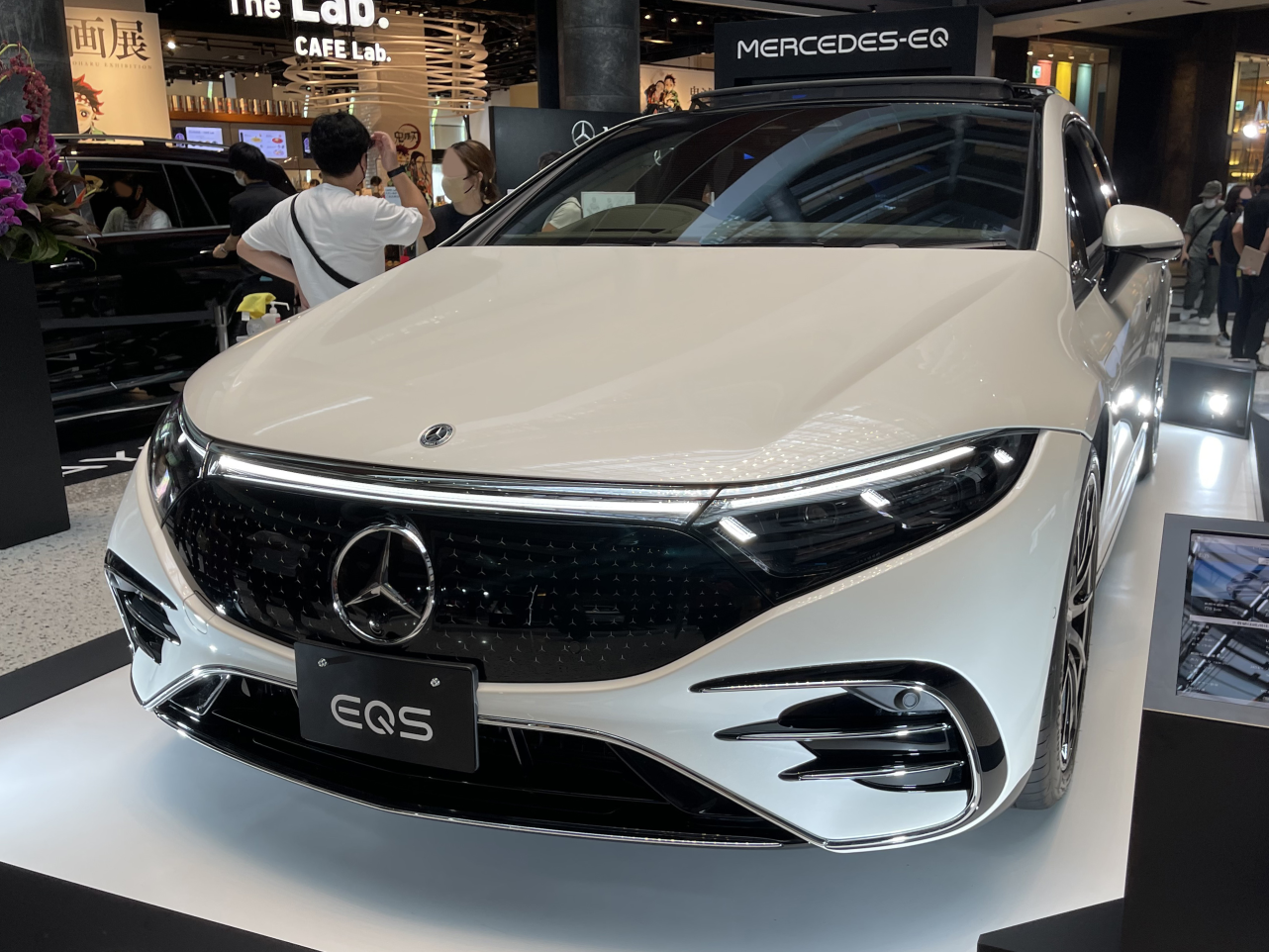
- Mercedes-Benz EQS 450+: up to 926 km WLTP for the update announced in April 2026.
- Audi A6 Sportback e-tron performance: up to 756 km WLTP in the production specification announced in 2024.
- Updated Hyundai IONIQ 6: up to 680 km WLTP for the 84 kWh RWD version with 18-inch wheels in the European press kit.
Long range EV cars and the differences that matter
Lucid Air Grand Touring: an additional reference
The European Lucid Air Grand Touring specifications show 817–960 km WLTP depending on configuration. The maximum does not apply to every Lucid Air. For an imported vehicle, establish its original market, charging connection, servicing arrangements and warranty documents. A large catalogue range cannot, by itself, solve a problem with local charging compatibility or access to replacement parts.
A specially managed single-charge record is also different from an everyday journey prediction. Consider seating, luggage, dimensions and the total ownership budget. If most trips are short, some of the benefit of a large battery may be unused while the purchase cost remains. Define the journeys the car must handle before deciding how much extra range is worth paying for.
Mercedes-Benz EQS 450+: separate the updates
The official new EQS announcement dated 13 April 2026 gives up to 926 km WLTP for the 450+. That figure should not be attached to an earlier EQS with a different battery. Combining new range with an older 107.8 kWh figure, motor rating or charging time creates a specification that may not describe any actual car.
The EQS offers a large comfort-oriented electric car format. On a used example, inspect the suspension, climate system, battery and charging operation. Large screens, Hyperscreen and individual driver assistance functions depend on equipment. See the functions you need demonstrated, rather than assuming they are standard because the car originally had a high price. Allow for the maintenance needs of the individual vehicle.
Audi A6 e-tron: production Sportback and Avant
The production Audi A6 e-tron announcement specifies up to 756 km WLTP for Sportback performance, with a 100 kWh gross and 94.9 kWh usable battery. The earlier concept is a different reference. Avant and S6 derivatives have their own figures; the longest-range performance version should not be combined with the acceleration of an S6.
For charging stops, the 800-volt architecture and the equipment available on the route both matter. Audi quotes 10–80% in 21 minutes under suitable conditions. Check battery preparation, the actual connection and accessible stations before assuming the same stop time in Ukraine. Compare body styles for passengers and luggage as well: the version with the greatest official range may not suit the things your family carries.
ZEEKR 001 YOU: CLTC is a separate comparison
The 001 is a practical fastback or shooting brake with different batteries and motor configurations. YOU without a model year and market does not identify one fixed specification. An older 675 km CLTC figure, the highest power from another update, and the shortest charging time should not automatically be assembled into a single description. Ask for documents covering the vehicle actually offered for sale.
For an import, check the charging standard, software features, account transfer and warranty terms. V2L and assistance equipment also depend on the version. Lane support and adaptive cruise control do not mean unrestricted autonomous driving. For a long trip, verified usable energy and a suitable charging curve are more informative than an isolated catalogue maximum or an unsupported promise about every available station.
Hyundai IONIQ 6: wheels and drive layout
The European press kit for the updated IONIQ 6 gives up to 680 km WLTP with an 84 kWh battery, rear-wheel drive and 18-inch wheels. Earlier 77.4 kWh cars have their own specifications. Do not apply the range of the most efficient RWD configuration to an AWD or sport-oriented version with different wheels. Read the complete specification row instead of taking a single best number from the model family.
Distinguish the rating of charging equipment from the power the vehicle can receive. A station labelled 350 kW does not prove that a particular car will continuously draw 350 kW. V2L supplies external devices within the permitted load. It does not establish that the car can power a home electrical installation without an additional compatible system. Check the adapter and instructions for the particular version.
BYD Song Plus EV: market and powertrain
Song Plus EV is battery electric, while DM-i is a separate hybrid powertrain. Their distances and energy replenishment methods should not be mixed. Trim names containing numbers such as 520 or 605 do not replace a document identifying the test cycle, battery and model year. Similar styling also does not establish that Chinese-market and export cars have the same charging ports or electrical limits.
Before paying, test AC and DC on compatible equipment, check climate and multimedia operation, and confirm account transfer. Establish who performs diagnosis and warranty repairs after import. A large catalogue range does not compensate for awkward charging or uncertain support. Where a feature is essential to the intended journey, ask for it to be demonstrated on the actual vehicle rather than a different showroom example.
Audi Q4 e-tron: SUV, Sportback and regional versions
Q4 e-tron body styles, batteries, drive layouts and model years differ. A Chinese-market CLTC value is not a European WLTP figure. An older combination of 84.8 kWh, 605 km and a particular DC rating therefore should not be treated as universal. Obtain the complete specification, and check a used vehicle by VIN and service history. The original market matters as much as the trim name.
Assess second-row space and the luggage area with the things you regularly carry. Wheels, tyres and motorway consumption affect distance between stops. Check cameras, multimedia and assistance packages individually. Equipment fitted to a demonstration vehicle does not establish the equipment on every listing. A practical assessment of seating and controls can prevent choosing a car that wins on paper but is inconvenient for daily use.
Volkswagen ID. UNYX: keep the Chinese test cycle visible
Volkswagen announced the initial 2024 rear-wheel-drive ID. UNYX with up to 621 km CLTC and a 77 kWh net battery. That is a defined launch specification for China, rather than European WLTP or a guaranteed distance on Ukrainian roads. Later updates need their own documentation. Do not add the motor output or charging specification of another model year to this historical example.
Check interface language, regional services, charging connection and account transfer before purchase. A familiar Volkswagen badge does not make a Chinese-market configuration identical to a European one. Verify the charging arrangement needed for your journeys and identify an alternative stop. A general claim that an adapter works is insufficient without the electrical parameters, communication support and confirmed compatibility of the specific vehicle and equipment.
Volkswagen ID.4 CROZZ Pro: the name is not enough
Pro across different years does not mean one unchanged battery or range. Keep Chinese CROZZ, European ID.4 and other regional versions separate. The Volkswagen ID.4 version guide explains the checks in more detail. To compare two listings, first obtain equivalent information. Otherwise, an apparent advantage may simply reflect a different market, battery definition or equipment package.
Check consumption, battery preparation, software updates and charging operation. A larger nominal battery does not necessarily deliver a longer practical distance with different wheels, battery condition or driving circumstances. Assess accident repairs and parts availability separately. A low asking price should be considered alongside confirmed work that may be needed immediately after purchase, rather than treated as the whole cost of becoming an owner.
Tesla Model Y: Long Range and Performance are different
Model Y has different years, drive layouts and supply markets. Performance acceleration should not be assigned to every Long Range AWD, and the range of one update should not be assigned to every vehicle using the name. Identify the specification, wheels, battery and origin. A US-market connection should not automatically be treated as European CCS2 because the body looks the same.
For everyday ownership, body condition, climate operation, software entitlements and account transfer matter. Access to networks or assistance features depends on the relevant terms and equipment, as well as the brand. A software update does not guarantee every advertised function will appear on an imported car in your region. Confirm the features required for your journeys and the available maintenance arrangements before committing to the purchase.
Kia EV9: range for a large family SUV
European EV9 launch material gave up to 563 km WLTP for the rear-wheel-drive version with a 99.8 kWh battery; AWD configurations have different results. Three rows can be useful for a family, but check room for passengers and luggage together. The catalogue maximum does not promise the same distance with a full load in cold weather. Seating comfort matters on a long trip too.
Confirm the trim, battery preparation, permitted towing and actual assistance equipment. A 350 kW station should not be described as the constant power received by the EV9. When comparing a large SUV with a low saloon, consider their different purposes. A usable third row may be worth more to your household than first place in a range list. Compare the complete journey, including stops and luggage requirements.
How to calculate practical electric car range
Approximate distance equals available battery energy divided by consumption, multiplied by 100 when consumption is expressed in kWh per 100 km. With an illustrative 75 kWh available, 15 kWh/100 km gives 500 km, 20 gives 375 km, and 25 gives 300 km. These are arithmetic examples, not road-test results for the models above. Use relevant consumption and retain enough energy to reach an alternative charger.
Between charging stops, only part of the battery may be used. An illustrative journey from 80% to 20% with 75 kWh usable capacity uses 45 kWh. At 20 kWh/100 km, that supports about 225 km. This driving leg is different from a quoted full-battery distance from 100% to 0%. Check which state-of-charge interval a calculation or test actually describes before using it to plan the next stop.
Winter temperature, speed, wind, rain, terrain, heating and luggage all affect consumption. A universal 20–30% reduction does not cover every situation. Begin with a conservative plan and update it using actual consumption as the trip develops. If the predicted arrival charge falls, change the plan early. Do not test the accuracy of the estimate by deliberately driving to an empty battery far from suitable charging equipment.
Benefits beyond the headline range figure
An electric car may be convenient because it can charge while parked, delivers smooth power and produces no exhaust at the point of driving. Calculate savings using your electricity price, consumption and share of home charging. Charging minutes are not a monetary cost, and every public session is not necessarily cheaper than every alternative. A useful budget follows how the car will actually be used throughout the year.
Removing combustion-engine maintenance does not remove tyres, suspension, brakes, climate equipment or scheduled fluids. Regeneration may reduce mechanical braking, but it does not replace brake inspection. Include insurance, equipment installation and confirmed repairs in the ownership budget. For a previously damaged vehicle, inspection of the structure and battery enclosure should be part of the purchase assessment rather than something deferred until after the first long trip.
How to use less battery energy
Maintain a steady safe pace, avoid unnecessary acceleration and use the recommended tyre pressures. Do not attempt to save energy by following a truck dangerously closely. Regeneration returns some energy but cannot make repeated acceleration free. Before a long trip, remove unnecessary external equipment and consider the effect of a roof box. Consistent habits are more useful than trying to reproduce a laboratory maximum regardless of traffic or road conditions.
Prepare the cabin and battery as instructed by the manufacturer, preferably while connected where practical. This can reduce the energy drawn from the battery at departure, but a low-power connection may not cover every requirement. Keep the heating and demisting needed for safe visibility. Passenger comfort and the ability to see the road remain requirements; additional kilometres do not justify driving with misted windows or unsuitable conditions in the cabin.
Set the routine charge limit according to the guidance for the particular battery. A 20–80% rule is not a universal instruction for every chemistry or use pattern. Schedule the energy needed for a long trip with the departure time in mind. Assess a used battery with appropriate diagnosis, rather than one dashboard distance reading after a full charge. That estimate also reflects recent driving and does not independently establish battery health.
Fast charging and a workable travel plan
On AC, the result is limited by the onboard charger, phases, cable and electrical installation. A 22 kW point cannot make a car receive more than its own limit. The CCS2 charging equipment selection helps compare DC solutions once compatibility has been established. AC and DC are not interchangeable simply because connections look related. Imported vehicles need separate checks for the intended standards and operating parameters.

TOKA photograph from location card No. 1603, illustrating a charging stop. Check current access and charging parameters before travelling.
For DC, consider average power and the required charge interval. Adding an illustrative 40 kWh at an average 80 kW takes approximately 30 minutes, excluding connection time and any queue. Average power can be lower because of cold conditions, a high state of charge, shared station capacity or vehicle limits. A peak rating does not describe the complete session and does not guarantee an identical result in summer and winter.
Use the TOKA map when planning a long-distance EV journey to check connections, power, access arrangements and the displayed tariff. Retain a backup with enough energy to reach it. A previous session price or an old network-port count does not establish the current situation. A quoted 10–80% time is not a full charge to 100%, and a convenient stop also considers passenger needs and site opening arrangements.
Frequently asked questions
Which electric car has the greatest range?
Among the European examples verified here, Lucid Air Grand Touring has the largest stated maximum at up to 960 km WLTP. This guide is not a complete worldwide catalogue, and the figure is not a guaranteed road result. A different market or test procedure needs its own comparison.
Can I compare 700 km CLTC directly with 700 km WLTP?
No. The procedures differ. Use the same cycle, identify the exact specification and make a separate prediction for your weather and speed. Equal numbers do not establish equal practical driving distances.
Can every model listed charge on TOKA?
The actual vehicle must be compatible with the connection and operating parameters at the chosen location. Check AC and DC separately for imports. There is no universal passive adapter that makes every charging standard interchangeable.
Is the largest battery always best for travelling?
No. Consumption, charging performance, compatible stops, comfort and servicing also matter. Lower energy use and a convenient route may be more valuable than additional nominal kilowatt-hours, particularly when long trips are frequent.
You may also like...
-
Innovations in charging technologies EV Heat Pump: How It Works, Winter Range and Buying Checks

-
Innovations in charging technologies Using an electric car in winter: Features of operating an electric car in frost

-
Innovations in charging technologies Tesla Model 3 Long Range: Specifications, Range and Versions