KIA Soul EV specifications: a detailed review of the electric car for Ukraine
KIA Soul EV is one of the most recognizable electric vehicles on the Ukrainian market, combining original design with the practicality of a city car. This electric crossover from the Korean manufacturer has gained driver trust thanks to a balanced combination of features, affordability, and reliability. In Ukraine, KIA Soul EV is especially popular among those seeking a compact electric vehicle for daily city and suburban commutes.
This article provides a detailed review of KIA Soul EV specifications, analyzes real-world range, highlights features of the KIA Soul EV battery, and offers practical advice for use in Ukrainian conditions. We will also discuss how to integrate this EV with the TOKA charging network for maximum comfort.
Technical specifications of KIA Soul EV by generations
The development of KIA Soul EV can be divided into three main stages, each bringing significant improvements in technical specifications and practicality. The Korean manufacturer has consistently improved the electric platform by increasing battery capacity and enhancing performance.
First Generation (2014-2019): The Start of the Electric Era
The first generation KIA Soul EV became a pioneer among mass-produced Korean electric cars. The car was equipped with an electric motor with 111 hp and a maximum torque of 285 Nm, providing acceleration to 100 km/h in 11.2 seconds. The first generation KIA Soul EV battery capacity was 27 kWh, later upgraded to 30 kWh at the end of 2017. This allowed for a range of up to 200 km on the NEDC cycle, though real-world range amounted to 120-150 km.
The vehicle's maximum speed was limited to 145 km/h, which is quite sufficient for city and suburban use. The lithium-ion polymer battery was placed under the floor of the cabin, notably not reducing the usable trunk space compared to the petrol version.
Second Generation (2019-2023): Significant Progress
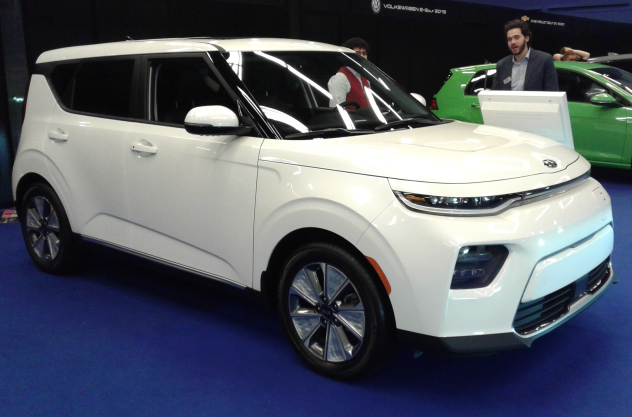
The second generation brought major improvements in all aspects. The base version with a 39.2 kWh battery had 136 hp and could travel up to 276 km on the WLTP cycle. The top modification, with a 64 kWh battery, generated 204 hp, accelerated to 100 km/h in 7.9 seconds, and provided a KIA Soul EV range of up to 452 km according to official data.
In real conditions on Ukrainian roads, this figure is 350-400 km, making the car suitable for intercity travel. Both versions have 395 Nm of torque, ensuring confident dynamics even when fully loaded.
Current versions 2024-2025
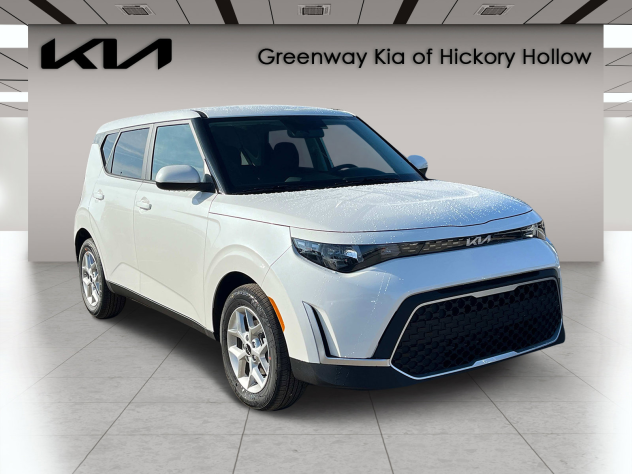
The latest versions of KIA Soul EV have received updated energy management systems and improved aerodynamics. The manufacturer implemented an enhanced recuperation system, upgraded climate control with a heat pump, and an improved battery with higher energy density. Fast charging support has increased to 80 kW DC standard, reducing charging time to 80% to approximately 35 minutes.
KIA Soul EV Battery: The Heart of the Electric Car
The power system is the most crucial part of an electric car, determining both dynamic characteristics and daily practicality. The KIA Soul EV battery uses modern lithium-ion polymer technology, providing high energy density and stable operation across a wide temperature range from -30°C to +60°C.
Technology and design
The battery system is designed for maximum safety and durability. The battery consists of multiple modules under the car floor, providing a low center of gravity and improved handling. The active cooling system maintains optimal temperature, and the advanced battery management system controls every operating parameter.
The manufacturer provides a warranty for the KIA Soul EV battery up to 8 years or 160,000 kilometers, demonstrating confidence in the technology's reliability. The modular design allows for partial section replacement if needed, instead of exchanging the entire battery.
Degradation and longevity
Real-world operation shows the KIA Soul EV battery loses about 2-3% of capacity per year when properly used. After five years, capacity degradation usually doesn't exceed 10-15%, and after 100,000 kilometers it can reach up to 20% of initial capacity. Following manufacturer recommendations for charging and usage greatly slows this degradation process.
The modern battery management system in KIA Soul EV continuously monitors the temperature of each module, balances cells, and protects against overcharging and deep discharge. This significantly extends battery life and maintains performance throughout its lifespan.
KIA Soul EV Range: Theory vs Practice
One of the most important questions for potential electric vehicle owners is the real range in various operating conditions. Official figures obtained in laboratory settings often differ from actual results on Ukrainian roads.
Official indicators and reality
The range of KIA Soul EV varies significantly depending on car version and conditions of use. The first generation, with a 27 kWh battery, officially covered 200 km on the NEDC cycle, but actual range was 120-150 km. The 30 kWh battery version increased official range to 250 km.
The second generation's 39.2 kWh battery achieves 276 km on the WLTP cycle, while the top 64 kWh battery version reaches an impressive 452 km. In Ukrainian conditions, real indicators are usually 85-90% of those stated in summer in urban settings. In winter, without active heater use, the range drops to 70-75% of official range, and with intensive cabin heating can drop to 50-60% of stated value.
Seasonal features in Ukraine
Ukrainian climate has its own specifics for electric car operation. In summer, at +25...+30°C, using air conditioning reduces the KIA Soul EV's range by 10-15%. In winter the situation is more critical: at temperatures below -10°C, battery capacity naturally drops and the need to heat the cabin may halve the travel distance.
To minimize winter impact, it is recommended to use the pre-conditioning function during charging, warming up the car without consuming battery energy. TOKA charging station network throughout Ukraine allows planning for winter trips considering the shortened range.
Factors affecting travel distance
Many factors affect the practical KIA Soul EV trip range:
- Temperature conditions: the optimal +15...+25°C range delivers maximum battery efficiency
- Driving style: smooth acceleration and braking can increase distance by 20-25%
- Speed mode: optimal speed is 50-70 km/h for greatest range
- Technical condition: correct tire pressure (2.3-2.5 bar) and minimal load
KIA Soul EV Charging: Everything You Need to Know
The KIA Soul EV charging system is designed for maximum flexibility in different scenarios. The vehicle supports both slow AC charging for home use and fast DC charging at commercial stations.
Types of charging and speed
Slow charging from a household 220V/16A outlet takes 10-12 hours for a full charge, ideal for overnight home use. Using a specialized wall charger with 7.2 kW power shortens the charging time to 4-6 hours depending on battery capacity. Charging stations with 22 kW can refill the battery in 2-3 hours.
Fast DC charging with the CCS2 standard up to 50 kW takes 30-45 minutes to reach 80% charge. Newer versions support up to 80 kW, reducing the time to 20-35 minutes. Note that charging speed drops after reaching 80% to protect the battery.
Integration with the TOKA network
KIA Soul EV owners can take advantage of the developed TOKA infrastructure, which covers major cities in Ukraine. Stations are conveniently located near shopping centers, hotels, restaurants, and highways. For ease of use, it's recommended to install the TOKA mobile app, which helps to locate available stations, plan routes, pay for charging, and track consumption statistics.
Home charging
For maximum comfort with your KIA Soul EV, the optimal solution is installing a home charging station. TOKA offers a wide range of wall chargers from 7.2 to 22 kW, with professional installation and setup.
Design and Interior
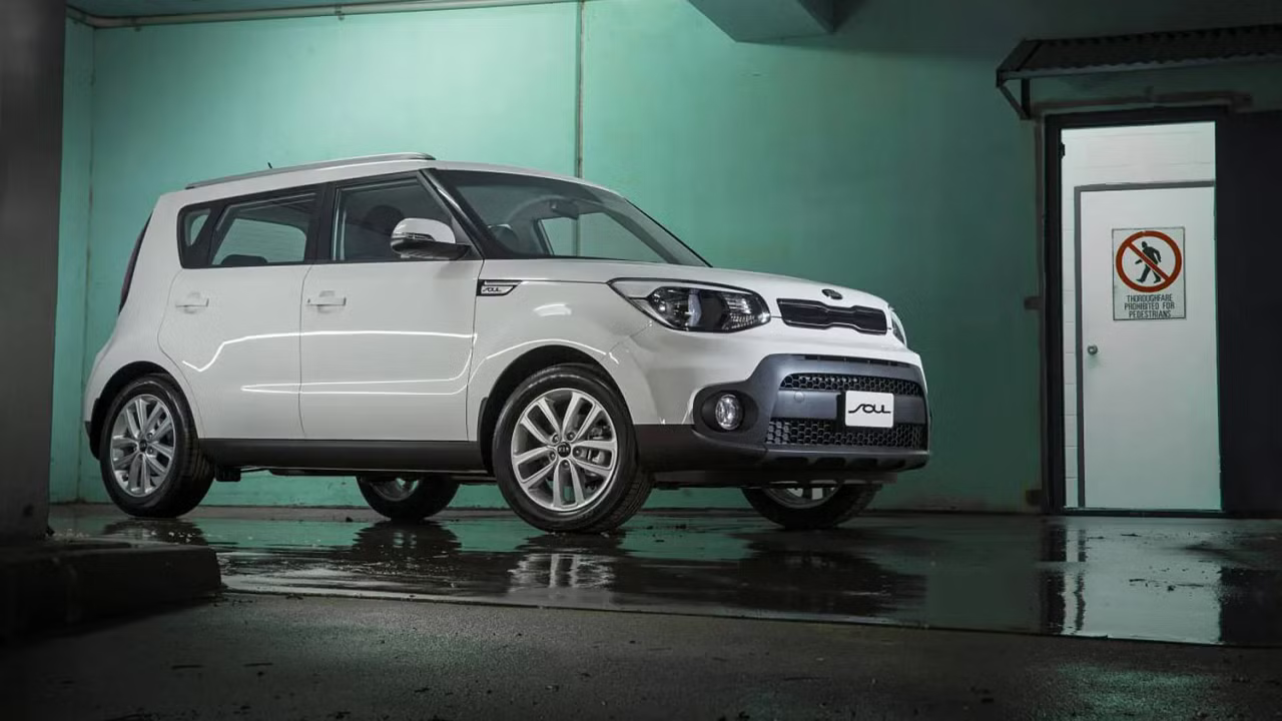
The KIA Soul EV's exterior is easily recognizable thanks to the unique electric version styling cues. The front features a closed decorative 'grille' hiding the charging port. Smaller air intakes emphasize the lack of need to cool a combustion engine, and LED lighting with its signature effect gives the vehicle a modern look.
Exterior: electric car with character
The side profile retains the iconic Soul boxy shape, complemented by aerodynamically optimized mirrors and special alloy wheels for the electric version. Blue-green accents highlight the car's eco focus. The aerodynamic drag coefficient is improved compared to the petrol version thanks to the closed front and optimized underbody.
The rear received updated LED lights with a discreet 'EV' badge signaling the electric drivetrain. The lack of an exhaust pipe gives the rear a more concise and modern appearance.
Cabin: space and technology
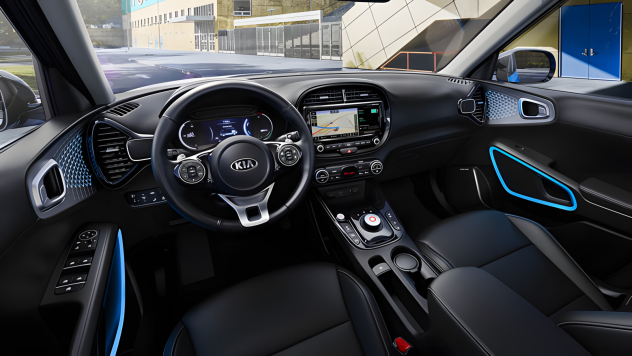
The KIA Soul EV interior differs from the petrol version with dedicated controls and upgraded trim materials. The seating remains higher than regular hatchbacks, providing good visibility and ease of entry/exit. There's space for five passengers, though rear legroom is slightly reduced due to battery placement.
The digital instrument cluster displays EV-specific data: battery level, real-time energy consumption, recuperation mode, and range. The center console features a drive mode switch (Eco, Normal, Sport) and buttons for recuperation level adjustment. The pre-conditioning system lets you prepare the cabin before your trip without consuming battery energy.
Luggage capacity is 315 liters as standard and can rise to 891 liters with the rear seats folded. Standard charging cables and a repair kit are stored under the trunk false floor.
Dynamic characteristics and handling
The electric drivetrain of KIA Soul EV provides a fundamentally different driving experience versus combustion engine vehicles. Instant torque from zero gives confident starts and easy overtaking in city traffic.
The benefits of electric traction
Maximum torque of 285 Nm (first generation) or 395 Nm (second generation) is available instantly, making the KIA Soul EV particularly enjoyable to drive in city conditions. The car easily starts on inclines and confidently overtakes slower vehicles. Three drive modes adapt vehicle behavior for different situations: Eco for maximum efficiency, Normal for balanced driving, and Sport for the best dynamics.
Recuperation system
KIA Soul EV is equipped with an advanced regenerative braking system with four intensity levels (0-3). Settings are adjusted with steering wheel paddles, and at maximum, you can drive in "one-pedal" mode. Effective recuperation can return up to 15% energy in city driving, increasing range by 10-20 km.
Learn more about the principles of regenerative braking in a special article on the TOKA website.
Safety and equipment
The KIA Soul EV safety system received high marks in independent tests. Euro NCAP gave the car 4.5 stars, with especially high scores for adult occupant protection (72%). The body structure is reinforced considering the heavy battery placement, improving passive safety.
Active and passive safety systems
The standard equipment includes safety systems ensuring a high level of protection:
- Passive safety: Six airbags (front, side, curtain), reinforced body structure, active head restraints
- Active safety: Stability control (ESP), anti-lock braking system (ABS), hill-start assist
- Monitoring: tire pressure monitoring, driver fatigue control, rain and light sensors
The base package features air conditioning, power windows, 16-inch wheels, and an 8-inch multimedia system. Heated front seats are standard for all versions, crucial for winter operation in Ukraine.
Equipment levels and options
The extended package adds climate control, leather trim, navigation system, and keyless entry. Rear-view camera and parking sensors assist maneuvering in tight spaces. Additional options include a panoramic roof, heated steering wheel, 360-degree camera, and adaptive cruise control in newer versions.
Prices and availability in Ukraine
The Ukrainian market for KIA Soul EV is mostly made up of used cars imported from Europe and the USA. Prices depend on production year, mileage, battery condition, and package.
Prices on the used market
First-generation cars (2014-2019) cost $12,000-$22,000 depending on year and condition. The cheapest examples from 2014-2016 can be found for $12,000-16,000 but require thorough KIA Soul EV battery checks. More recent 2017-2019 cars cost $16,000-22,000.
The second generation (2019-2023) is noticeably pricier: 39.2 kWh versions are $22,000-28,000, and top 64 kWh versions are $28,000-35,000. New cars, if available from dealers, start from $35,000.
What to consider when buying
When choosing a used KIA Soul EV, pay special attention to battery condition. Degradation over 20% from original is reason to negotiate or refuse. Always use specialized diagnostic tools to check the battery and request the complete service history.
Preference goes to European cars, as they usually have a better usage history. Always check for flood damage, which can be critical for electronic systems.
Practical advice for owners
Owning a KIA Soul EV has its specifics, and knowing them will extend your car's lifespan and reduce service costs.
Maintenance and use
Scheduled maintenance is required every 15,000 km or once a year. Key points include checking the brakes, suspension, and electronic components. Service costs are 30-40% lower than petrol equivalents thanks to the lack of oil, filters, and spark plug changes.
KIA Soul EV battery care tips for maximum longevity:
- Charge level: Avoid discharging below 10% and prolonged storage at 100%
- Optimal range: Keep charge between 20-80% for daily use
- Temperature: Park in cool places in summer, warm in winter where possible
Winter preparation and trip planning
Winter use requires extra care. Use the cabin preheat during charging, fit winter tires below +7°C, and park in warm garages if possible. Plan routes with reduced winter range in mind.
Find more helpful tips in the article about using an electric car in winter on the TOKA website.
For city trips, the KIA Soul EV is perfect for daily needs with a typical range of 100-150 km. Intercity travel requires planning using the charging station map and a buffer of 20-30% for unforeseen situations.
Comparison with competitors
In the compact electric car market, the KIA Soul EV competes with several popular models, each with its pros and cons.
KIA Soul EV vs Nissan Leaf
Nissan Leaf is the main competitor due to similar pricing and specs. The KIA Soul EV boasts a higher ride height and better visibility, more practical trunk, and a modern interior. Nissan Leaf has the advantages of higher popularity, a more advanced service network, lower used prices, and a longer production history.
KIA Soul EV vs Tesla Model 3
The comparison with Tesla Model 3 shows different philosophies. The KIA Soul EV is much more affordable, simpler and cheaper to maintain, and is serviced more easily in Ukraine. Tesla Model 3 surpasses in range, charging speed, and tech, including an advanced autopilot system.
General market position
In the compact EV segment, the KIA Soul EV stands out with unique design, optimal value-for-money, well-balanced features, and reliable Korean build quality. This makes it attractive for those who need a practical EV without premium ambitions.
Conclusions
KIA Soul EV is a practical choice for those seeking a reliable electric vehicle for urban operation. The car offers balanced specs for Ukrainian conditions, affordable servicing, and a unique design with a spacious interior.
The main strengths are the reliable KIA Soul EV battery with long warranty, sufficient range for city needs, good integration with charging infrastructure, and moderate running costs. Weaknesses include a modest range compared to premium models, slower fast charging in older versions, and significantly reduced autonomy in winter conditions.
The car is ideal for city dwellers driving up to 100 km daily, especially with home charging. It is an optimal first EV due to ease of use and predictable expenses.
For the most comfortable KIA Soul EV experience, it is recommended to use TOKA services: from installing a home charging station to planning routes using the public charging network. This ensures maximum freedom of movement and peace of mind regarding EV charging.