Innovations in charging technologies13 October 2025
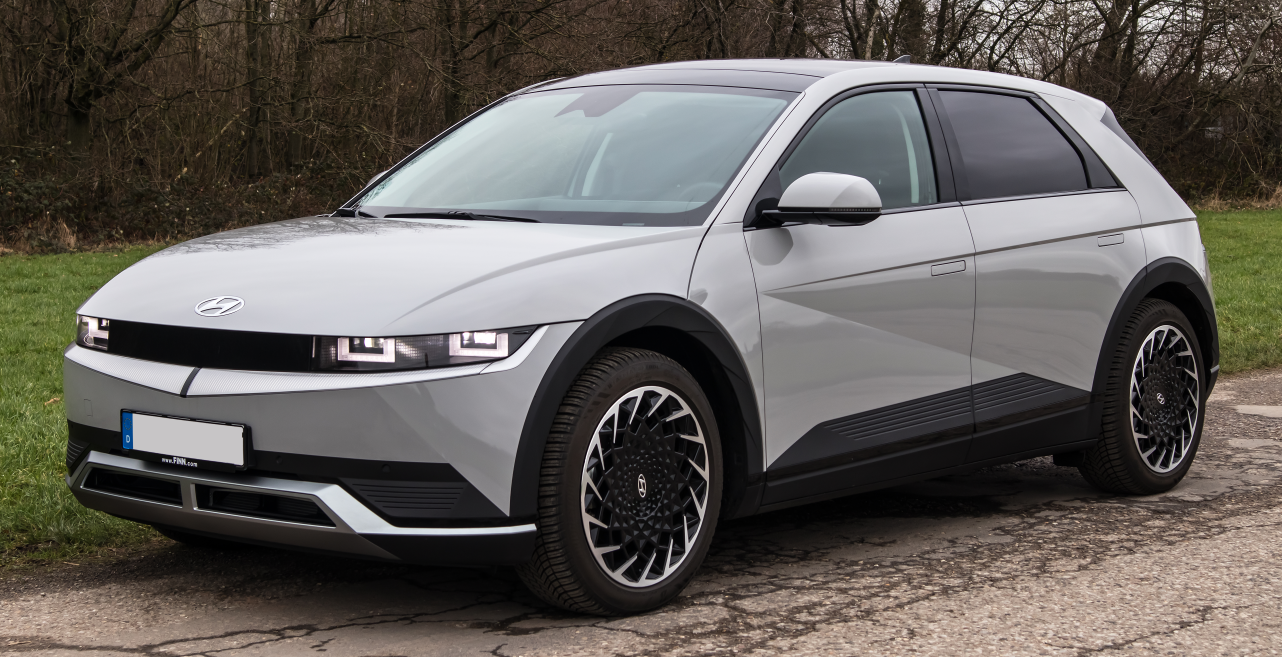
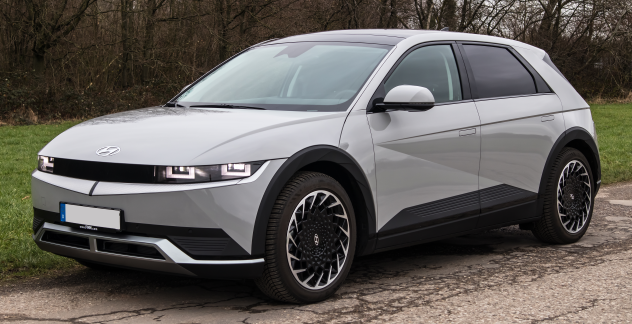
Hyundai IONIQ 5 in Ukraine: specs, price, range and charging
Updated 6 October 2026.
Hyundai IONIQ 5 combines a roomy interior, high-voltage architecture and rapid DC charging when conditions allow. This guide covers the practical questions for Ukraine in October 2026: current headline pricing, battery and connector differences, charging costs, used-car checks and import taxes. Compare cars by model year and market rather than a single advertised range figure.
Market: new and used Hyundai Ioniq 5 in Ukraine
New: prices and availability in 2026
As of 6 October 2026, Hyundai’s official Ukrainian distributor lists the NEW IONIQ 5 from UAH 3,375,000 and the IONIQ 5 N from UAH 3,642,300. These are date-stamped headline prices on the brand’s website, not a guarantee that a particular version is in stock or that the contract price will be the same. Production year, offers, options and dealer terms can change the total. Ask an official dealer for a quotation tied to a specific vehicle and verify its equipment.
When comparing a new car with a used import, consider the warranty, charge-port standard, service record and potential hidden damage. Old 2024–2025 prices are not a current 2026 price list.
Used market: price ranges and rapid depreciation
There are many used IONIQ 5 listings, but fixed US-dollar price bands and a universal “45% depreciation in two years” claim do not describe every car. Battery version, drivetrain, mileage, high-voltage-system condition, country of origin, CCS1 or CCS2 inlet, and collision repairs all affect value.
Request the VIN, pre-repair photographs, service history and a battery-health inspection. Compare cars after allowing for shipping, import taxes, certification and any suitable port adapter or conversion. A cheap auction car may become expensive after repairs, tyres and charging-system work.
How to value a used Hyundai IONIQ 5
Instead of using a year-only average, compare verifiable specifications. Early IONIQ 5 cars have 58/72.6/77.4 kWh packs depending on market; refreshed European versions use 63/84 kWh packs. Record VIN, mileage, drivetrain, charge inlet, collision history, available battery capacity, equipment and the outcome of an AC/DC charging test.
An auction hammer price is not the on-road cost in Ukraine. Add transport, repairs, taxes, registration, insurance and charging equipment. Two cars built in the same year can have very different ownership economics.
"American" factor: CCS1, history, and hidden costs
A noticeable share of cars arrive from the USA/Canada - often after insurance auctions. They feature a CCS1 port, and listings may note restorative repairs ("fender/door repainted to match," etc.). The starting price in US auctions may look low, but real cost on Ukrainian plates includes shipping, repair, customs clearance, and certification. In addition to price, there's a practical connector nuance: dominance of the CCS2 standard in the region. Adapters/conversions are available, but these are extra expenses. Summing up: an "American" car is a compromise between a minimal entry price and potential future costs/inconveniences.
Official IONIQ 5 starting prices in Ukraine
Model
Distributor website on 6 Oct 2026
Check before purchase
NEW IONIQ 5
From UAH 3,375,000
Build year, battery, drive, equipment and availability
IONIQ 5 N
From UAH 3,642,300
Availability, options, warranty and final quote
Prices can change. Special offers on individual 2025-built cars should not be presented as the regular starting price of the current catalogue.
Technical specs of Hyundai Ioniq 5: batteries, performance, real-world Ukraine
Hyundai Ioniq 5 batteries and powertrains
Over the model cycle, the battery set includes: 58, 73, 77.4, and the new 84 kWh (for 2025). Powertrains range from 170 hp on the base RWD with 58 kWh to 325 hp on the AWD with 77.4 kWh. The latter does 0-100 km/h in 5.2 s. The increase to 84 kWh changes the "portrait" of the 2025 model: when buying used, battery capacity is one of the key value markers.
Hyundai Ioniq 5 range: WLTP vs Ukrainian practice
Hyundai quotes up to 570 km WLTP for the refreshed European IONIQ 5 with the 84 kWh battery and rear-wheel drive. This standardized figure helps compare vehicles; it does not promise the same range on a Ukrainian motorway. Early 58/72.6/77.4 kWh batteries, current 63/84 kWh packs, rear- or all-wheel drive and wheel sizes produce different results.
For a real journey, use observed consumption on a similar route. Speed, temperature, wind, tyres, heating and terrain all matter. Keep an extra reserve in winter rather than applying one fixed percentage loss to every car. A heat pump, where fitted, may improve cabin-heating efficiency, but its effect varies with conditions.
How to estimate IONIQ 5 range for your route
Usable energy for this example
At 18 kWh/100 km
At 24 kWh/100 km
At 30 kWh/100 km
50 kWh
≈278 km
≈208 km
≈167 km
70 kWh
≈389 km
≈292 km
≈233 km
These are arithmetic examples, not certified ranges for any IONIQ 5 version. Formula: usable kWh ÷ observed kWh/100 km × 100. Keep a reserve on long routes and use consumption measured at similar speed and temperature. A nominal 84 kWh battery does not mean all 84 kWh can be used for trip planning.
Hyundai Ioniq 5 ground clearance and dimensions: practical nuances
Hyundai Ioniq 5 is a crossover with a long 3,000 mm wheelbase and a flat floor. In practice this gives two effects:
space for rear passengers and cabin transformations;
when parking and over speed bumps it's important to be careful - the long wheelbase "teaches" you to roll over obstacles gently and to choose the angle when approaching a curb.
Exact millimeters of clearance and exterior dimensions depend on version/wheels and are clarified per specific trim. In the city it doesn't cause issues, but country gravel roads and diagonal ramps are better taken without zeal.
Charging: 800-volt E-GMP platform, actual speeds, and infrastructure
IONIQ 5 uses Hyundai’s E-GMP high-voltage architecture. For the refreshed European car with an 84 kWh battery, Hyundai quotes around 18 minutes from 10 to 80% at a compatible 350 kW DC station in suitable conditions. “350 kW” is the station class, not the constant power the car accepts. Actual speed depends on battery temperature, starting state of charge, version and available station output; charging slows at higher states of charge.
European cars commonly use Type 2 for AC and CCS2 for DC. North American imports often use CCS1, so verify the inlet before buying and check compatible chargers along your routes. Look up the current tariff and available power before starting a session. At home, the car’s onboard AC limit and the electrical installation matter more than the advertised wallbox rating.
Hyundai Ioniq 5 trims
The names and contents of Hyundai Ioniq 5 trims may differ depending on the supply market. For convenience I'll give two "lines": reference points for the official Ukrainian market and trim names used in other markets.
1) Reference points for the official Ukrainian market (2024-2025)
AWD Top (77.4 kWh - 2024; 84 kWh - 2025) The "flagship" civilian version: current set of assistants, expanded convenience and multimedia.
N (84 kWh - 2025) High-performance version with reinforced chassis/brakes, profile software (N e-Shift, N Active Sound+), and a focus on dynamics.
2) Alternative trim lineup
Exclusive - base trim. Logic: "entry point" without frills, oriented toward a sensible budget.
Prestige - mid-level trim. A balance of equipment and price: broader comfort and assist set compared with the base.
Inspiration - top trim, often with all-wheel drive. Emphasis on maximum convenience and technology; for buyers who want a "fully loaded" showroom car.
Ultimate - another name for the highest trim level. May include leather upholstery, a premium BOSE audio system, a head-up display, and other features (as you noted with the Hyundai News mention).
Note: specific packages and options inside these names vary by markets and years. For an exact match to a Ukrainian allocation/specific car, we recommend checking the VIN specification and the option sheet from the seller.
3) Quick configuration navigator
Configuration
Who it suits
What to look at
58 kWh RWD (base/Exclusive)
City, short trips
Heat pump presence; highway range is limited
77.4 kWh RWD (Prestige)
Family/suburbs
Good summer autonomy, moderate consumption
77.4-84 kWh AWD (Inspiration/Top)
Universal for all seasons
Dynamics, full set of assistants
84 kWh AWD (Ultimate/Top 2025)
Maximum long-distance km
More autonomy, up-to-date electronics
84 kWh AWD N
Enthusiast
Chassis/brakes/software for emotion and pace
Hyundai Ioniq 5 interior
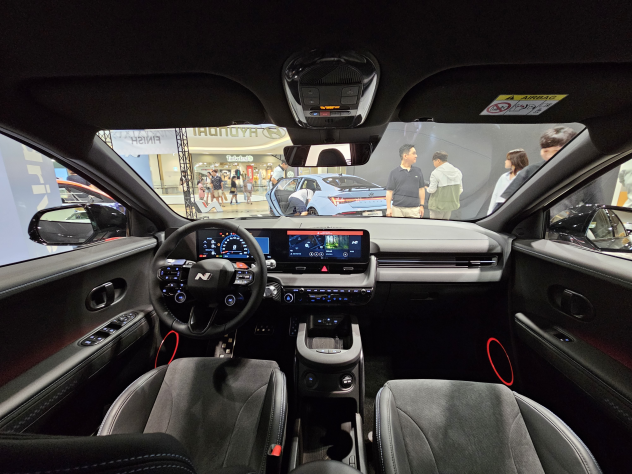
Hyundai Ioniq 5 is renowned for space and "proper" ergonomics for daily use.
Room and transformations
3,000 mm wheelbase and flat floor - an excellent space reserve in the second row.
Sliding center console makes ingress/egress and front workspace setup easier.
Front seats with deep relaxation mode - comfort on the highway and during charging stops.
Practicality and volumes
Rear trunk (reference up to 480 L in the N version); "civilian" versions - comparable practical capacity.
Front trunk ("frunk") about 57 L - convenient for storing cables/accessories.
Powerful drives for the pop-out door handles - handy in winter: they help "break through" ice.
Digital environment and safety
Two 12.3″ displays; stable Apple CarPlay operation.
Hyundai Smart Sense: BVM (blind-spot view monitor), SVM (surround view monitor), etc.; 7 airbags, including a central one between the front seats.
Materials and attention zones
Certain decorative trims are sensitive to scratches - it's worth treating these areas carefully or protecting them with film.
Otherwise - neat execution of the "pixel" aesthetic, which supports the model's futuristic image.
V2L energy autonomy
Vehicle-to-Load up to 3.6 kW: powering external devices/equipment - real utility in our conditions (dacha, office, power outages).
Hyundai Ioniq 5 N: the engineering "superstructure" and who it's for
The N version isn't just "a bit more powerful," it's effectively a different car setup: - two electric motors, 609 hp (650 hp in N Grin Boost), 0-100 km/h in 3.4 s; - stiffer body (additional weld points and adhesive), brakes with 400 mm front discs; - first to get the 84 kWh battery and profile software (N e-Shift, N Active Sound+).
This is a niche story for an enthusiast ready to pay for driver emotions rather than "per-kilometer pragmatism." The premium over the top "civilian" AWD version is noticeable - but the value here is about sensations that tuning can't replicate.
Total cost of ownership (TCO) in Ukraine
Purchase and registration
In Ukraine, passenger cars powered exclusively by electricity are exempt from the pension-fund levy on first registration. Confirm the current administrative registration costs separately. The 2026 annual transport tax of UAH 25,000 applies only where the car is no more than five years old, its official average market value exceeds UAH 3,242,625, and it is covered by the published model list. A seller’s asking price above the threshold does not automatically make a car taxable.
Check the specific model in the official annual list rather than assuming five years of fixed tax: eligibility and thresholds may change. For an import, obtain an individual customs calculation based on its documents before placing a deposit.
EV import taxes and registration in 2026
According to Ukraine’s tax authority, the temporary VAT exemption for the import and domestic supply of qualifying electric vehicles ended on 1 January 2026. These transactions are now subject to VAT under the general rules. Passenger EVs still have 0% import duty; excise is €1 per kWh of battery capacity. An 84 kWh pack implies €84 in excise, but the total bill depends on the vehicle’s customs value and documents.
The former prediction of additional import duty and a fixed percentage jump is incorrect for this case. Calculate VAT and all other charges under the current rules before committing to an import.
How to calculate the full import cost
Compare the legal treatment rather than an obsolete hypothetical invoice. Before 2026, a temporary VAT exemption applied to qualifying EVs; in 2026, import and supply are subject to VAT under the general rules. The passenger-EV import duty remains 0%, while excise is calculated at €1 per kWh of battery capacity. The old table assuming an incorrect duty rate and a fixed US-dollar conversion has therefore been removed.
A full import budget includes the vehicle, shipping, insurance, repairs, customs value, VAT, excise, certification, registration and home-charging equipment. An auction price is not the final on-road price in Ukraine. Request a written vehicle-specific calculation before purchase.
Operation: charging, insurance, service
Calculate charging cost as energy consumption (kWh/100 km) multiplied by the actual tariff (UAH/kWh). For example, 20 kWh/100 km at a hypothetical UAH 8/kWh costs about UAH 160 per 100 km before charging losses. This is an arithmetic example, not a TOKA tariff or universal price.
Home AC is convenient for daily use, while public DC supports longer trips, but tariffs and available output vary by location. Seek personal MTPL and comprehensive-insurance quotations based on the car’s value, excess and coverage terms. EVs have no combustion-engine oil or exhaust, but tyres, brakes, suspension, cooling and high-voltage components still need inspections and service.
Home infrastructure: wallbox and installation
A home charger is useful where there is a dedicated parking space and enough grid capacity. European IONIQ 5 versions typically accept about 11 kW AC, but actual charging depends on phase supply, the connection limit and vehicle settings. Have a qualified electrician inspect the circuit and specify appropriate protection; the largest advertised wallbox figure is not the deciding factor.
The cost of equipment and installation depends on model, cable run, distribution board, protective devices and available connection power. An old “UAH 15,000–30,000” range is not a reliable quote for every home. Request separate prices for hardware and installation; for a US-import car, check its AC inlet and cable first.
Comparison with competitors and recommendations
Against Tesla Model Y
Tesla Model Y is a powerful competitor in recognition and software ecosystem. Strengths - its own charging network and a minimalist cabin. Hyundai Ioniq 5 responds with design, space, and an 800 V architecture. The choice is about priorities: infrastructure/software versus design/space/charging "platformness."
Against Volkswagen ID.4
Volkswagen ID.4 often plays a "sensible alternative" in the used segment with an attractive entry price. Ioniq 5 positions itself as a more design-driven and tech-forward product, while ID.4 bets on a traditional interior and calm tuning.
Who suits what
- Family/city: used RWD 77.4 kWh (2-3 years) - the optimum for price/space/range. - Long trips: new AWD 84 kWh (2025) - maximum range and dynamics (with a caveat on actual charging speeds in Ukraine). - Enthusiast: Ioniq 5 N - a unique emotional offering in the class.
Before buying an IONIQ 5: a practical inspection route
Start by identifying the car from its VIN. “IONIQ 5” alone does not tell you which battery, drivetrain or charge inlet it has. Early cars from different markets can have 58, 72.6 or 77.4 kWh packs, while Hyundai’s current European range lists 63 and 84 kWh. Verify the year, factory specification and actual inlet; do not infer these from the headlights or a seller’s advertisement.
Battery and vehicle history
Commission an independent high-voltage-system inspection covering usable capacity, fault codes, cooling and charging equipment. A reported state-of-health number is useful, but it cannot replace a test drive and a working fast-charge test. For an auction import, compare pre-repair photographs with the repairs completed, inspect the underside and battery casing, and check recalls by VIN. Have the 12-volt system and electronics checked as well: a short test drive may not reveal intermittent faults.
Connector and charging test
On a European car, check Type 2 and CCS2; on a North American import, verify CCS1 and whether a specific adapter is suitable. Never choose an adapter by plug shape alone: current, voltage, locking and thermal requirements must match the equipment. Try an AC session and, where possible, a DC session on a working charger. Record starting and ending charge levels, energy delivered and any errors; a single peak-power number does not describe the full charging curve.
Planning for home and travel
Compare charging options filtered for Hyundai IONIQ 5 by connector, power and installation requirements. For private parking, ask an electrician to inspect available connection power, phases, circuit protection and cable run. A car limited to 11 kW onboard AC charging will not charge faster merely because the wallbox label says 22 kW. Use the live TOKA charging-point map to choose a main and backup stop. For a longer route, check compatible ports, current power and tariffs on the charging map, and keep a backup stop. Winter driving calls for extra time and battery reserve, but one fixed percentage loss cannot fit every trip.
V2L can power separate external devices with suitable equipment and within the vehicle’s allowed output. It is not the same as V2H, which requires a specially designed and certified system to supply a house. Do not connect the car to domestic wiring with improvised cables. Compare vehicles by their full verified cost, not just listing price.
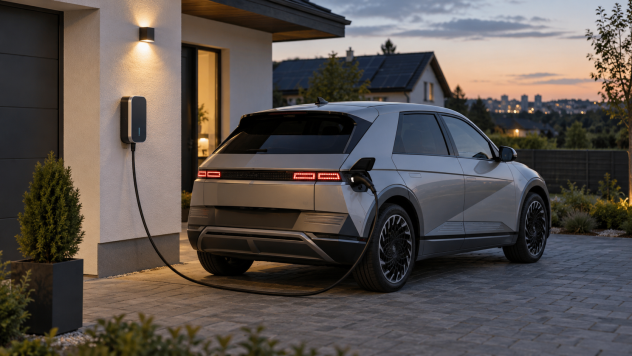
Illustration: home AC charging; the pictured vehicle is not a specific Hyundai IONIQ 5.
Conclusion: is Hyundai IONIQ 5 worth buying in 2026?
In 2026, IONIQ 5 remains a compelling option for Ukrainian buyers because of its roomy cabin, battery choices and rapid charging where the infrastructure supports it. The right choice depends on the actual version: early and refreshed cars differ in battery, equipment and market of origin. For a North American import, check its CCS1 inlet, repair history and whether compatible charging is practical on your routes.
Do not base the decision on a 2025 tax “window” that has already closed. Calculate the vehicle price together with 2026 import charges, insurance, inspection and home charging. Before paying, obtain the VIN, check battery condition and AC/DC charging, and compare an independent repair assessment with the seller’s claims. If regular home charging is unavailable, inspect the cost and availability of public charging first; this may matter more than a trim-level difference.
FAQ
Which Hyundai Ioniq 5 battery is better for the city?
For short trips with reliable home charging, a smaller battery may be enough. Frequent motorway travel or limited charger access can make a larger battery more flexible. Compare the specific version, battery condition, price and your driving pattern rather than treating 77.4 kWh as a universal answer.
What's the real Hyundai Ioniq 5 winter range?
There is no single winter range: battery, drivetrain, speed, temperature, tyres and heating all matter. Use observed consumption for your own route and plan a charging stop with reserve. A heat pump, where fitted, can reduce the energy needed for cabin heating.
Hyundai Ioniq 5 ground clearance - sufficient for our roads?
For city use - no problem. On diagonal ramps/dirt it's better to be careful: the long 3,000 mm wheelbase "likes" the right trajectory.
Do I need a wallbox?
Often yes for regular home charging: a properly installed wallbox improves convenience and load control. Savings depend on your tariff, driving consumption and installation cost, not a fixed “UAH 40–90 per 100 km”. Without private parking, check available AC/DC chargers on your routes and calculate costs before buying the car.
Is there a point in paying extra for the Hyundai Ioniq 5 N?
If emotions and a track-oriented character matter - yes. If the task is purely pragmatic, the standard AWD/RWD versions are more rational.