BMW iX specs, range and charging: old and new versions
Updated 3 November 2026.
The BMW iX is a large electric SUV with all-wheel drive, but its specifications depend on the model year. The original European range comprised the xDrive40, xDrive50 and M60. Following the 2025 update, the names are xDrive45, xDrive60 and M70 xDrive. A single figure for “BMW iX range” or “BMW iX charging speed” can therefore mislead if the variant is not named.
This guide separates the two generations, explains battery capacity and WLTP range, and shows how Type 2 and CCS2 charging work for European-specification cars in Ukraine. It also covers dimensions, interior equipment, safety and the practical checks to make before buying a used or imported iX. Treat the VIN and the vehicle’s charging port as the final references for a particular car.
BMW iX design and dimensions
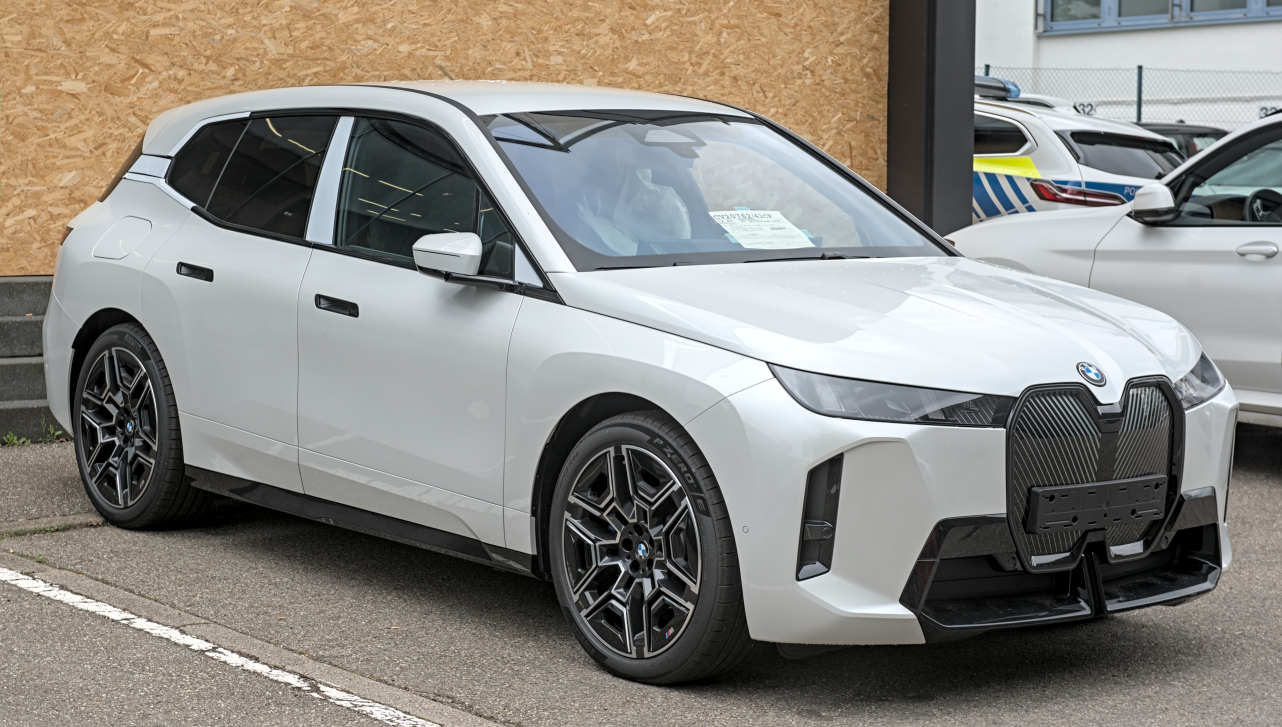
BMW developed the iX as a dedicated electric model with a long wheelbase, a flat cabin floor and a tall SUV body. Its closed front panel and slim lighting make it easy to recognise. The external appearance alone does not prove which sensors and driver-assistance functions are installed: equipment differs between individual cars.
Exterior details that matter in use
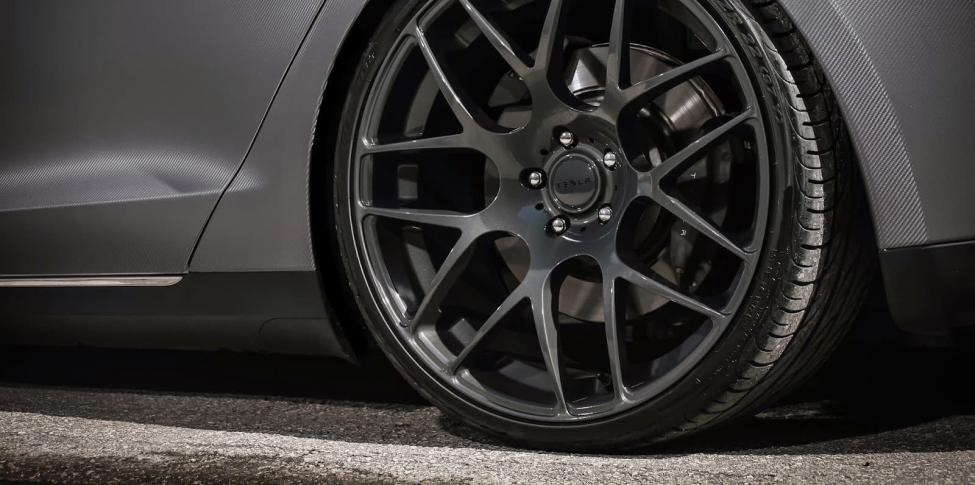
The iX has a closed front panel rather than a conventional open grille. Its door handles are integrated into the body; on a used car, test the mechanism and inspect the seals. Large wheels change more than the appearance: they can affect comfort, energy use and replacement tyre costs. Inspect the wheels, brakes and suspension before purchase. Test the lights, external cameras and parking sensors rather than relying on an advert’s package name.
Size, parking and charger placement
The original xDrive40 and xDrive50 are approximately 4,953 mm long and 1,967 mm wide without mirrors. BMW lists the updated xDrive60 at 4,965 mm long and 1,970 mm wide. Width including mirrors is about 2,230 mm, the wheelbase is 3,000 mm and height is around 1,695 mm. Check the exact weight and ground clearance for the variant concerned. If you will install a charger at home, measure garage clearance, door swing and the route the cable must take to the charge port.
BMW iX specifications: original and updated versions
The first-generation European iX was sold as xDrive40, xDrive50 and M60. From spring 2025 BMW introduced the updated xDrive45, xDrive60 and M70 xDrive. The changes include more than a new badge: battery energy, power output, range and charging limits differ. A used xDrive50 should not be described with the new xDrive60’s data. Confirm its production year, VIN, market specification and installed options before using any comparison table.
Original xDrive40, xDrive50 and M60
BMW lists 240 kW and 0–100 km/h in 6.1 seconds for the xDrive40, 385 kW and 4.6 seconds for the xDrive50, and up to 455 kW and 3.8 seconds for the M60 in its European-market table. Each uses two electric motors and all-wheel drive. Their differences are also significant at a charger: the smaller-battery xDrive40 has a lower DC power limit. A buyer of a used example should look beyond peak power to battery condition, tyres, service and repair history, software updates and whether both AC and DC charging work.
Updated xDrive45, xDrive60 and M70 xDrive
The updated xDrive45 is rated at 300 kW/408 hp and 5.1 seconds to 100 km/h. The xDrive60 is rated at 400 kW/544 hp and 4.6 seconds; the M70 xDrive reaches up to 485 kW/659 hp and 3.8 seconds. These figures describe named European variants, not every iX. BMW’s Ukrainian technical-data table includes both older and newer versions, while its 2025 model announcement explains the revised range. Specifications published for North America can differ, especially battery figures and charging equipment.
The most powerful version is not automatically the best choice for every driver. If most journeys are short, access to overnight charging and the car’s condition may matter more than a few seconds of acceleration. On frequent motorway trips, compare battery reserve, charging-stop duration, the planned route and the availability of backup stations. Wheel choice, equipment and driving style also affect consumption. In an M60 or M70, inspect the exact suspension and option package rather than assuming all examples share the same equipment.
BMW iX battery capacity and driving range
Battery figures must be tied to a generation and variant. The original xDrive40 has about 74 kWh of usable energy; the xDrive50 and M60 have larger packs. The 2025 update gave the xDrive45 substantially more battery energy and revised the other versions. Do not confuse gross and usable capacity. BMW material for different markets sometimes rounds or defines these numbers differently, so use the local specification and the VIN when comparing a specific car.
Official WLTP figures by variant
BMW Ukraine currently lists the original xDrive40 at 390 km WLTP, the xDrive50 at 586–633 km and the M60 at 499–567 km. For updated cars the listed ranges are 489–603 km for the xDrive45, 561–701 km for the xDrive60 and 517–600 km for the M70 xDrive. A range such as 701 km is the upper end for a particular configuration, not a promise for every xDrive60. Wheels, equipment and the certification cycle used in another market can change the published number.
Real-world range, winter and efficiency
WLTP is a standardised test cycle rather than a motorway forecast. Speed, headwind, gradient, temperature, heating or cooling, tyres, load and battery age affect the trip. That makes a single “real range” band or a fixed percentage of winter loss unsuitable for every iX. Check your car’s recent energy use in kWh/100 km. If 80 kWh is available and consumption is 25 kWh/100 km, a simple calculation gives 320 km to empty; plan a shorter leg so you arrive with a useful reserve and have an alternative charger.
Cabin heating can represent a large share of energy on short winter trips. Preheating while plugged in may help, but it does not guarantee a fixed increase in range. A cold battery may also accept less power at a DC charger. Use the preconditioning function available on your model before a planned fast-charging stop, and compare actual sessions under similar conditions. The car’s indicated remaining kilometres can change after a motorway segment or weather change because it is a forecast, not stored energy.
BMW iX charging: Type 2, CCS2 and realistic speeds
European-specification iX models use Type 2 for AC charging and CCS Combo 2 for DC fast charging. An imported car from another market may have a different connector, so inspect the actual port before buying equipment or planning a trip. Charging power is limited jointly by the car, the station, battery temperature and state of charge.
DC fast charging by model year
BMW gives the original xDrive40 a peak DC limit of 150 kW, while the xDrive50 and M60 can reach 195 kW. The updated xDrive45 is rated at up to 175 kW, with 195 kW for the xDrive60 and M70. BMW’s table gives approximate 10–80% times of 31–35 minutes for the various versions under suitable conditions. These are not flat-power figures: the charging curve changes through a session, and a cold pack or limited station can make a stop longer. Comparing energy added in a 20- or 30-minute stop is more useful than comparing only peak kilowatts.
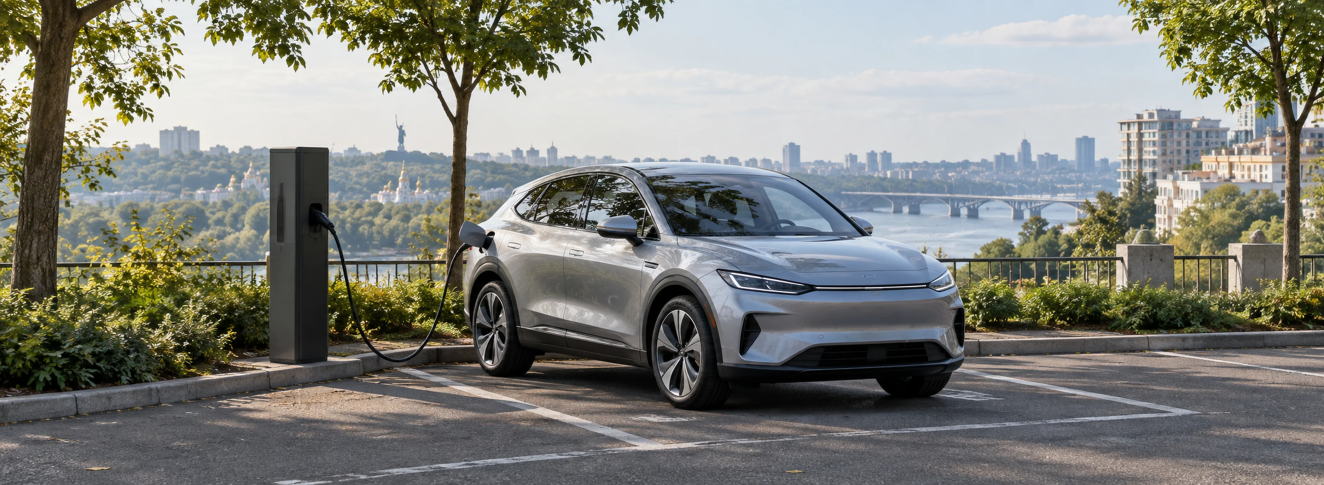
Before setting out, use the TOKA map to check CCS2 charging points, their stated power, availability and current conditions. A 60 kW charger cannot deliver 195 kW to an iX. A 250 kW charger does not force the car to charge above its own limit, either. Leave enough energy to reach a backup location, particularly in cold weather or on a busy route. After a session, record the delivered kWh and elapsed time to understand what your particular car actually achieved.

Illustration only: verify the connector and specifications of the particular BMW iX.
Home and public AC charging
BMW lists Type 2 AC charging at up to 11 kW or 22 kW, depending on the iX version and installed equipment. A 22 kW wallbox will not shorten the session if the car’s onboard charger is limited to 11 kW. At home, sustained power also depends on the electrical connection, available capacity and safe installation. Estimate time from the usable battery energy you want to add, actual AC power and charging losses. “Fully charged overnight” is too broad without the starting charge and setup.
Browse TOKA equipment filtered for Type 2 and home charging options once you have verified the vehicle’s port and AC limit by VIN. Cable length, mounting position, protection, power sharing and control features can matter more than buying the highest advertised kilowatt rating. Have a qualified installer assess the supply before selecting a home station.
Battery preparation and charge planning
BMW route planning can prepare the battery before an anticipated fast-charging stop; newer versions also provide manual control. Menus and features vary with model year and software, so consult the manual for your car. For AC sessions, a target charge and scheduled start can be useful if supported by the car and app. Avoid expecting the same rate every time: charger output, concurrent demand and battery conditions all vary. Keep the connector clean and follow the manufacturer’s instructions when unplugging.
BMW iX interior, space and controls
The 3,000 mm wheelbase and lack of a central transmission tunnel create generous space between rows. Seat shape and adjustment still determine comfort for individual occupants, while wheels and suspension influence ride quality. During a viewing, try the driving position, rear-seat access, visibility and luggage area. Check the operation of seat adjustments and the condition of cabin materials; a broad description such as “luxury interior” says little about the particular used vehicle.
Displays and connected features
BMW Curved Display combines the instruments and central screen. The iDrive interface and connected-service list have changed with model year and software updates; do not assume every iX runs the same version. Navigation can plan charging stops, but verify the charger’s live status before travelling. Apple CarPlay, Android Auto, audio equipment, voice functions and ConnectedDrive availability should be checked against the car’s options and original market.
Materials and comfort options
A panoramic roof, ventilated or massaging front seats, expanded climate control, gesture functions and crystal-look decorative controls are not present in every iX. Avoid describing all versions as having natural Swarovski crystal components. Ask for the factory option list by VIN, then personally test the roof, seats, climate system, screens and phone connection. An unavailable online service may reflect regional service terms rather than a hardware fault.
BMW iX equipment: verify the specific car
Package names and standard features vary with year and market. A feature list in a review does not guarantee it is fitted to an individual vehicle. Request the factory VIN specification and compare it with what actually works on the car.
Everyday equipment checklist
Test lights, cameras and parking sensors, heated seats and wheel, climate zones, powered seat adjustments, the panoramic roof and audio system. Inspect the charging flap and included cable. Some items were optional or part of a package; a high purchase price does not prove they are installed. For an imported vehicle, verify language support and the availability of connected services in the country where it will be used.
Options that affect charging and travel
Establish whether the onboard AC charger is rated for 11 or 22 kW, identify the physical connector and check battery preconditioning before a DC stop. Then confirm the assistance package, suspension type, wheel size and any approved towing equipment. Some digital functions depend on software or service terms. Generic advert labels such as “Comfort” or “M Performance” are not a substitute for an exact factory option record.
Safety ratings and driver assistance
The BMW iX received five stars in the 2021 Euro NCAP assessment. State the test year when quoting this rating: it describes a tested configuration under that year’s protocol, not a fresh crash test for every 2025–2026 variant. Euro NCAP reports separate results for adult and child occupants, vulnerable road users and safety assistance. A used car’s repair history and working safety systems still need to be checked individually.
Structure and passive protection
The body combines materials and incorporates the high-voltage battery into the vehicle structure. Describing it as an “armoured capsule” that guarantees no battery damage in a collision overstates what a test can establish. After a crash, a qualified service provider should inspect high-voltage components. Ask for documented body repairs and diagnostics when buying a used or imported example, especially after an insurance write-off.
Active assistance and motorway driving
Adaptive cruise control, lane assistance, surround cameras, parking functions and Driving Assistant Professional vary by year, region, software and option list. A visible sensor does not establish that the full package is active. These systems require the driver’s supervision; calling them a universal autopilot or promising the same operation up to 130 km/h in every car is misleading. Check the VIN option record and the manual for the exact car, and try the functions in appropriate, safe conditions.
Living with a BMW iX in Ukraine
Urban use and daily charging
Allow for the iX’s nearly five-metre length, width including mirrors and room to connect the cable when choosing a parking space. Regenerative braking recovers some energy during deceleration, but it does not produce one universal consumption figure for every city and motorway drive. Use the history displayed by the car instead of assuming a fixed 18–22 kWh/100 km. A regular AC charging location where the car sits for several hours can be more convenient than relying solely on public DC stops.
Winter trips and longer routes
Cold weather affects cabin heating demand, battery temperature and the speed of DC charging. Preheating a plugged-in car can reduce energy drawn from the battery at the start of a journey, but it cannot promise an extra 15% range in all conditions. Build a reserve to a second charging site and watch actual energy use on faster roads. Clear snow and moisture from the connector only as the manual instructs; never use damaged charging hardware. Recheck the station’s status before departing, especially during severe weather.
Maintenance and used-car checks
Fixed service intervals copied from a general review may be wrong for your iX. Follow the vehicle’s service information and the plan for its market and VIN. For a used example request maintenance, software and collision-repair records; inspect tyres, brakes, suspension and both AC and DC charging. Battery condition should be assessed through proper diagnostics, while any warranty claim depends on the documents for that car and its original market. A vehicle imported after a significant accident merits a specialist high-voltage inspection.
Choosing between an original xDrive40 and xDrive50 involves the actual battery condition, available energy and your normal journey length. For the updated xDrive45 and xDrive60, compare how often you drive long distances, whether you have overnight charging and the price of the exact option packages. M60 and M70 versions are primarily a deliberate choice for performance and equipment. The VIN helps prevent mistakes about the 22 kW onboard AC charger, comfort options and driver assistance.
BMW iX frequently asked questions
Which BMW iX has the longest official range?
BMW Ukraine lists an upper WLTP figure of 701 km for an appropriately configured updated xDrive60. It is a test-cycle value, so account for speed, weather, wheels and a charging reserve on a real route.
How long does a BMW iX take to fast charge?
BMW quotes approximately 31–35 minutes from 10% to 80% for different variants in suitable conditions. The xDrive40 peaks at up to 150 kW, the updated xDrive45 at 175 kW, and the other versions discussed here at up to 195 kW. A lower-power charger or cold battery extends the stop.
Will a 22 kW home station charge every iX at 22 kW?
No. The onboard AC charger and electrical supply must both support that power. An iX limited to 11 kW will draw no more than its own limit even when connected to a 22 kW station. Verify the equipment by VIN.
What is the real-world winter range?
There is no reliable single number. Divide usable energy by the car’s actual kWh/100 km for a comparable journey and leave a reserve. A short urban trip and a motorway drive may produce very different results.
Can the BMW iX tow a trailer?
Check the permitted trailer mass, towbar and registration documents for the individual vehicle. A figure from another market or model year should not be assumed to apply.
What is the battery warranty, and does the car update remotely?
Battery-warranty terms depend on the original market, sale date and vehicle history; request the current documents for the VIN. The iX supports Remote Software Upgrade, although available functions depend on generation, region and software version.