Audi e-tron specs: battery, range, dimensions and charging
Updated 6 October 2026.
The original Audi e-tron is a premium electric SUV, but its battery, range and charging depend on version 50 or 55, model year and equipment. This guide explains the specifications, practical charging in Ukraine and checks to make before buying used. Do not confuse the original e-tron with the later Q8 e-tron.
General Information about Audi e-tron
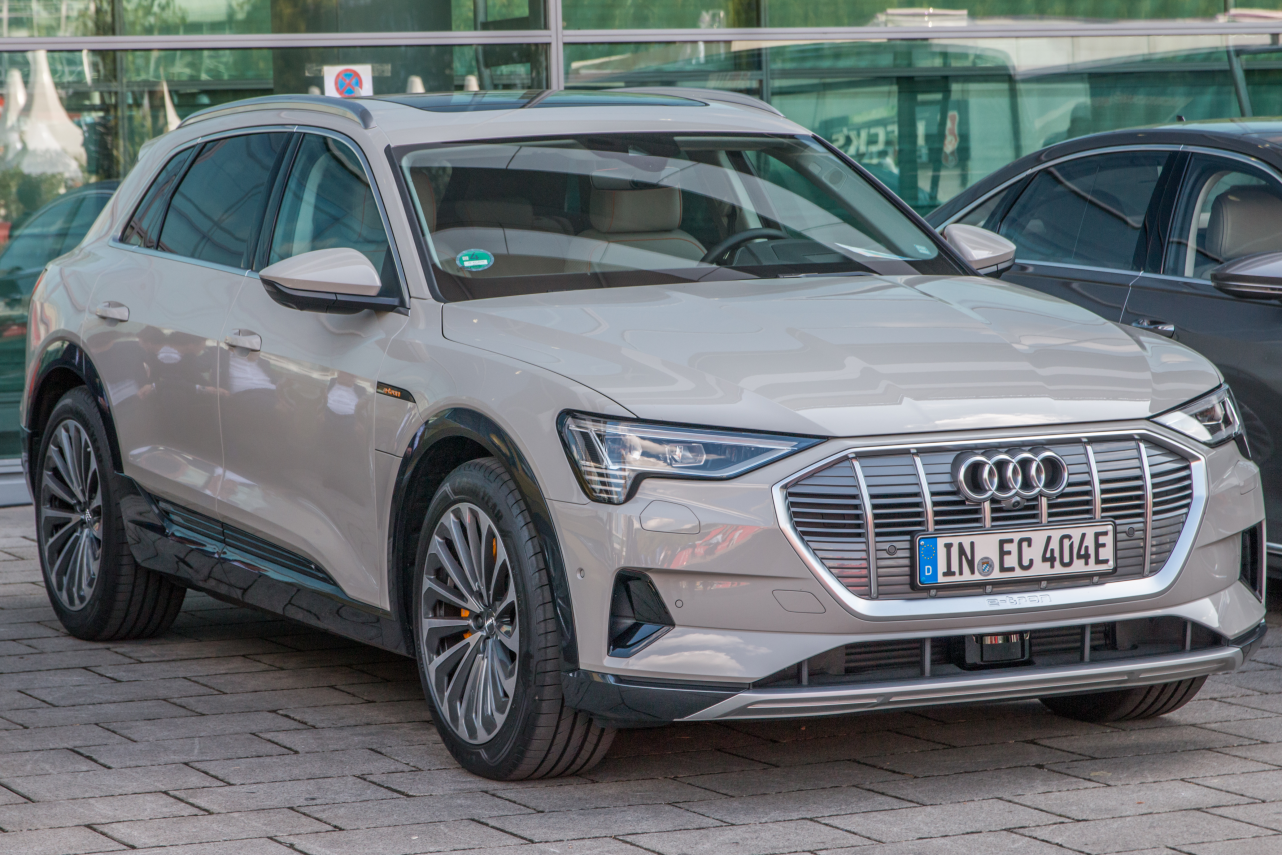
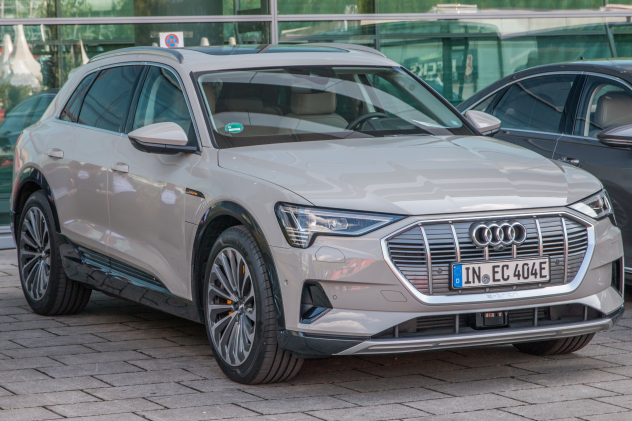
This guide covers the original Audi e-tron SUV and Sportback sold from 2018 to 2022. The updated model was renamed Q8 e-tron; its battery and range figures should not be applied automatically to earlier cars. Ukraine’s used market includes the e-tron 50 quattro with a 71 kWh gross battery, the e-tron 55 quattro with a 95 kWh gross battery, and the Sportback body style. Check model year, version, original market and equipment against the VIN before comparing listings.
Both body styles offer five seats and electric quattro all-wheel drive, but the Sportback has a different roofline and luggage-space trade-off. In 2026 the original e-tron is primarily a used-car purchase: battery condition, repair history and working charging systems matter more than its former new-car price. A documented inspection is more useful than a generic model score.
Exterior and Design
The Audi e-tron design demonstrates the company's evolutionary approach to creating electric vehicles. The car remains recognizably "Audi" but received a number of unique elements emphasizing its electric nature.
Dimensions and Proportions
Audi e-tron specifications dimensions:
- Length: 4901 mm
- Width: 1935 mm (2043 mm with mirrors)
- Height: 1616 mm
- Wheelbase: 2928 mm
- Ground clearance: 152-222 mm (adjustable)
These dimensions make the e-tron more compact than the coupe-like Q8, but still maintain an impressive road presence. The 2928 mm wheelbase provides a spacious cabin for passengers of all rows.
Aerodynamic Solutions
Audi engineers paid special attention to aerodynamics. The drag coefficient is only 0.30 - an excellent figure for an SUV of this size. This was achieved thanks to:
- Active Singleframe grille of octagonal shape with vertical slats, sections of which open depending on driving mode
- Specially developed wheel discs with aerodynamic profile
- Low rolling resistance tires created specifically for the model
- Completely flat floor of the car
- Active body elements that automatically correct air flows
Design Features
The signature radiator grille, although it doesn't perform the traditional engine cooling function, remains an important design element. LED optics received unique daytime running lights resembling a battery charge level indicator.
The rear bumper is equipped with a contrasting light gray insert emphasizing the absence of an exhaust pipe. Virtual rearview mirrors are optionally available - cameras on pillars transmit images to screens in the cabin (technology not yet allowed in all countries).
Technical Specifications of the Powertrain
The heart of the Audi e-tron is the quattro electric all-wheel drive system built on two asynchronous electric motors.
Electric Motors and Power
The Audi e-tron 55 quattro powertrain includes:
- Front electric motor: 125 kW (135 kW in S mode)
- Rear electric motor: 140 kW (165 kW in S mode)
- Total power: 265 kW (360 hp) in D mode
- Maximum power: 300 kW (408 hp) in S mode
- Torque: 561 Nm in D mode, 664 Nm in S mode
Important feature: maximum power is available for one minute, which is quite sufficient for overtaking and active driving.
Dynamic Characteristics
Audi e-tron specifications dynamics are impressive:
- Acceleration 0-100 km/h: 6.6 seconds (5.7 seconds in S mode)
- Maximum speed: 200 km/h (electronically limited)
- 80-120 km/h acceleration time: about 4 seconds
When driving at low speeds, the car uses only the rear electric motor to increase efficiency, connecting the front one when necessary for active acceleration or difficult road conditions.
Regeneration System
Regenerative braking returns some kinetic energy to the battery when the vehicle slows. The driver can adjust deceleration with steering-wheel paddles or let the automatic system manage it. Energy recovered depends on route, traffic and driving style; “up to 30% of range” is not a universal result. The effect is smaller on a steady motorway journey than in stop-and-go city traffic.
Battery and Driving Range
The Audi e-tron battery represents a high-tech system developed specifically for this model.
Battery Characteristics
Audi quoted 95 kWh gross capacity for the e-tron 55 quattro. The usable energy available to the driver changed after technical updates: Audi quoted roughly 86–86.5 kWh for later vehicles. The 95 kWh headline is not the amount that can all be used on a trip. The e-tron 50 quattro has a different 71 kWh gross battery. Audi documents the battery update in its official MediaCenter article. For a used car, verify the model year and high-voltage battery condition by diagnosis rather than relying on the listing alone.
The battery sits in the floor and uses liquid thermal management. Odometer mileage alone does not describe battery health: check available capacity, fault codes, charging behaviour and service history. Inspect the underside for damage from a collision or road obstacle, particularly on an imported or repaired vehicle.
Battery Cooling System
The Audi e-tron uses liquid battery thermal management to help maintain a suitable temperature while driving and charging. Describing this as “gel under each cell” that stores 3 kW for cabin heating is inaccurate. Heating uses energy from the vehicle, so cold weather can increase consumption, while DC charging speed depends partly on battery temperature. An inspection should include the coolant circuit and any related fault codes, especially after collision repairs.
Driving Range
Following technical updates, Audi quoted up to 436 km WLTP for the e-tron 55 quattro; Sportback variants have their own certified figures. Early e-tron cars, the 50 version and the later Q8 e-tron cannot all be represented by a single “400 km” number. WLTP is a comparative laboratory figure, not a promise of winter motorway range. Actual distance depends on the particular battery’s usable energy, speed, temperature, tyres, terrain and cabin heating.
For a real route, calculate from consumption: if 80 kWh is available and the trip computer shows 25 kWh/100 km, the theoretical full-range figure is about 320 km. Leave a reserve on longer journeys rather than planning to use every percentage point of charge. Compare trips made in similar conditions instead of relying on an ideal maximum.
Charging
Charging the Audi e-tron is one of the strong points of this electric vehicle thanks to support for various standards and high energy replenishment speed.
Types of Charging
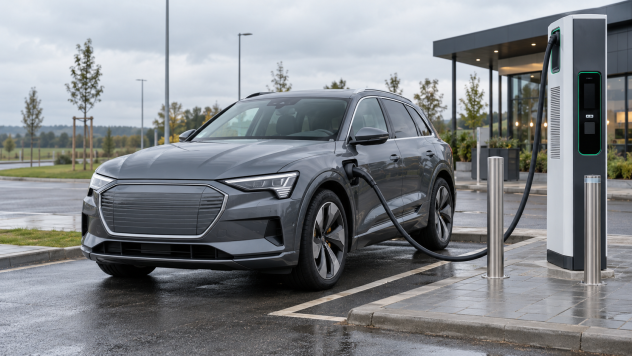
A European e-tron 55 normally supports up to 11 kW AC charging; 22 kW requires an optional second onboard charger. A 22 kW wallbox cannot raise the car’s own limit. Audi describes the fast-charging curve. For the 55 quattro Audi estimated approximately 30 minutes from 5 to 80% on a compatible DC station capable of up to 150 kW, under favourable conditions. This is not a time guarantee at every charger: actual power varies during the session and generally falls as the battery approaches 80–100%.
Estimate AC time by dividing the energy to add by the actual charging power, then allow for losses. Adding 50 kWh at 10 kW will take more than five hours. Continuous use of a household socket requires an electrician to verify the circuit and suitable charging equipment; it is not a substitute for a correctly installed wallbox.
Charging Ports and Connectors
European-market cars typically use Type 2 for AC and CCS2 for DC. Some equipment packages include a second passenger-side port for AC, but its presence and functions must be checked on the specific car: a second port does not mean a second DC inlet. Cars imported from other markets may use different connectors. Before buying, test both AC and compatible DC charging, the charge-door operation and connector locking.
Match home equipment to the car’s connector, onboard charger and available electrical supply. Three-phase 11 kW charging requires the appropriate installation; 22 kW is relevant only if the car has the option and the electrical circuit supports it.
Compare compatible options in the TOKA catalogue.
charging equipment filtered for Audi e-tron. Check the connector and rated output of any specific charger before ordering.
Practical Charging Aspects in Ukraine
In Ukraine, a practical setup combines inspected home AC charging with public DC stops on longer trips. Before departure, check on the TOKA charging map for connector type, port availability, power, current tariff and session-start rules. “Cheaper than petrol” is not a universal promise: the bill depends on the tariff and energy delivered, while winter driving can increase consumption.
For a European e-tron, look for CCS2 at a fast charger. If the vehicle came from North America, verify its inlet standard and compatibility with any specific adapter first; similar-looking plugs do not prove safe operation. Keep a backup charging stop in the route plan, particularly in cold weather.
Interior and Equipment
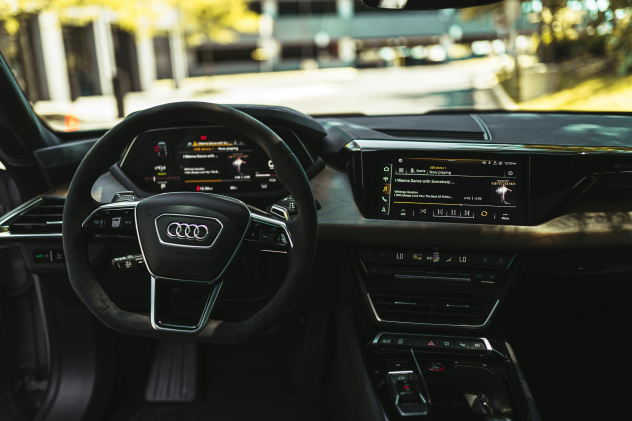
The Audi e tron interior represents a model of modern premium interior with emphasis on technology and comfort.
Space and Ergonomics
Thanks to the 2928 mm wheelbase, the Audi e tron interior offers:
- Number of seats: 5 (2+3 configuration)
- Rear legroom: 976 mm
- Ceiling height: sufficient for passengers up to 195 cm tall
- Trunk volume: 600 l under shelf, 1700 l with rear seats folded
- Frunk (front trunk): 60 l for storing charging cables
Rear seats fold in 40/20/40 proportion, providing flexibility in cargo space use.
Digital Technologies
The Audi e tron interior is equipped with MMI touch response operating system:
- Upper display: 10.1 inches for multimedia, navigation and phone control
- Lower display: 8.6 inches for climate control and comfort functions
- Virtual instrument panel: Audi Virtual Cockpit Plus 12.3 inches
- Touch response technology: tactile feedback when pressed
The system supports Android Auto and Apple CarPlay, and also integrates Amazon Alexa voice assistant.
Materials and Finish
Material quality corresponds to the car's premium status:
- Valcona leather seats with perforation
- Natural wood or aluminum inserts
- Soft plastic with textured coating
- Ambient lighting with color selection
Comfort Systems
The interior includes the following comfort systems:
- 4-zone climate control with pre-conditioning
- Heating and ventilation of front seats
- Electric seat adjustments with position memory
- Panoramic roof with electric curtain drive
- Bang & Olufsen 3D audio system with 16 speakers
Safety and Driver Assistance Systems
The Audi e-tron is equipped with a comprehensive set of modern safety and driver assistance systems using data from five radars, six cameras, twelve ultrasonic sensors and a laser scanner.
Active Safety Systems
- Adaptive cruise control with Stop&Go function
- Emergency braking system Pre Sense City
- Lane keeping assistant with trajectory correction
- Blind spot monitoring system with side traffic warning
- Lane change assistant for highways
Parking Assistance Systems
- 360-degree cameras with 3D environment image
- Parking assistant with automatic steering control
- Reverse exit assistance system with approaching vehicle warning
- Front and rear parking sensors with graphic display
Additional Options
- Night vision system with pedestrian and animal recognition
- Adaptive LED headlights with matrix technology
- Head-up display on windshield
These systems significantly increase driving safety and comfort, especially in urban conditions and long trips.
Trim Levels and Prices in Ukraine
Audi e-tron trim levels are represented by several equipment levels, each offering a certain set of options.
Available Versions
Common used versions are the e-tron 50 quattro (71 kWh gross), e-tron 55 quattro (95 kWh gross) and the Sportback body style. Power and range depend on model year, software updates, wheels and market certification. The 55 quattro’s 408 PS figure refers to a temporary boost mode, not continuous output. The later Q8 e-tron is a separate updated model with its own specifications.
Equipment Levels
Audi e-tron trim levels include:
Base (basic trim):
- LED headlights and taillights
- Adaptive cruise control
- MMI touch response with two displays
- Leather seats with electric adjustments
- 4-zone climate control
- 360-degree cameras
Advance (extended trim):
- All Base options +
- Air suspension
- Bang & Olufsen audio system
- Panoramic roof
- Adaptive LED headlights
- Pre Sense system
Sport (sport version):
- All Advance options +
- S-Line exterior and interior
- Sport seats
- Sport suspension
- 21-inch wheels
Design (top trim):
- All Sport options +
- Virtual rearview mirrors
- Matrix LED headlights
- Seat massage
- Night vision system
Approximate Prices
The first-generation Audi e-tron is now mainly a used-car purchase, so fixed “from UAH 2.8 million” prices for loosely named Base, Advance, Sport and Design trims do not describe the 2026 market. Compare current offers by VIN, year, battery, drivetrain, mileage, country of origin and collision history. A cheaper listing may need costly work on its battery, charging port or air suspension.
Include shipping and import charges where applicable, certification, insurance, inspection and home-charging equipment in the total budget. An advertisement is not proof of condition: commission an independent inspection before paying a deposit.
Comparison with Competitors
Comparing the original e-tron 55 against today’s new Tesla Model X, BMW iX or Mercedes-Benz EQS SUV using a 2025 price-and-range table is misleading: these are different generations and market conditions. In the used market, the e-tron’s case rests on comfort, cabin refinement, materials and a predictable DC charging curve in suitable conditions. Other models may offer longer certified range or lower energy use, but prices, service histories and equipment vary.
Compare the route you actually drive, luggage needs, CCS2 availability, insurance cost and condition of individual cars. Families should also budget for tyres, suspension and the practicality of charging at home.
Audi e-tron Advantages
Strengths:
- Traditional German build quality and materials
- Conservative but elegant design
- Excellent interior sound insulation
- Stable fast charging curve
- Developed Audi service network
- Two charging ports for convenience
Disadvantages Compared to Competitors
Weaknesses:
- Shorter range compared to BMW iX and Tesla Model X
- Slower maximum charging speed
- High price relative to Tesla
- Smaller interior trunk space
- No third row of seats (unlike Model X)
TOKA experts note that the choice between these cars is often determined by personal design preferences, brand loyalty and characteristic priorities.
Problems and Disadvantages
Despite overall high quality, Audi e-tron problems still exist, and potential buyers should know about them.
Technical Problems
Most common Audi e-tron problems:
Software issues:
- Periodic MMI system failures
- Need for regular software updates
- Sometimes incorrect charge level display
Charging systems:
- Rare cases of charging port failure
- Compatibility issues on some old charging stations
- Reduced charging speed at extreme temperatures
Suspension and chassis:
- Wear of air suspension elements (typical for all cars with air suspension)
- Increased electricity consumption by pneumatic system
Operational Nuances
Seasonal features:
- Significant range reduction in winter (up to 25-30%)
- Need for battery preheating
- Increased energy consumption by heating systems
Service issues:
- High cost of maintenance and parts
- Limited number of certified services
- Long delivery time for original parts
Problem Minimization Recommendations
Before purchase, check the service record, open recalls by VIN, battery condition, fault codes, AC and DC charging, and air-suspension operation. Ask a service provider to clarify exactly what any remaining warranty covers: terms depend on year, market, mileage and manufacturer conditions. “Most issues are covered by warranty” is not a universal assurance for a used imported vehicle.
After purchase, follow the recommended maintenance schedule and monitor tyres, brakes and the cooling system. For longer trips, allow extra time, check charging-station availability shortly before leaving and identify an alternative stop.
TOKA Energy Expert Assessment
After detailed study of all Audi e-tron aspects, TOKA Energy experts are ready to provide a comprehensive assessment of this electric crossover.
Pros
Outstanding Audi e-tron qualities:
Quality and comfort:
- Impeccable build quality and interior materials
- Excellent sound insulation - one of the quietest cabins in class
- Comfortable air suspension with wide adjustment range
- Ergonomic seats with multiple settings
Technologies:
- Stable and predictable fast charging curve
- Efficient energy regeneration system
- Two charging ports for maximum convenience
- Advanced driver assistance systems
Practicality:
- Spacious cabin for five passengers
- Large trunk plus additional frunk
- Good off-road capability thanks to quattro all-wheel drive
- Developed Audi brand service network
Cons
Model weaknesses:
Technical limitations:
- Range less than main competitors
- Maximum charging power below modern standards
- Significant efficiency reduction in winter
- High energy consumption of comfort systems
Economic aspects:
- High purchase cost
- Expensive maintenance and parts
- Rapid value loss in secondary market
- Limited number of specialized services
Functional disadvantages:
- No third row of seats
- Slow charging from regular 220V network
- Complexity of some MMI system functions
Summary Assessment
Overall TOKA experts' rating: 8.2/10
The Audi e-tron represents a quality, technological and comfortable electric crossover that is particularly attractive to conservative buyers in the premium segment. The car is excellent for daily city use and comfortable long trips.
We recommend the Audi e-tron if you value:
- Traditional German quality
- Maximum comfort and cabin quietness
- Audi brand prestige
- Developed service support
- Conservative design without excessive extravagance
Consider alternatives if priorities are:
- Maximum driving range
- Fast charging
- More affordable price
- Sport characteristics
For those considering buying an electric car for the first time, we recommend familiarizing yourself with our materials on electric car selection and operation features in Ukrainian conditions.
Conclusions and Recommendations
The Audi e-tron occupies a special place in the premium electric vehicle market, offering a balanced combination of traditional German quality and modern electric technologies.
Who the Audi e-tron is Suitable For
Ideal buyers:
- Premium car owners switching to electric drive
- Families valuing comfort and safety
- Corporate clients with environmental agenda
- Drivers making regular trips up to 300-400 km
- Buyers who value developed service network
Alternatives to Consider
If Audi e-tron characteristics don't fully meet your needs, consider:
- BMW iX - greater range and faster charging
- Tesla Model X - maximum technology and performance
- Mercedes EQS SUV - more luxury and comfort
- Volvo XC40 Recharge - more affordable price in premium class
Purchase Tips
TOKA experts' recommendations:
- Definitely test the car in real operating conditions
- Calculate available charging infrastructure in your region
- Consider purchasing extended battery warranty
- Study government support possibilities for electric vehicle purchase
- Plan home charging station installation
You will find more detailed information about buying and operating electric vehicles in Ukraine in TOKA Energy materials. Our experts are also ready to provide personal consultations on electric car selection and charging infrastructure installation.
FAQ
How much does the Audi e-tron actually drive in winter?
There is no single winter range for every e-tron. Version 50 or 55, battery health, speed, heating and temperature all matter. Estimate your route from observed energy consumption; on the first winter trip, keep a conservative reserve and plan to charge before the battery becomes very low.
Can you charge the Audi e-tron from a regular outlet?
It can be possible with suitable charging equipment, but an electrician must first check the socket, cable, protection and safe continuous load. Time depends on actual power and energy needed; a fixed “40–50 hours” does not fit every case. A correctly installed wallbox is usually more practical for regular charging.
What are the main problems with the Audi e-tron?
For a used e-tron, inspect the individual car rather than assume every vehicle has the same fault: review MMI errors, charge ports, the high-voltage battery, cooling and air suspension. Repair costs and remaining warranty depend on year, original market and service history. Arrange an independent diagnostic check and review open recalls by VIN before buying.
Which trim level is most cost-effective?
There is no universally best-value trim: package names and equipment vary by market and year. Check the VIN and actual options, including the 11 or 22 kW onboard AC charger, charge ports, air suspension, cameras, battery condition and service history. Compare the full cost of specific inspected vehicles, not a trim label alone.
How much does Audi e-tron maintenance cost?
No fixed bill applies to every e-tron: work required, parts prices and each used car’s condition vary. Request a service estimate for the specific VIN and mileage. Check air suspension, tyres, brakes, the high-voltage battery and charging hardware separately; potential costs here may matter more than routine scheduled servicing.
What is the real electricity consumption?
Actual e-tron consumption varies with speed, temperature, tyres and heating. For your own cost estimate, use kWh/100 km from the trip computer on a similar route and multiply by the tariff per kWh. Other owners’ reports are useful context but cannot replace measurements from the specific car.
Is it worth buying an Audi e-tron in 2026?
In 2026, the original e-tron can be a compelling used electric SUV for buyers who value comfort and have reliable access to charging. The decision depends on the specific car’s condition, usable battery capacity, charging equipment, accident history and total ownership cost. Compare alternatives at the same budget and arrange an independent inspection before committing.